


Listen to the article
Palestinians Vote in Landmark Gaza Elections, First in Two Decades
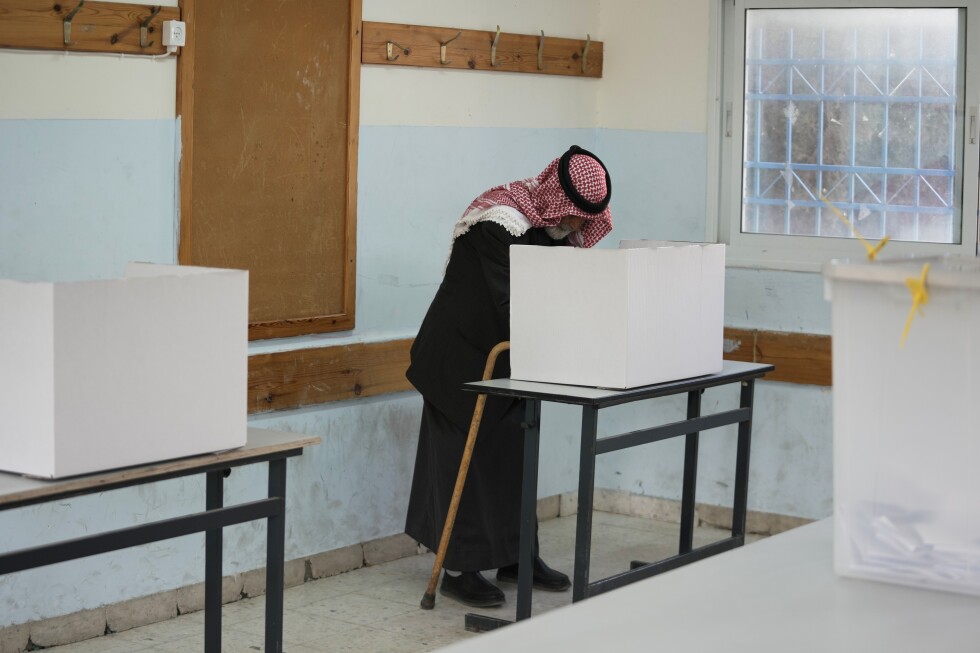
Palestinians in central Gaza’s Deir al-Balah cast ballots Saturday in the first local elections held in any part of Gaza in more than two decades, while tens of thousands voted simultaneously in the Israeli-occupied West Bank. The landmark vote represents a significant moment in Palestinian politics, coming amid ongoing conflict and humanitarian crisis.
The Gaza vote was described as a “pilot” election by officials, intended to politically reconnect Gaza and the West Bank. Palestinian Authority President Mahmoud Abbas, who has faced declining popularity and been sidelined in U.S.-led postwar planning for Gaza, sees the elections as a step toward his vision of establishing an independent Palestinian state across both territories.
Hamas, which has controlled Gaza since 2007, did not field candidates in Deir al-Balah. The city has suffered extensive damage from Israeli airstrikes but was spared ground invasion during more than two years of war. Over 70,000 residents were eligible to participate in the municipal elections.
“I came to vote because I have a right to elect members to municipal council so they can provide us with services,” said Ashraf Abu Dan, a Deir al-Balah voter, highlighting the practical concerns driving participation amid a near-total absence of public services. The municipal councils oversee critical infrastructure including water systems, roads, and electricity.
Election officials reported a preliminary 22.7% turnout in Deir al-Balah, while the West Bank saw a more robust 53.4% overall participation rate. The stronger-than-expected West Bank turnout surprised observers who had anticipated voter apathy and eroded faith in elected offices. Final results for individual races are expected Sunday.
“Municipal laws need to be enforced so people feel there’s justice,” said Khalid al-Qawasmeh, a voter in the West Bank city of Beitunia, echoing widespread desires for functional local governance.
The Palestinian Authority, formed during the 1990s peace accords, remains the internationally recognized representative of the Palestinian people. However, its credibility has been undermined by corruption allegations, autocratic governance, failure to establish an independent state while Israeli settlements expand in the West Bank, and ongoing divisions with Hamas. Abbas, now 90, was elected to what was intended as a four-year term in 2005 but has remained in power without further presidential elections.
While the Palestinian Authority has not held presidential or legislative elections since 2006, it has promoted these local races following governance reforms enacted last year in response to pressure from international supporters.
“We’re talking about geographically linking the West Bank and Gaza Strip,” explained Rami Hamdallah, chair of the Ramallah-based Central Election Commission and former prime minister.
Organizing the Gaza vote presented significant logistical challenges. Hamdallah reported that Israel blocked the entry of essential election materials including ballot paper, boxes and ink. The commission improvised by repurposing wooden ballot boxes and using ink originally intended for a vaccination campaign. The commission stated it did not coordinate directly with either Israel or Hamas before the vote. COGAT, the Israeli military body overseeing humanitarian affairs in Gaza, did not respond to inquiries about the alleged blockage of election materials.
Recent electoral reforms have changed voting procedures to allow ballots for individuals rather than party slates. A January decree required candidates to accept the Palestine Liberation Organization’s program, which includes recognizing Israel and renouncing armed struggle – effectively sidelining Hamas and other militant factions.
Many major West Bank cities, including Ramallah and Nablus, did not have contested elections. Family and clan affiliations often proved more influential than political parties, with most slates dominated by Fatah (the faction leading the Palestinian Authority) and independents, some with ties to other political groups.
The Palestinian Authority will appoint councils in cities without contested races, viewing local elections as a low-risk way to demonstrate progress on political reforms. With restricted movement in the West Bank due to Israeli military checkpoints and settler outposts, local councils have taken on greater importance in overseeing community services.
Meanwhile, Gaza faces an uncertain political future under the U.S.-brokered ceasefire plan, which envisions a governance structure excluding both Fatah and Hamas. The plan established an international Board of Peace and a committee of unelected Palestinian experts to govern, but progress toward disarming Hamas, reconstruction, and power transfer has stalled.
The elections did not include Israeli-annexed East Jerusalem, which remains a point of contention between Israeli and Palestinian leaders, as Palestinians claim it as the capital of their future state.
Fact Checker
Verify the accuracy of this article using The Disinformation Commission analysis and real-time sources.

9 Comments
Interesting to see elections happening in Gaza after so long. I wonder how this will impact the ongoing conflict and humanitarian situation there. It’s a complex issue with many perspectives to consider.
With Hamas not fielding candidates, I wonder how representative this election really is. The political dynamics in Gaza are so complex and fragile.
That’s a good point. The absence of Hamas raises questions about how inclusive this process is. Reintegrating the different Palestinian factions will be crucial.
The humanitarian crisis in Gaza is so dire, I hope these elections can at least start to address some of the local governance and service delivery challenges. But the bigger political issues loom large.
It’s good to see some democratic progress, but the context of the Israeli occupation and regional tensions means this is just one small piece of a much larger puzzle. Cautious optimism is warranted.
Over 70,000 eligible voters in Deir al-Balah – that’s a relatively small scale for an election, but still an important step. I hope this can build momentum for broader political reforms.
This is an important milestone for Palestinian politics, even if it’s just a ‘pilot’ election for now. Reconnecting Gaza and the West Bank is crucial for any future independent Palestinian state.
It’s good to see democratic processes being revived in Gaza, but the realities of the conflict and occupation will still pose major challenges. I hope this is a step forward, but much work remains.
You’re right, the broader context of the conflict can’t be ignored. Any progress has to be balanced against the ongoing difficulties and divisions.