


Listen to the article
Local fact-checking organization Local Voices Liberia (LVL) has intensified its campaign to combat disinformation and strengthen media literacy in Liberia’s democracy through a targeted educational outreach program.
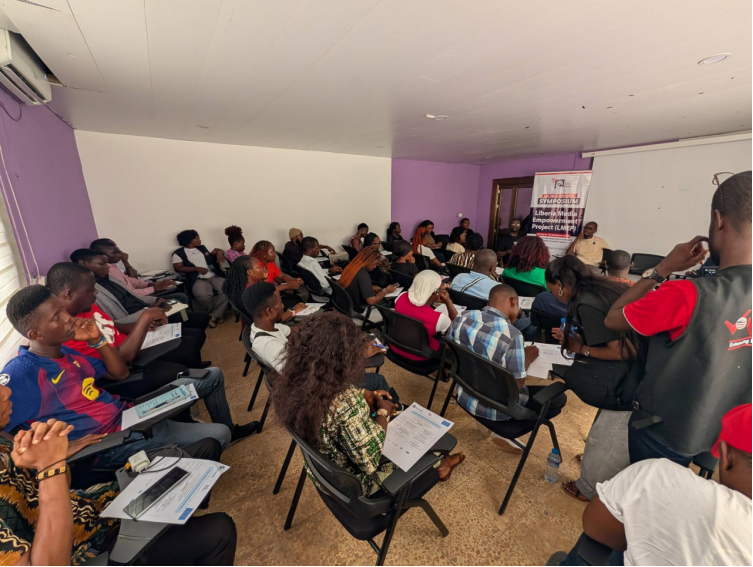
The organization recently hosted a comprehensive fact-checking symposium for over 50 students at Gonet Academy, a technical and vocational training institution that focuses on developing job-ready skills among young Liberian professionals. The April 17 event, organized under the Liberia Media Empowerment Project (LMEP), aimed to enhance students’ ability to identify and counter false information in an increasingly complex media landscape.
“Stopping disinformation to enhance Liberia’s democracy – What Students Need to Know” served as the central theme for the day-long symposium, which brought together students from various academic disciplines.
Rita Jlogbe, Journalism Program Officer at Internews, emphasized the alarming speed at which misinformation spreads in today’s digital environment. “Verifying information before sharing or publication is not just for journalists or fact-checkers; it is a culture of responsibility,” Jlogbe told participants. “You must ensure at all times that the information you share is true, to help others make informed decisions.”
The symposium featured a detailed presentation on fact-checking techniques delivered by LVL Executive Director, Attorney Alpha Daffae Senkpeni, who introduced attendees to fundamental verification methods applicable in their daily information consumption and sharing.
A highlight of the event was an interactive panel discussion moderated by Jackson Clay Jr., a recognized fact-checker from the verification platform Dubawa. The panel explored how disinformation undermines governance, media accountability, and public trust in Liberia’s democratic institutions.
The expert panel featured three prominent voices from Liberia’s information ecosystem. Peterking Quaye, Certified AI Governance Expert and Director of Programs & Projects at the West Africa ICT Action Network (WAICTANT), challenged participants to consider how emerging technologies, particularly artificial intelligence, are reshaping information landscapes and political narratives across the region.
Mrs. Whinell Shasha, who lectures in Mass Communication and Media Studies at the University of Liberia, encouraged students to become catalysts for positive change by prioritizing information verification before sharing content. She emphasized that a functioning democracy depends on citizens having access to accurate information to make informed decisions about governance and leadership.
Providing legal context to the discussion, Attorney Al-varney Rogers, who brings dual expertise as both a legal professional and experienced journalist, outlined the legal framework governing freedom of expression in Liberia. Rogers detailed both the protections and limitations of free speech, particularly regarding the dissemination of false information that could harm individuals or undermine social cohesion.
The symposium was marked by robust participation, with students eagerly engaging panelists on practical questions about verification tools, strategies for identifying misinformation on social media platforms, and methods for integrating fact-checking practices into daily information routines.
This event represents part of a broader campaign by Local Voices Liberia under the LMEP initiative, which seeks to enhance media literacy and combat disinformation across the country. According to organizers, similar educational forums are planned for the coming weeks across Montserrado, Bong, and Margibi Counties, targeting additional educational institutions and intellectual forums.
The timing of these initiatives reflects growing concern about information integrity in Liberia, where social media penetration has increased significantly in recent years while media literacy education has lagged behind. By focusing on students and young professionals, LVL aims to build a generation of critical information consumers who can help safeguard the country’s democratic processes against manipulation through false information.
Liberia, having experienced periods of conflict and democratic transition, presents a particularly important case for strengthening information integrity as the nation continues to consolidate its democratic institutions and processes.
Fact Checker
Verify the accuracy of this article using The Disinformation Commission analysis and real-time sources.

10 Comments
The emphasis on verifying information before sharing or publishing is a crucial lesson. In today’s digital age, we all have a responsibility to be discerning consumers and distributors of information.
Absolutely. Promoting a culture of fact-checking, even at the individual level, can go a long way in combating the spread of misinformation.
While the focus seems to be on general disinformation, I wonder if the symposium also touched on misinformation related to the extractive industries, given Liberia’s rich mineral resources. Building awareness around fact-checking in that space could be impactful.
That’s a good point. Applying fact-checking skills to the mining and commodities sector could help expose any misleading claims or narratives surrounding those industries.
Fact-checking efforts are crucial to combating disinformation and strengthening media literacy, especially among the youth. This symposium seems like a valuable initiative to equip students with the skills to navigate today’s complex information landscape.
Agreed. Building a culture of responsibility around verifying information before sharing is an important step in addressing the rapid spread of misinformation.
Kudos to Local Voices Liberia for organizing this timely and relevant symposium. Fostering media literacy and critical thinking skills among students is a wise investment in the future of Liberia’s democracy.
Interesting to see Liberia taking proactive steps to empower young people with media literacy skills. Strengthening critical thinking and fact-checking abilities will serve them well, both as consumers and potential producers of information.
Absolutely. Equipping the next generation to identify and counter false narratives is crucial for the health of Liberia’s democracy.
I’m curious to learn more about the specific curriculum or topics covered during the symposium. Did they delve into common tactics used to spread disinformation, or provide guidance on reliable fact-checking resources?