


Listen to the article
Nigerian Ex-Information Minister Defends Government Response to #EndSARS Crisis, Blames Fake News
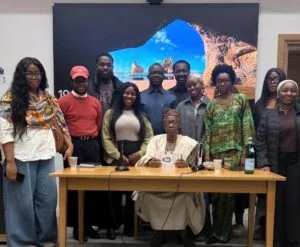
A former Nigerian Minister of Information and Culture, Alhaji Lai Mohammed, has attributed the escalation of the 2020 #EndSARS protests to fake news and misinformation rather than government communication failures. Speaking at a high-level forum at the London School of Economics and Political Science (LSE) over the weekend, Mohammed defended the Nigerian government’s handling of the crisis that garnered international attention.
According to Mohammed, while the protests initially began as legitimate demonstrations against police brutality, they were subsequently “hijacked by those with ulterior motives.” He emphasized that the situation deteriorated significantly due to the spread of unverified information across traditional and digital media platforms, particularly after military forces were deployed to the Lekki Toll Gate in Lagos – a flashpoint during the protests.
The former minister specifically criticized CNN’s coverage of the events, claiming the international news network relied on “unverified and sometimes doctored content” that inflamed tensions and shaped global perceptions that didn’t align with realities on the ground. “The problem we had was not the usual communication gap between the government and the citizens. It was fake news and disinformation, coupled with unbridled violence,” Mohammed stated.
Contrasting the #EndSARS communication challenges, Mohammed highlighted what he described as the Nigerian government’s successful handling of COVID-19 messaging. He noted that despite the absence of established global communication templates for the pandemic, the administration achieved remarkable public approval ratings between 97-98 percent through a strategy of transparency and consistent daily briefings.
The former minister also reflected on his approach to counter-insurgency communication, recounting a significant media tour he organized to territories previously held by Boko Haram extremists. Leading 40 journalists to Nigeria’s conflict-affected North-East region, Mohammed claimed this initiative served as a turning point that effectively challenged extremist propaganda while rebuilding public confidence in the military’s counter-terrorism efforts.
When addressing the controversial Twitter suspension during his tenure, Mohammed defended the decision as a necessary measure rather than an impulsive reaction. He stated that the platform was suspended only after repeated attempts to secure cooperation from Twitter to curb incitement and divisive content had failed, suggesting the action was taken as a last resort to maintain national security and social cohesion.
Mohammed also highlighted his introduction of nationwide town hall meetings as an innovative communication strategy that helped bridge gaps between the government and citizens. He described these forums as “unscripted platforms” that facilitated localized messaging and inclusive engagement across Nigeria’s six geopolitical zones.
The former minister revealed that upon assuming office in 2015, he encountered a vacuum in structured government communication, which prompted him to develop a proactive framework integrating both traditional and digital media channels to establish an effective two-way feedback system between the administration and the public.
Mohammed’s appearance at LSE concluded a three-day speaking tour in the United Kingdom, where he promoted his new book titled “Headlines & Soundbites: Media Moments That Defined an Administration.” The publication chronicles his experiences as Nigeria’s Information Minister from 2015 to 2023, during the administration of former President Muhammadu Buhari.
The #EndSARS protests of October 2020 represented one of Nigeria’s most significant civil demonstrations in recent history, with thousands of young Nigerians protesting against police brutality, specifically targeting the now-disbanded Special Anti-Robbery Squad (SARS). The protests gained international attention, particularly after the controversial Lekki Toll Gate incident, where security forces allegedly opened fire on peaceful protesters – allegations the Nigerian government has consistently denied.
Fact Checker
Verify the accuracy of this article using The Disinformation Commission analysis and real-time sources.

18 Comments
The role of social media and online information in amplifying social unrest is a complex issue. While the government has a responsibility to communicate clearly, the media and public also need to be more discerning consumers of information.
Agreed. Everyone has a part to play in curbing the spread of misinformation, whether it’s government transparency, responsible journalism, or digital literacy. Tackling this challenge requires a multi-stakeholder approach.
It’s troubling to hear the government deflect blame onto the media rather than taking accountability for their own actions. Effective crisis management requires a nuanced understanding of all contributing factors, not just scapegoating.
I share your concern. Shifting the entire blame onto the media is a simplistic and counterproductive approach. The government should examine its own policies and communication strategies to identify areas for improvement.
This highlights the challenges of managing information flows during volatile social upheaval. Both the government and media outlets need to be more responsible and restrained in their reporting to avoid exacerbating tensions.
Absolutely. Fact-checking and verifying information should be the top priority, rather than rushing to publish sensational stories. Balanced, nuanced reporting is essential to de-escalate such crises.
This is a complex issue with valid concerns on both sides. While the government has a responsibility to communicate clearly and transparently, the media also has a duty to verify information and report responsibly. Addressing the root causes should be the priority.
Agreed. Fostering an environment of mutual trust and accountability is key. Both the government and the media need to demonstrate a genuine commitment to serving the public interest, rather than pursuing their own agendas.
While the minister raises valid points about the role of misinformation, his criticism of the media’s coverage seems overly defensive. A more constructive approach would be to acknowledge the complexities of the situation and work collaboratively to address the root causes.
I agree. Blaming the media alone is an evasive tactic that fails to address the broader issues. The government should be open to self-reflection and engage in sincere dialogue to find lasting solutions that address public grievances.
This is a complex issue with no easy answers. Both the government and the media have a responsibility to provide accurate, balanced information and to avoid inflaming tensions. Addressing the underlying societal problems should be the top priority.
Absolutely. Pointing fingers is easy, but it won’t resolve the crisis. All stakeholders, including the government, media, and the public, need to work together in a spirit of transparency and mutual understanding to find sustainable solutions.
It’s an interesting perspective from the former minister, though one could argue that the government’s own actions also contributed to the worsening of the protests. Transparency and accountability are key to rebuilding public trust.
That’s a fair point. The government’s response plays a major role, and they shouldn’t solely blame the media. A more self-reflective approach acknowledging their own shortcomings could help find a constructive solution.
The minister’s comments highlight the challenges of effective crisis communication and the need for all parties to exercise restraint and responsibility. Balancing the need for information with the risk of misinformation is a delicate balancing act.
Well said. In such volatile situations, it’s critical that both the government and the media strive for accuracy, nuance, and constructive dialogue. Scapegoating or finger-pointing will only exacerbate the problems.
It’s concerning to see how misinformation and fake news can escalate social unrest, even in legitimate protests. The government needs to address the root issues, not just the symptoms. Clear, transparent communication is crucial during such crises.
I agree. Spreading unverified information, even by the media, can make a difficult situation much worse. The government should focus on resolving the underlying problems through open dialogue, not deflecting blame.