


Listen to the article
Former Information Minister Blames Fake News for #EndSARS Escalation
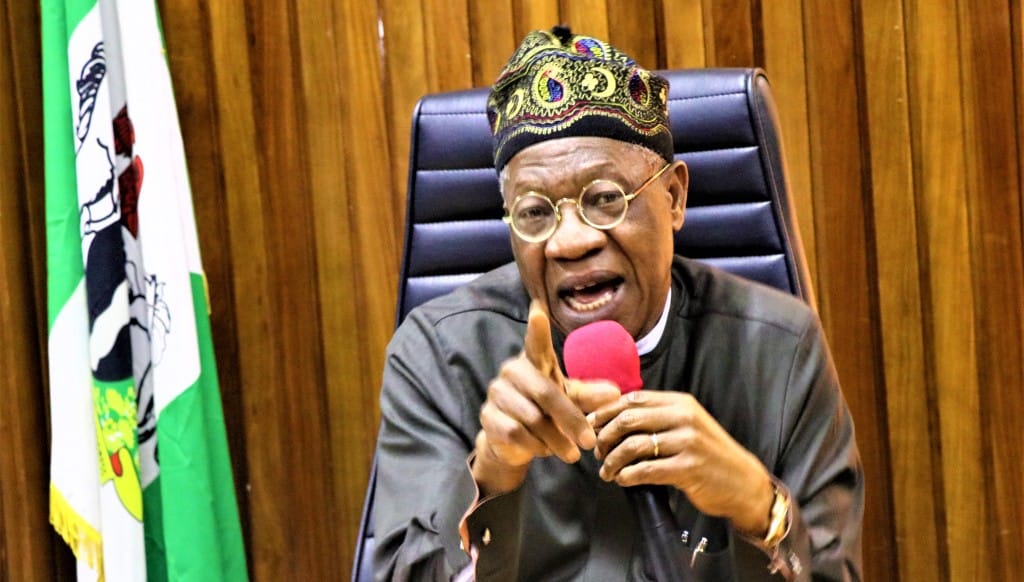
Former Nigerian Minister of Information and Culture, Lai Mohammed, has attributed the escalation of the #EndSARS protests to the spread of misinformation rather than government communication failure. Speaking at a forum hosted by the London School of Economics and Political Science, Mohammed detailed how what began as legitimate protests against police brutality transformed into something more volatile due to deliberate misinformation campaigns.
“The problem we had was not the usual communication gap between the government and the citizens. It was fake news and disinformation, coupled with unbridled violence,” Mohammed told the audience. He identified the deployment of troops to Lagos’ Lekki Toll Gate as a critical turning point that triggered an avalanche of unverified reports across media platforms.
The former minister singled out CNN for particular criticism, claiming the international network’s coverage relied heavily on unverified and sometimes doctored content. According to Mohammed, this reporting amplified tensions and shaped global perceptions that diverged from realities on the ground.
“What we saw during EndSARS was the dangerous power of disinformation in real time,” he remarked, emphasizing the need for stronger fact-checking mechanisms and greater media responsibility in crisis situations.
The #EndSARS protests of 2020 represented one of Nigeria’s most significant civil demonstrations in recent years, with thousands of mostly young Nigerians taking to streets nationwide to demand the dissolution of the Special Anti-Robbery Squad (SARS), a police unit with a documented history of human rights abuses. What began as peaceful protests eventually resulted in violence, property destruction, and casualties after security forces intervened.
Mohammed also highlighted Nigeria’s communication strategy during the COVID-19 pandemic, describing how officials had to create response frameworks without existing templates, as the last comparable global health crisis had occurred over a century earlier.
“When COVID-19 broke out, there was no template to fall back on. The last major pandemic, the Spanish Flu, had occurred over 100 years earlier. So we had to devise our own communication strategy on the go,” he explained.
The government’s approach included daily briefings, multi-platform messaging, and engagement with various stakeholders. Communication materials were translated into indigenous languages and pidgin to ensure broader accessibility. The strategy also incorporated live radio programs featuring health experts, religious leaders, traditional authorities, and COVID-19 survivors to educate citizens and address concerns.
Mohammed cited weekly opinion polls showing approval ratings of 97-98% for the government’s pandemic communication efforts. He credited this comprehensive approach with helping Nigeria avoid the catastrophic death toll some had predicted for the country. Nigeria recorded approximately 0.0044% of global COVID-19 deaths, which totaled 7.1 million worldwide.
Regarding Nigeria’s ongoing battle against insurgency in the northeast, Mohammed described a media tour he led shortly after taking office as information minister. With around 40 journalists in tow, he visited territories previously held by Boko Haram that had been reclaimed by Nigerian forces.
“That trip was a turning point. For the first time, journalists were able to see firsthand that those territories had been reclaimed, and that normalcy was gradually returning,” he said. According to Mohammed, this initiative significantly shifted domestic and international perceptions about the military’s progress against the insurgents.
Nigeria continues to face multiple security and communication challenges, from insurgency in the northeast to banditry in the northwest and separatist movements in the southeast. Effective crisis communication remains crucial for government legitimacy and public trust in a country where social media penetration has grown exponentially, creating both opportunities for civic engagement and vulnerabilities to misinformation.
Fact Checker
Verify the accuracy of this article using The Disinformation Commission analysis and real-time sources.

6 Comments
The minister’s comments highlight how social media can amplify misinformation during crises. Fact-checking and responsible reporting are crucial to avoid inflaming tensions further. Transparency from all sides is needed to find the truth.
Interesting to hear the former minister cite fake news as a key factor in the #EndSARS protests escalating. Disinformation can certainly inflame sensitive situations. It’s important to verify information carefully, especially on volatile issues.
The minister raises a valid point about the role of fake news in fueling the #EndSARS protests. Unverified reports and doctored content can distort public perception and make resolving conflicts more difficult. Careful communication is key during turbulent times.
It’s an interesting argument that fake news, rather than government failures, was a key driver in the #EndSARS protests escalating. The role of misinformation in such situations merits further examination.
The minister’s perspective highlights the complex dynamic between government communication, media coverage, and public sentiment during crises. Balancing transparency and accuracy is an ongoing challenge.
It’s concerning to hear the minister claim CNN’s coverage relied on unverified content. Media outlets have a responsibility to report accurately, even on sensitive topics. Fact-checking and balanced reporting are essential for informing the public properly.