


Listen to the article
Pakistan’s Diplomatic Deception: Falsehoods in US-Iran Mediation Efforts
Pakistan’s efforts to position itself as a mediator between the United States and Iran have collapsed amid accusations of deliberate misinformation campaigns orchestrated by the country’s military establishment.
For weeks, Islamabad has attempted to portray itself as an essential diplomatic bridge between Washington and Tehran. However, evidence suggests Pakistani officials, particularly through the Inter-Services Public Relations (ISPR) – the media wing of Pakistan’s Armed Forces – actively spread false information about potential talks that were never scheduled to occur.
The controversy reached its peak last Friday when ISPR distributed messages to journalists claiming Iranian Foreign Minister Abbas Araghchi was arriving in Islamabad for a second round of peace talks with U.S. representatives. “Following important discussions with the Pakistani mediation team, a second round of Islamabad peace talks between the United States and Iran is expected,” the ISPR statement read, adding that “A US logistics and security team is already present in Islamabad.”
Several major media outlets, including international wire services, published reports based on this information. While Araghchi did indeed travel to Pakistan, Iranian officials had explicitly stated there would be no face-to-face meetings with American representatives.
Iranian Foreign Ministry Spokesperson Esmaeil Baqaei clarified on social media: “No meeting is planned to take place between Iran and the US. Iran’s observations would be conveyed to Pakistan.” This statement directly contradicted Pakistan’s narrative about imminent negotiations.
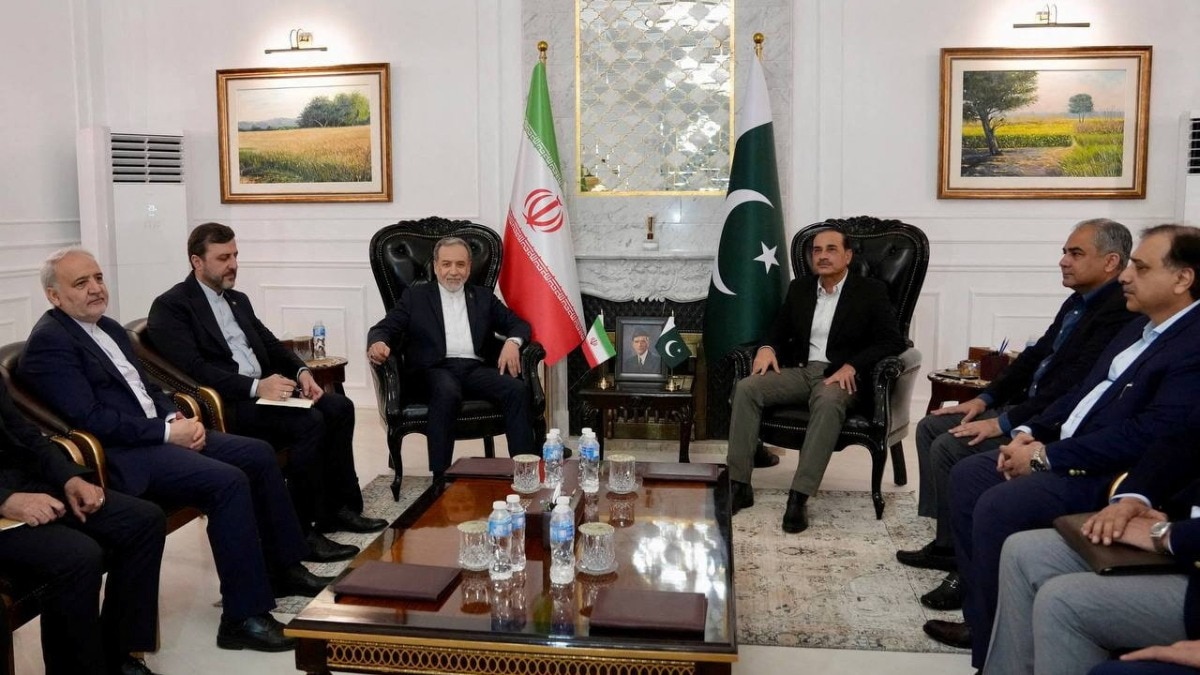
According to U.S. news outlet Politico, Araghchi’s visit to Pakistan was simply part of a broader diplomatic tour that included stops in Oman and Moscow to “consult on regional developments.” The Iranian minister met with Pakistani officials for approximately two hours on Saturday before departing the country well before U.S. envoys Steve Witkoff and Jared Kushner were scheduled to arrive.
Iranian President Masoud Pezeshkian had reportedly told Pakistani Prime Minister Shehbaz Sharif that Tehran would not enter “imposed negotiations” under threats or blockade. The U.S. Navy has maintained restrictions on Iranian shipping in the Strait of Hormuz, a key condition Iran wanted addressed before engaging in talks.
President Trump ultimately canceled the visit by his envoys, telling reporters, “We’re not going to spend 15 hours in airplanes all the time going back and forth to be giving a document that was not good enough, and so we’ll deal by telephone, and they can call us anytime they want.”
Despite knowing no meetings would take place, Pakistani authorities placed parts of Islamabad and Rawalpindi under restrictive security measures, disrupting commercial traffic and business activities for local residents. This action appears to have been part of the performance to maintain the illusion of high-level diplomatic engagements.
Independent journalist Ryan Grim questioned Pakistan’s motives on social media: “It was never true that Araghchi had any plans to re-enter negotiations last week. Why would the Pakistanis say otherwise?” Political sociologist David Miller added that the “Pakistani junta has been lying about every single thing since these ‘negotiations’ began.”
This is not the first time Pakistan’s military establishment has been accused of orchestrating disinformation campaigns. Following India’s aerial strikes on terror camps during Operation Sindoor, Pakistan reportedly launched widespread efforts to control the narrative through digital manipulation and unverified claims. ISPR Director General Ahmed Sharif Chaudhry played a significant role in those campaigns.
The consequences of this diplomatic deception may be lasting. Erik Sperling, executive director of U.S.-based think tank Just Foreign Policy, noted, “It is very hard to imagine Iran trusting Pakistan to ‘mediate’ talks again. This is exactly the type of ‘continuous media hype (leaks and rumors) from the Pakistani side’ that should make Iran refuse to conduct any further diplomacy in Islamabad.”
The episode has not only damaged Pakistan’s credibility as a neutral mediator but has also raised questions about the country’s true objectives in the region. Rather than establishing itself as a diplomatic powerhouse, Pakistan’s actions have portrayed it as willing to manipulate information for perceived political gains, potentially compromising its relationships with both Washington and Tehran.
Fact Checker
Verify the accuracy of this article using The Disinformation Commission analysis and real-time sources.

5 Comments
Interesting if true, but the accusation of disinformation campaigns by Pakistan’s military is concerning. Unclear if there were actually any planned US-Iran peace talks in Islamabad or if this was just fabricated. Need to see more evidence to verify the claims.
Glad to see the Disinformation Commission investigating this issue. Spreading false information about diplomatic negotiations is a serious matter that can undermine trust and progress. Transparency and fact-checking are essential, especially on sensitive geopolitical topics.
As an energy and mining analyst, I’ll be closely monitoring developments on this story. Reliable information about potential diplomatic breakthroughs or breakdowns in the region is crucial for assessing market risks and opportunities. Careful analysis is needed.
The role of Pakistan’s military in this alleged disinformation campaign is concerning. If true, it highlights the need for greater accountability and oversight of state-run media and propaganda efforts. Objective reporting is crucial for informed decision-making on global affairs.
As a mining and commodities investor, I’m curious to see how geopolitical tensions in the region could impact energy and resource markets, especially for uranium, lithium, and other critical minerals. Reliable information is key to understanding the risks and opportunities.