


Listen to the article
Former Information Minister Blames Fake News for #EndSARS Crisis Escalation
Nigeria’s former Minister of Information and Culture, Lai Mohammed, has attributed the escalation of the 2020 #EndSARS protests to the proliferation of fake news and disinformation rather than government communication failures. Speaking at a recent forum at the London School of Economics and Political Science (LSE), Mohammed offered his perspective on how misinformation shaped the course of the nationwide demonstrations.
According to Mohammed, what began as legitimate protests against police brutality evolved into a more complex crisis fueled by unverified information circulating across traditional and social media platforms. The situation reached a critical point following the controversial deployment of troops to the Lekki Toll Gate in Lagos, which became the epicenter of intense public scrutiny and international attention.
“The government’s challenge extended beyond communication gaps to what he termed the dangerous mix of fake news and rising violence,” noted a statement released by Mohammed’s media office through Nnamdi Atupulazi, Head of Strategic Communications.
In his address, the former minister specifically criticized international media coverage of the Lekki Toll Gate incident, singling out CNN for allegedly relying on “unverified and, in some cases, doctored materials” that he claimed significantly influenced global perceptions of the crisis. Mohammed’s criticism reflects the Nigerian government’s longstanding position on the incident, which has remained contentious since October 2020.
The former minister’s comments highlight the growing challenges of information management in the digital age, particularly during periods of social unrest. He emphasized the need for more robust fact-checking mechanisms, responsible journalism practices, and enhanced public awareness to counter the spread of misleading information during critical events.
Reflecting on other crisis communication challenges during his tenure, Mohammed detailed Nigeria’s approach to the COVID-19 pandemic. He explained that the country developed a multi-platform communication strategy at a time when there was no established global template for managing such a health crisis. The strategy included regular briefings, multilingual messaging campaigns, and extensive radio outreach across the country’s diverse regions.
“This approach helped reduce public anxiety, improved compliance with health protocols, and contributed to relatively low fatality rates compared to global figures,” Mohammed stated, pointing to the effectiveness of the government’s pandemic communication efforts.
Addressing Nigeria’s fight against insurgency in the Northeast, Mohammed recounted leading media tours to areas previously controlled by Boko Haram. These visits, which involved numerous journalists, aimed to counter narratives suggesting that insurgents maintained control over significant territories. He emphasized that effective information management remains crucial in countering extremist propaganda and limiting the psychological impact of terrorism.
The former minister also highlighted his introduction of nationwide town hall meetings as a platform for direct engagement between government officials and citizens across Nigeria’s six geopolitical zones, presenting this as an innovation in government-public communication.
When discussing the controversial suspension of Twitter in Nigeria during his tenure, Mohammed defended the action as a necessary response to concerns over the platform’s role in spreading harmful content. He claimed the decision came after unsuccessful attempts to secure cooperation from social media companies on content moderation issues.
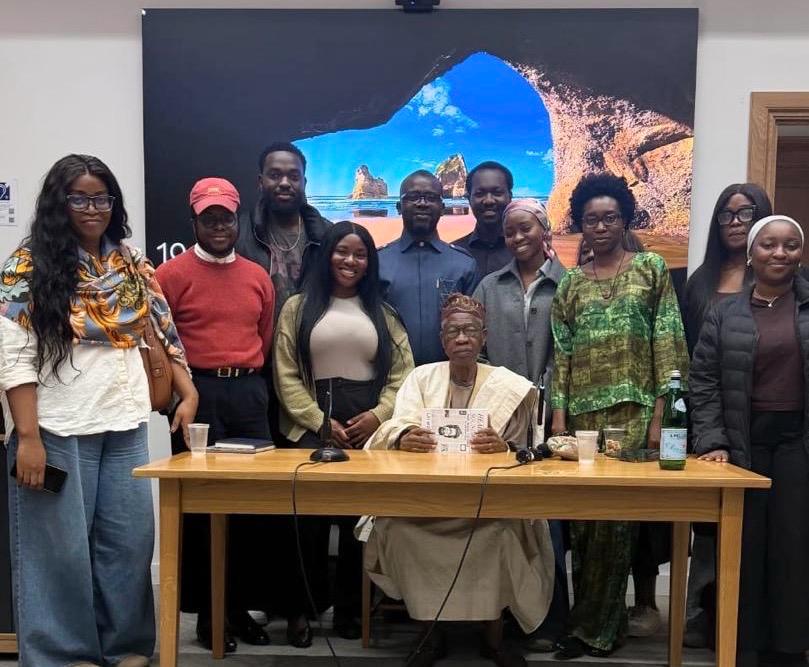
Mohammed’s appearance at LSE concluded his three-day speaking tour of the United Kingdom, during which he addressed various audiences on governance, leadership, and media practice. His presentations drew from his book, “Headlines & Soundbites: Media Moments That Defined an Administration,” which documents his experiences as Information Minister from 2015 to 2023 under President Muhammadu Buhari’s administration.
The former minister’s retrospective assessment of these major events offers insight into the Nigerian government’s communication strategies during several defining national crises, while also revealing the ongoing tensions between government narratives and independent media accounts of these same events.
Fact Checker
Verify the accuracy of this article using The Disinformation Commission analysis and real-time sources.

18 Comments
The role of social media and the rapid spread of unverified information are worrying trends we’ve seen in many protests and political movements. Careful communication and fact-checking are essential to avoid further escalation.
Yes, it’s a complex challenge navigating the digital landscape while trying to address legitimate grievances. Governments and media outlets need to find ways to combat misinformation without stifling free speech.
The former minister’s perspective highlights the need for governments and media to be more proactive in addressing misinformation, especially during periods of public unrest. Balancing transparency and accountability with the need to prevent further escalation is a delicate challenge.
The former minister’s remarks on the role of misinformation in the #EndSARS crisis are thought-provoking. Addressing the spread of unverified claims and rebuilding trust between citizens and authorities will be crucial in the path forward.
Agreed. Tackling misinformation requires a multifaceted approach, including improved communication, fact-checking, and accountability measures. It’s a delicate balance, but essential for preventing further escalation of tensions and violence.
The former minister raises some valid points about the role of misinformation in the #EndSARS crisis. In today’s digital landscape, the rapid spread of unverified claims can significantly exacerbate already tense situations. Improved communication and fact-checking efforts are crucial.
Misinformation is a persistent problem that can undermine legitimate protests and public discourse. The former minister’s insights on the #EndSARS crisis underscore the importance of fact-based reporting and open communication to avoid the spread of unverified claims.
Absolutely. In the digital age, the proliferation of fake news and disinformation poses a significant threat to social stability. Governments and media outlets must work together to combat this issue while respecting fundamental rights and freedoms.
The former minister’s perspective on the impact of misinformation in the #EndSARS crisis highlights the challenges governments face in the digital age. Combating the spread of fake news while addressing legitimate grievances is a complex task that requires nuanced policymaking.
Interesting take from the former minister. The spread of fake news and disinformation is a growing challenge that can amplify and distort public protests. Combating misinformation while respecting free speech is a complex issue.
The former minister raises a valid point about the role of misinformation in escalating the #EndSARS crisis. In the digital age, combating the spread of unverified claims is an ongoing challenge for governments and media.
You’re right. Striking the right balance between addressing public concerns and preventing further unrest is no easy task. Improved communication and fact-checking efforts will be crucial in the path forward.
The insights from the former minister highlight the complexities of managing protests and public unrest in the era of social media. Misinformation can quickly spiral out of control and undermine legitimate grievances. Careful handling is required.
Agreed. Governments need to find ways to actively counter misinformation and rebuild trust with the public, while also addressing the underlying issues that prompted the protests in the first place. It’s a delicate balance.
Interesting perspective from the former minister. It’s concerning how misinformation can escalate a legitimate protest into a broader crisis. Fact-checking and responsible reporting are crucial to avoid fueling tensions and violence.
I agree, the spread of unverified information can significantly exacerbate already volatile situations. Maintaining open and transparent communication is key to prevent misinformation from taking hold.
Misinformation is a serious issue that can have real-world consequences, as seen with the #EndSARS protests. Addressing communication gaps and stemming the tide of fake news requires a multi-pronged approach.
Absolutely. Rebuilding trust between citizens and authorities is crucial, but it won’t be easy when misinformation has already taken hold. Transparency and accountability will be key going forward.