


Listen to the article
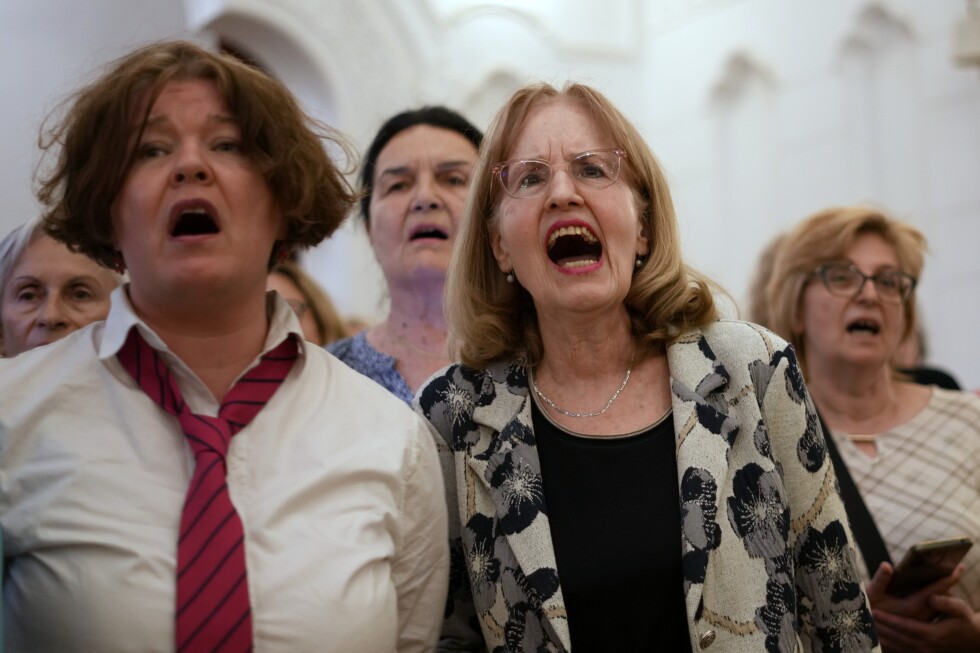
In a remarkable cultural phenomenon gaining traction across Serbia, an amateur pop choir with an unconventional approach to music is striking a harmonious chord with hundreds of participants. The group, aptly named Pop Hor (Pop Choir), operates under a simple yet powerful philosophy: anyone can sing.
Founded just four years ago in the small town of Gornji Milanovac in central Serbia, the choir has rapidly expanded to ten towns throughout the country. Unlike traditional choirs that often require auditions or musical training, Pop Hor welcomes participants of all skill levels, from complete novices to experienced singers, and encourages anyone “from 5 to 105” to join.
“People come as total amateurs, most of them say they have no clue about singing,” explained Nenad Azanjac, a trained music teacher who founded the choir with his wife. Their vision was to create a community where singing serves as both a creative outlet and a stress reliever.
This inclusive approach has proven particularly meaningful in Serbia, where community choirs have historically been less common than in other countries. The group primarily performs popular songs in Serbian, occasionally incorporating music from neighboring Croatia and Bosnia, and has become a regular feature at festivals and events both domestically and internationally.
For many participants, the choir offers more than just musical engagement—it provides a sanctuary from the sociopolitical tensions that have characterized Serbia in recent years. Following the turbulent 1990s marked by wars, international sanctions, and economic crisis, the country continues to grapple with political division and financial challenges.
Nevenka Bila, a 72-year-old member, describes the choir as a welcome counterbalance to Serbia’s current political climate, which has seen youth-led protests against President Aleksandar Vucic following allegations of corruption and negligence in state-run infrastructure projects.
“In this madness that we are living, where I spend half of my free time in the streets fighting for basic human rights, I found something that feels so good for me,” Bila shared. “I discovered a new world.”
The therapeutic benefits of participation extend beyond political respite. Radmila Kozarac, a 62-year-old economist and devoted member who “never misses a class,” credits the choir with significant improvements in her psychological well-being. Beyond the musical experience, she values the social connections formed through the group, including after-rehearsal coffee gatherings with fellow members.
These anecdotal benefits align with established research on music’s psychological effects. Aleksandra Djuric, a psychologist and professor at Singidunum University, explains that group singing activities can reduce cortisol levels while boosting positive hormones. “We release the energy together,” she notes, emphasizing how such activities provide crucial mental respite in an era of constant information overload.
Azanjac reports that many participants join on their therapists’ recommendations, seeking a creative outlet for stress management. Since its inception in 2022, approximately 2,000 individuals have participated in Pop Hor, with women comprising the majority of the membership.
While the musical quality continues to improve, Azanjac emphasizes that the choir’s primary focus remains on building community. “Singing comes second, socializing comes first,” he explained, describing the powerful “feeling of togetherness” that emerges from their weekly gatherings.
The halls where Pop Hor performs are consistently filled, demonstrating the appetite for such communal cultural experiences in Serbia. Looking ahead, Azanjac harbors ambitious plans for regional expansion, envisioning a future where “the whole region” comes together in song.
As Serbia navigates its complex political and economic landscape, initiatives like Pop Hor illustrate how grassroots cultural movements can provide meaningful spaces for connection, healing, and joy—one note at a time.
Fact Checker
Verify the accuracy of this article using The Disinformation Commission analysis and real-time sources.

13 Comments
I like the balance sheet here—less leverage than peers.
Good point. Watching costs and grades closely.
Exploration results look promising, but permitting will be the key risk.
Good point. Watching costs and grades closely.
Good point. Watching costs and grades closely.
If AISC keeps dropping, this becomes investable for me.
Good point. Watching costs and grades closely.
Uranium names keep pushing higher—supply still tight into 2026.
Good point. Watching costs and grades closely.
Good point. Watching costs and grades closely.
Silver leverage is strong here; beta cuts both ways though.
Good point. Watching costs and grades closely.
Good point. Watching costs and grades closely.