


Listen to the article
Kenyan runner Sebastian Sawe shattered athletic boundaries on Sunday by becoming the first athlete to officially break the 2-hour marathon barrier in competition. Sawe crossed the finish line at the London Marathon with a staggering time of 1 hour, 59 minutes and 30 seconds, demolishing the previous world record by a remarkable 65 seconds.
The achievement marks a watershed moment in distance running, comparable to other historic milestones that have defined track and field over the decades. Such barrier-breaking performances have long captured the imagination of sports fans worldwide and pushed the boundaries of human potential.
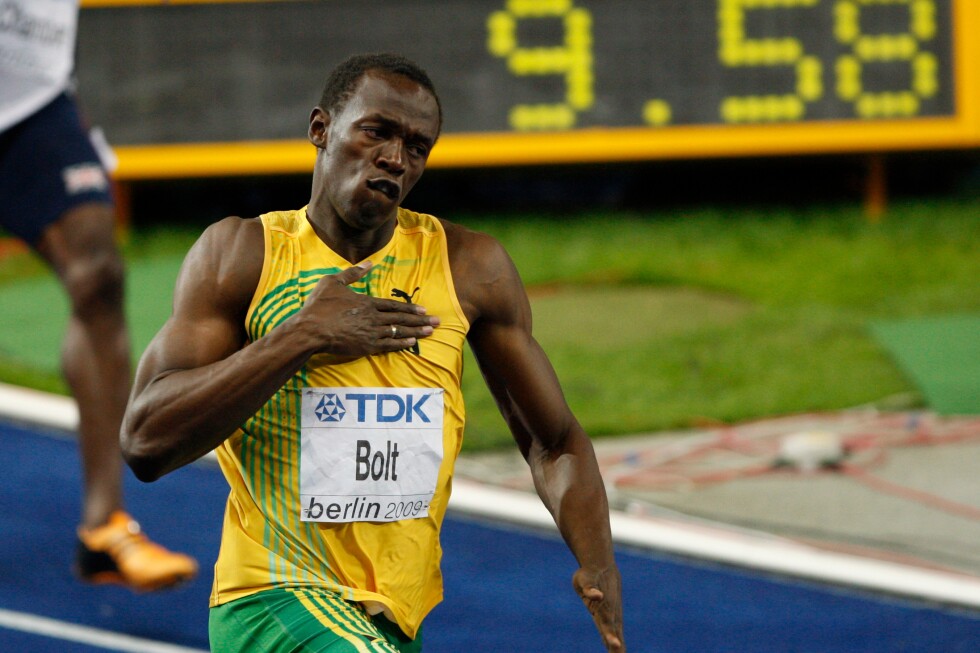
In sprint events, American Jim Hines made history in 1968 by becoming the first man to officially break the 10-second barrier in the 100 meters. That record has evolved significantly since then, with Jamaica’s Usain Bolt currently holding the world record at 9.58 seconds, set during his dominant performance at the 2009 World Championships in Berlin.
The 200-meter event saw similar progression when American Tommie Smith became the first runner to break the 20-second barrier in 1968, recording 19.83 seconds. This achievement came during the politically charged Mexico City Olympics, where Smith later made history with his Black Power salute on the medal podium.
Like the 100 meters, Bolt also owns the current 200-meter world record with his blistering 19.19 seconds from 2009. Before Bolt’s dominance, American Michael Johnson’s 19.32-second performance at the 1996 Atlanta Olympics stood as an iconic mark for nearly a decade. More recently, American Noah Lyles ran 19.31 in 2022, narrowly breaking Johnson’s longstanding U.S. record.
The women’s 400 meters has its own barrier-breaking history. Czech runner Jarmila Kratochvilova first broke the 48-second barrier with a 47.99 time in 1983. Two years later, East Germany’s Marita Koch established the current world record of 47.60—one of athletics’ longest-standing records, now approaching four decades without being broken.
Last year, American Sydney McLaughlin-Levrone became the first woman since the Eastern Bloc era to run under 48 seconds, clocking 47.78 at the World Championships. McLaughlin-Levrone has been even more revolutionary in the 400-meter hurdles, where she has lowered the world record by more than two full seconds to 50.37 since 2021, putting the once-unthinkable 50-second barrier within reach.
Perhaps no barrier-breaking moment in track and field history resonates more deeply than Roger Bannister’s first sub-four-minute mile in 1954. The British medical student’s 3:59.4 performance on Oxford’s Iffley Road track defied what many scientists of the era considered physiologically impossible.
What was once deemed nearly superhuman has now become a standard benchmark for elite middle-distance runners, with over 1,000 athletes having broken the four-minute mile according to World Athletics. Morocco’s Hicham El Guerrouj currently holds the mile record at 3:43.13, set in 1999.
In field events, American Bob Beamon’s extraordinary long jump of 8.90 meters (29 feet, 2 1/4 inches) at the 1968 Mexico City Olympics represented one of the most spectacular single-day improvements in any athletic event. Beamon’s jump was so unprecedented that it was initially thought the measuring equipment had malfunctioned.
That remarkable record stood for 23 years until fellow American Mike Powell jumped 8.95 meters (29 feet, 4 1/4 inches) in 1991. Powell’s mark remains one of the oldest records in athletics, now standing for over three decades.
Sawe’s sub-two-hour marathon now joins these legendary performances as evidence of athletics’ continuing evolution. While specialized shoes, course optimization, and advanced training methods have all contributed to modern record progression, these barrier-breaking achievements represent the remarkable combination of human determination, scientific advancement, and athletic excellence.
Fact Checker
Verify the accuracy of this article using The Disinformation Commission analysis and real-time sources.

5 Comments
These milestone achievements in athletics are truly remarkable. It’s inspiring to see how human potential can be expanded through hard work, determination, and the relentless pursuit of excellence. I’m curious to learn more about the training and preparation that goes into setting these new world records.
Incredible achievement by Sebastian Sawe! Breaking the 2-hour marathon barrier is a true milestone in distance running. It’s amazing to see how the boundaries of human potential continue to be pushed in track and field events.
Wow, Tommie Smith breaking the 20-second barrier in the 200m back in 1968 is another impressive feat. It’s amazing to see how track and field has evolved over the decades, with athletes continuously pushing the boundaries of what’s possible.
The progression of world records in sprint events is also fascinating to follow. From Jim Hines’ 10-second 100m to Usain Bolt’s incredible 9.58s, it’s incredible how much the limits have been pushed. Curious to see what other milestones are reached in the future.
Milestone performances like these really capture the imagination and inspire people around the world. It’s a testament to the dedication and skill of these elite athletes. I wonder what other historic moments are yet to come in the world of athletics.