


Listen to the article
Deadly Strikes Across Ukraine and Russia Claim 16 Lives Amid Chernobyl Anniversary Concerns
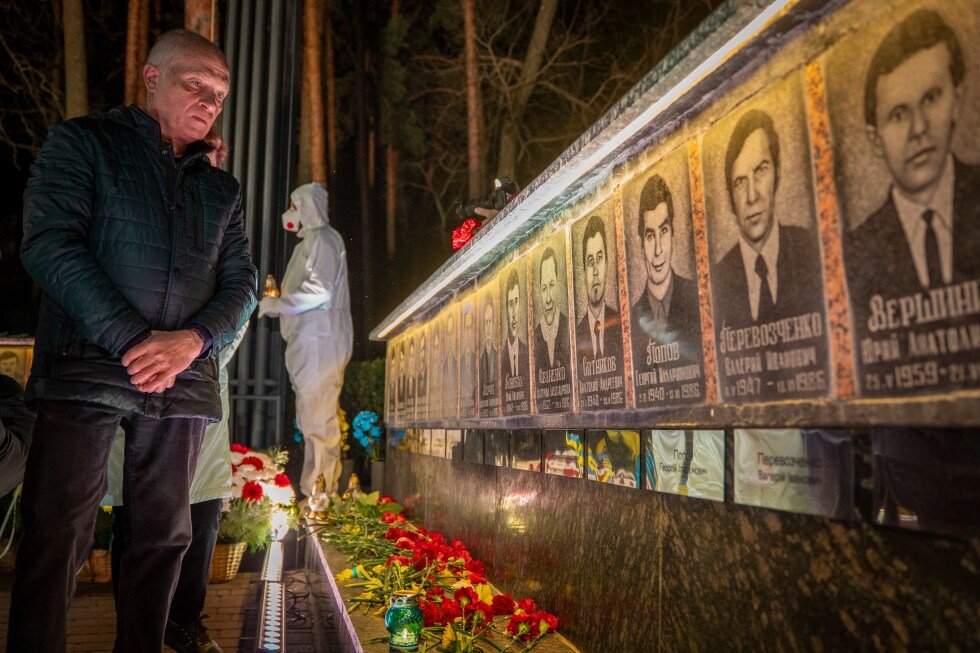
At least 16 people were killed in strikes across Ukraine, Russian-occupied territories, and Russia over the past day, authorities reported Sunday. The violence coincided with the 40th anniversary of the Chernobyl nuclear disaster, prompting renewed warnings about the risks posed by military operations near the plant during Russia’s ongoing invasion of Ukraine.
Ukrainian President Volodymyr Zelenskyy marked the somber anniversary with a stark warning that Russian attacks could lead to another catastrophe. “Russia is once again bringing the world to the brink of a man-made disaster,” he wrote on Facebook, noting that Iranian-designed Shahed drones regularly fly over the plant, with one striking the protective confinement structure last year.
“The world must not allow this nuclear terrorism to continue, and the best way is to force Russia to stop its reckless attacks,” Zelenskyy emphasized.
In the city of Dnipro, a major industrial hub in central Ukraine, Russian drone and missile strikes killed at least nine people, according to regional governor Oleksandr Hanzha. The city has been a frequent target throughout the conflict due to its strategic importance as a manufacturing center.
Violence also erupted in Russian-occupied Crimea, where Moscow-installed authorities reported that one man was killed in a Ukrainian drone strike on the port city of Sevastopol. Russia annexed the peninsula from Ukraine in 2014, a move widely condemned internationally, and has since used it as a crucial military staging area for its operations.
In Ukraine’s eastern Luhansk region, which Russia recently claimed to have fully captured (a claim Ukraine disputes), Russian-installed governor Leonid Pasechnik reported that three people were killed in an overnight Ukrainian drone strike on a village. This followed two other reported fatalities in the same region earlier in the weekend. Ukrainian officials did not comment on these allegations, which could not be independently verified.
The cross-border violence continued with a woman reportedly killed in a Ukrainian drone attack on Russia’s Belgorod region, according to local Russian authorities.
In a significant development showcasing Ukraine’s expanding long-range strike capabilities, Ukrainian forces targeted an oil refinery in Yaroslavl, deep inside Russian territory, according to Ukraine’s General Staff. The facility, which processes 15 million tons of oil annually and produces fuels critical for Russia’s military operations, suffered fires following the attack.
Ukraine has increasingly employed domestically developed long-range drones capable of striking targets up to 1,500 kilometers (900 miles) inside Russia. These attacks have frequently targeted Russian oil infrastructure as Moscow looks to boost exports following temporary sanctions relief from the Trump administration. Ukrainian officials have expressed concern that increased oil revenue will enable Russia to purchase more weapons for use against Ukraine.
The anniversary of the 1986 Chernobyl disaster has intensified concerns about nuclear safety in the region. Rafael Grossi, director general of the International Atomic Energy Agency, echoed Zelenskyy’s warnings during a visit to Kyiv, emphasizing that repairs to the plant’s damaged outer protective shell must begin immediately.
IAEA assessments indicate that damage from a strike last year has already compromised a key safety function of the structure. Grossi warned that continued inaction could further endanger the original sarcophagus beneath the newer containment structure. The European Bank for Reconstruction and Development estimates repairs would require at least 500 million euros ($586 million).
Ukrainian Energy Minister Denys Smyhal announced that international partners have committed 100 million euros ($108 million) for repairs, in addition to a previously agreed 30 million euros ($32 million). Ukrainian officials claim a Russian drone struck the plant’s New Safe Confinement structure—a $2.1 billion archlike enclosure completed in 2019—in February 2025. Moscow has denied targeting the plant and suggested Ukraine staged the attack.
Meanwhile, Russia continues to strengthen its international military alliances. Russian Defense Minister Andrei Belousov visited North Korea on Sunday for talks with leader Kim Jong Un about future military cooperation. Belousov stated that the countries had agreed to “transition military cooperation to a sustainable, long-term basis,” according to Russian state news agency Ria Novosti.
During the visit, Belousov presented the Russian Order of Courage to North Korean service members who served in Russia’s Kursk region, where Ukraine launched a surprise incursion in August 2024. Intelligence reports indicate Kim has sent thousands of troops and substantial weapons shipments to support Russia’s war against Ukraine, marking a significant deepening of military ties between the two nations.
Fact Checker
Verify the accuracy of this article using The Disinformation Commission analysis and real-time sources.

10 Comments
It’s tragic to see the loss of life on both sides during this tense time. The Chernobyl anniversary serves as a stark reminder of the catastrophic consequences that can arise from military operations near nuclear facilities. De-escalation and securing these sites are critical.
You’re right, the stakes are incredibly high. Responsible leadership is needed to prevent further escalation and ensure the safety of these sensitive areas.
This is a somber anniversary, as the Chernobyl disaster still casts a long shadow. The continued attacks around the plant are deeply worrying and raise serious concerns about nuclear safety. We must ensure these sites are protected and not used for further reckless violence.
Agreed. The world cannot afford another nuclear disaster, especially with an ongoing military conflict. Protecting these sites should be a top priority for all parties involved.
The Chernobyl anniversary serves as a somber reminder of the catastrophic potential of nuclear incidents. President Zelenskyy’s warning about the risks of military operations near the plant is well-founded and deserves serious attention from the international community.
I agree, the safety and security of nuclear facilities should be a top priority. All efforts must be made to de-escalate the conflict and ensure these sites are protected, regardless of political affiliations.
While the details are still emerging, it’s clear that the situation remains extremely volatile. The use of Iranian-made drones near Chernobyl is particularly concerning and underscores the need for stronger international pressure to halt such actions.
Absolutely. The global community must come together to condemn these reckless attacks and hold all parties accountable. The stakes are far too high to allow this conflict to endanger nuclear sites.
This is a deeply concerning situation, with the ongoing conflict threatening the stability and security of critical infrastructure like the Chernobyl plant. The loss of life is tragic, and the potential for a larger-scale disaster remains a real and ever-present danger.
You’re absolutely right. The world cannot afford another Chernobyl-like incident. Urgent diplomatic efforts are needed to secure these sites and prevent further escalation, regardless of the political complexities involved.