


Listen to the article
Palestinian Authority Hails Local Elections as Step Toward Statehood Despite Low Gaza Turnout
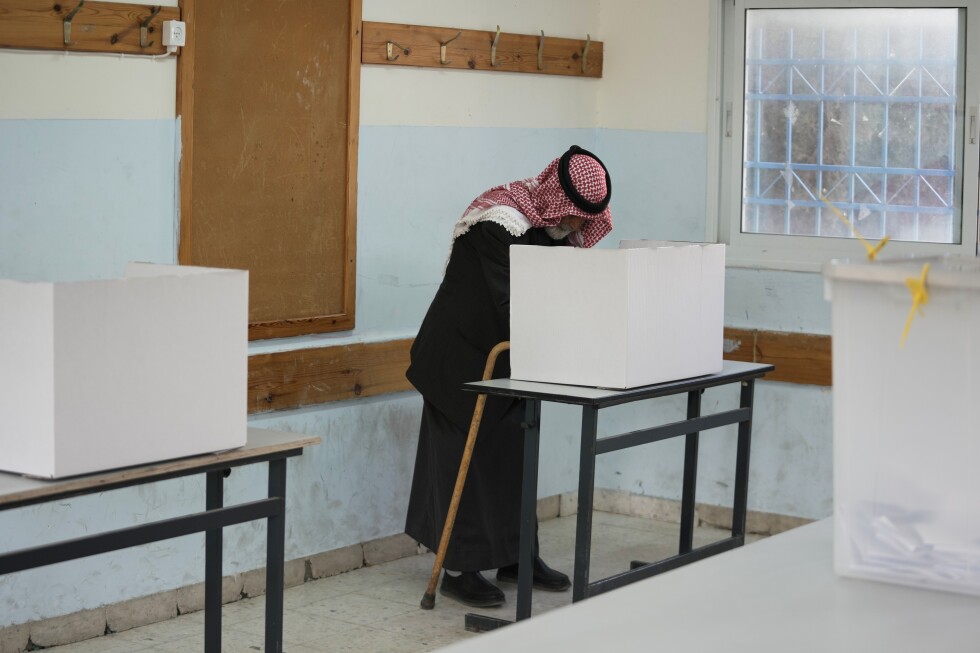
Palestinian authorities have declared Saturday’s local elections in the Israeli-occupied West Bank and a single Gaza community a success, framing the vote as progress toward long-delayed presidential elections and eventual statehood.
The elections in central Gaza’s Deir al-Balah marked the first vote in part of Hamas-run Gaza in more than two decades. The Palestinian Authority (PA), which administers semiautonomous areas of the West Bank, described the Gaza vote as largely symbolic while it attempts to politically reconnect the separated Palestinian territories.
Despite the war-ravaged conditions in Gaza, where Deir al-Balah was spared an Israeli ground invasion but remains heavily damaged, local residents participated in the electoral process. Turnout there reached 23%, with officials citing significant challenges including large-scale displacement and outdated civil registry records.
Hamas, which controls half of Gaza following Israel’s partial withdrawal under the current U.S.-drafted ceasefire agreement, neither fielded candidates nor attempted to block the vote, allowing the process to proceed without interference.
In the West Bank, voter participation was considerably higher at 56%, with over half a million people casting ballots – comparable to turnout levels in recent years. However, many races went uncontested, and candidates were required to accept the Palestine Liberation Organization’s platform, which recognizes Israel and renounces armed struggle. This requirement effectively excluded Hamas and other militant factions from participating.
The election results were dominated by independents and Fatah, the faction that leads the Palestinian Authority and claimed victory. The voting system has undergone reforms implemented in response to international pressure, allowing Palestinians to vote for individuals rather than party slates – a change reflecting diminished public trust in political parties.
Rami Hamdallah, chair of the Ramallah-based Central Election Commission and former prime minister, emphasized the significance of holding elections despite challenging conditions. “Everyone is aware of the political, security and economic conditions, the fragmentation of Palestinian territory, the war on Gaza, and the regional conflict in Iran,” Hamdallah told journalists. “Simply holding the elections in Deir al-Balah is a significant achievement, and we hope to hold elections in other bodies across the Gaza Strip in the near future.”
The elections focused on local councils responsible for basic services like water, roads, and electricity. Prime Minister Mohammad Mustafa characterized the vote as “another step on the path to full independence,” though Israeli Prime Minister Benjamin Netanyahu remains firmly opposed to Palestinian statehood.
For many Palestinians, these local elections represent only partial progress. Prominent Palestinian-American business owner Bashar Masri expressed this sentiment on social media: “Municipal elections are an important step, but they are not enough… We want general elections.”
The Palestinian Authority has not held a presidential election in 21 years, and public support for both the PA and 90-year-old President Mahmoud Abbas has eroded amid corruption allegations and frustration over the continued expansion of Jewish settlements in the West Bank. Abbas was elected in 2005 to what was originally meant to be a four-year term, but no presidential or legislative elections have been held since 2006.
That year, Hamas won parliamentary elections, leading to a violent takeover of Gaza and the expulsion of the PA from the territory. Since then, the Palestinian territories have remained politically divided, with the internationally recognized PA governing parts of the West Bank while Hamas controls Gaza.
The PA now finds itself notably absent from the U.S.-drafted ceasefire plan for Gaza, further complicating efforts to establish unified governance across Palestinian territories. Despite these challenges, Palestinian officials continue to frame local elections as building blocks toward national sovereignty, even as the path to statehood remains obstructed by both internal divisions and external opposition.
Fact Checker
Verify the accuracy of this article using The Disinformation Commission analysis and real-time sources.

34 Comments
Production mix shifting toward World might help margins if metals stay firm.
Silver leverage is strong here; beta cuts both ways though.
Good point. Watching costs and grades closely.
Good point. Watching costs and grades closely.
Exploration results look promising, but permitting will be the key risk.
Good point. Watching costs and grades closely.
If AISC keeps dropping, this becomes investable for me.
Good point. Watching costs and grades closely.
Good point. Watching costs and grades closely.
Exploration results look promising, but permitting will be the key risk.
Good point. Watching costs and grades closely.
Good point. Watching costs and grades closely.
If AISC keeps dropping, this becomes investable for me.
Good point. Watching costs and grades closely.
Good point. Watching costs and grades closely.
Interesting update on West Bank and Gaza local elections seen as a step toward presidential vote. Curious how the grades will trend next quarter.
Good point. Watching costs and grades closely.
Uranium names keep pushing higher—supply still tight into 2026.
Good point. Watching costs and grades closely.
Interesting update on West Bank and Gaza local elections seen as a step toward presidential vote. Curious how the grades will trend next quarter.
Good point. Watching costs and grades closely.
Good point. Watching costs and grades closely.
If AISC keeps dropping, this becomes investable for me.
Good point. Watching costs and grades closely.
Nice to see insider buying—usually a good signal in this space.
Exploration results look promising, but permitting will be the key risk.
Good point. Watching costs and grades closely.
Production mix shifting toward World might help margins if metals stay firm.
Good point. Watching costs and grades closely.
Good point. Watching costs and grades closely.
If AISC keeps dropping, this becomes investable for me.
Good point. Watching costs and grades closely.
Uranium names keep pushing higher—supply still tight into 2026.
Good point. Watching costs and grades closely.