


Listen to the article
In a significant political development, two former Israeli prime ministers announced Sunday they would unite their parties ahead of upcoming elections in a strategic bid to challenge Benjamin Netanyahu’s leadership.
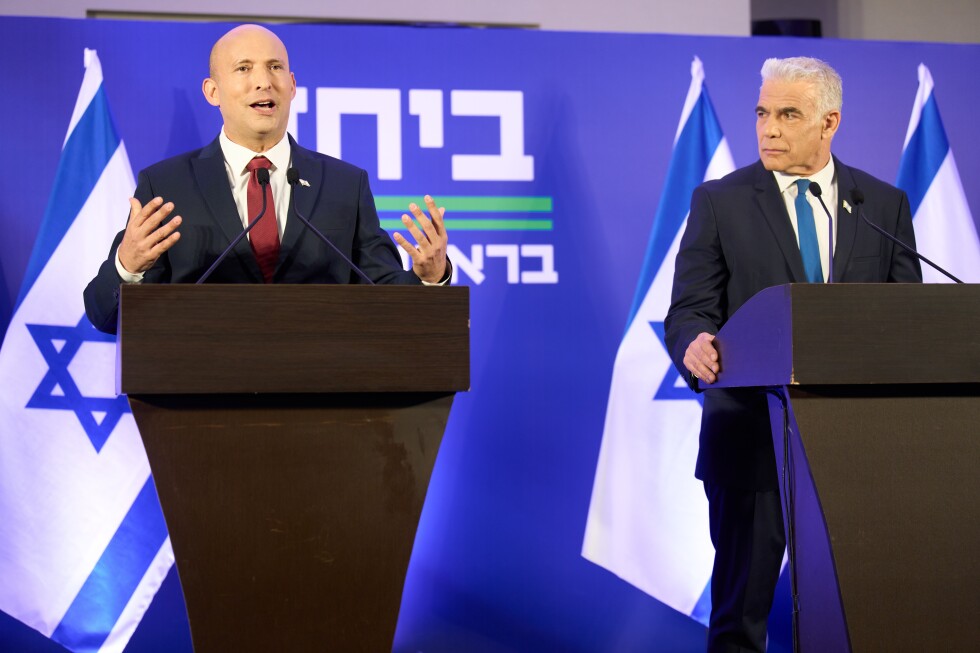
Naftali Bennett and Yair Lapid, who previously formed a historic coalition government in 2021 that temporarily ended Netanyahu’s 12-year reign, plan to merge their parties into a single faction headed by Bennett. The alliance represents what they describe as a partnership bridging Israel’s center and right-wing political camps.
“This country needs unity like air to breathe,” Lapid told supporters during the announcement, urging Israel’s political center to rally behind Bennett. The move comes at a critical moment in Israeli politics, as the country continues to grapple with the aftermath of the October 7, 2023 Hamas attack and the ongoing war in Gaza.
Bennett wasted no time outlining key priorities, stating that if elected, his government would immediately establish a state commission of inquiry into the Hamas attack that triggered the current conflict. This issue has been particularly contentious for Netanyahu, who has faced mounting criticism over intelligence and security failures related to the deadliest attack in Israel’s history.
Public calls for a formal inquiry into the October 7 attack have grown louder in recent months, with many Israelis demanding accountability for how Hamas militants were able to breach border defenses and carry out such a devastating assault.
The two leaders have a history of successful, if brief, cooperation. Their 2021 coalition arrangement saw Bennett serve as prime minister for the first year before the government fractured. Lapid then held the position as caretaker prime minister for six months until elections returned Netanyahu to power.
While Bennett took a hiatus from politics after their government collapsed, Lapid has remained active as Israel’s opposition leader, consistently challenging Netanyahu’s policies and leadership.
The alliance is particularly notable given the men’s ideological differences. Bennett, an Orthodox Jew, holds hardline views regarding Palestinians and security matters, while Lapid, who is secular, is generally viewed as more moderate on these issues. Despite these differences, their previous working relationship appears to have created a foundation of mutual trust.
“We have been through a great deal together. We have made difficult decisions together. We know we can count on one another,” Lapid emphasized during the announcement, highlighting their pragmatic approach to governance despite differing worldviews.
Political analysts view this alliance as an attempt to unify Israel’s fragmented opposition, which has struggled to present a cohesive alternative to Netanyahu’s leadership. The opposition landscape includes parties from across the political spectrum whose primary commonality has been opposition to Netanyahu personally rather than shared policy positions.
The timing of this political realignment comes during a period of intense national crisis, with Israel facing security challenges on multiple fronts and growing international scrutiny over its military operations in Gaza. Domestic tensions have also increased, with regular protests over the government’s handling of hostages held by Hamas and broader war strategy.
While no election date has been officially set, Israeli political observers anticipate a vote later this year. Recent polling has shown fluctuating support for Netanyahu’s coalition, with public opinion shifting in response to developments in the ongoing conflict.
The Bennett-Lapid alliance represents the most significant challenge to date for Netanyahu’s current government, though it remains to be seen whether they can expand their coalition to include other opposition parties necessary to secure a parliamentary majority.
Fact Checker
Verify the accuracy of this article using The Disinformation Commission analysis and real-time sources.

10 Comments
I’m curious to see how Bennett and Lapid’s partnership will be received by the center and right-wing camps. Unity is crucial, but they’ll need to find common ground on divisive issues.
This is a high-stakes moment for Israeli politics. Voters will be weighing which vision and leadership team can best navigate the country through the current turmoil and instability.
The stakes are high, and voters will be looking for bold leadership and pragmatic solutions to the country’s pressing issues. This alliance between Bennett and Lapid could be a game-changer if they can capitalize on the public’s desire for unity and change.
The aftermath of the Hamas attack and the ongoing conflict in Gaza are clearly key issues that will shape this election. Voters will be looking for strong leadership and solutions to these complex challenges.
Agreed. A state commission of inquiry could help shed light on the intelligence failures and security lapses that led to the attack.
It will be interesting to see how this new political partnership evolves and whether it can successfully challenge Netanyahu’s long-standing grip on power in Israel.
While the details of Bennett and Lapid’s alliance remain to be seen, their commitment to a state commission of inquiry is a promising step towards accountability and transparency.
Absolutely. Investigating the intelligence and security failures around the Hamas attack is crucial for restoring public trust and charting a path forward.
The convergence of former political rivals like Bennett and Lapid is an intriguing development. It reflects the pressing need for a united front to address Israel’s pressing security and political challenges.
This is an interesting development in Israeli politics. It will be important to see if Bennett and Lapid can bridge the divides and present a coherent alternative to Netanyahu’s leadership.