


Listen to the article
Southeast Asian Leaders to Issue Plan Upholding International Law Amid Middle East Tensions
Southeast Asian leaders are preparing to unveil a comprehensive contingency plan that emphasizes international law, sovereignty, and freedom of navigation during their annual summit in Cebu, Philippines. The declaration, to be released Friday, could be interpreted as a subtle critique of actions by the United States, Israel, and Iran in the ongoing Middle East conflict, which has created significant ripple effects throughout the Southeast Asian region.
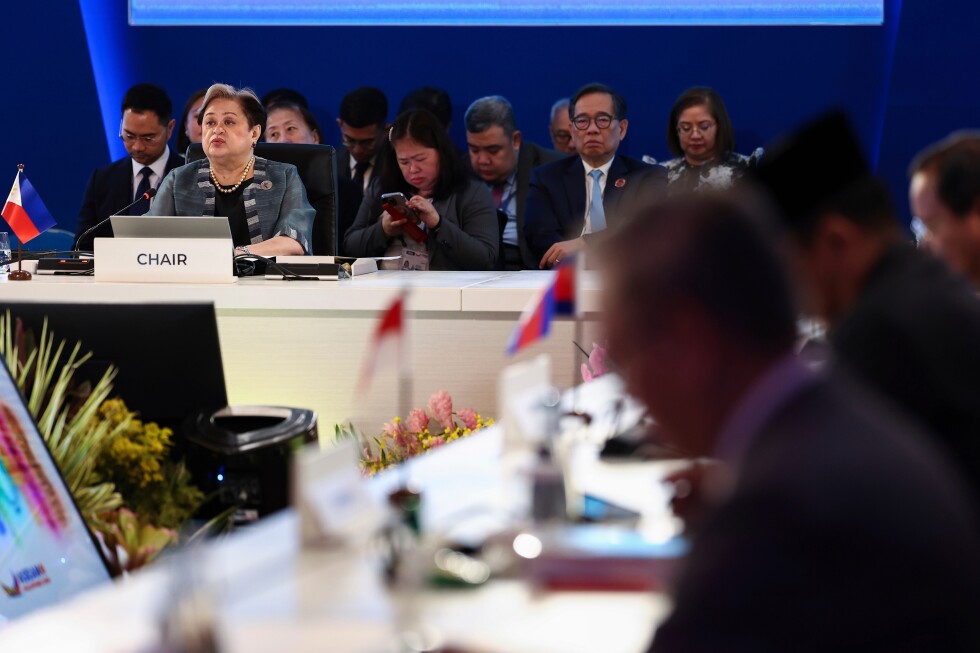
The Association of Southeast Asian Nations (ASEAN) summit, hosted by Philippine President Ferdinand Marcos Jr., will primarily address energy security, food supply chains, and the protection of over one million Southeast Asian workers and seafarers currently stationed in the Middle East. Marcos has opted for a more subdued gathering this year, eschewing traditional ceremonial elements in recognition of challenging global economic conditions.
“We emphasized the importance of upholding international law and ensuring that regional cooperation remains anchored in dialogue, trust and respect for sovereignty,” states the draft declaration obtained by The Associated Press. The document further emphasizes the need to “maintain open, transparent and predictable markets as well as secure and open sea lanes, and ensure freedom of navigation.”
The Middle East conflict has directly impacted ASEAN nations on multiple fronts. Several workers from the region, including two from the Philippines, have lost their lives in the ongoing hostilities. Thousands more have either returned home voluntarily or been evacuated by their governments as the situation deteriorated.
Economic concerns loom large over the summit discussions. The Asian Development Bank warned in March that prolonged disruptions from the Middle East conflict could severely hamper growth and trigger inflation across Asia and the Pacific. The region’s heavy dependence on Middle Eastern oil and gas makes it particularly vulnerable to supply chain disruptions and price volatility.
ASEAN’s proposed contingency plan outlines several concrete actions, including the ratification of an agreement to facilitate coordinated emergency fuel sharing, development of a regional power grid, diversification of crude oil sources, promotion of electric vehicles, and exploration of new energy technologies, including civilian nuclear power.
The plan also calls for “a possible ASEAN crisis communication and coordination protocol to ensure a coherent, timely and coordinated regional response to crises” – a significant step for a region known for its cautious diplomatic approach.
Southeast Asia represents a complex geopolitical landscape, home to approximately 680 million people across diverse economies at various stages of development. The region faces numerous internal challenges, including long-standing territorial disputes involving China, Myanmar’s five-year civil war following the military coup, and recent border tensions between Thailand and Cambodia.
Despite these internal issues, ASEAN leaders have expressed grave concern about the global economic fallout from the Middle East conflict and its endangerment of their citizens working abroad. The emphasis on international law and freedom of navigation in their declaration reflects the region’s strategic interests as a critical nexus of global shipping lanes and maritime trade.
ASEAN consists of ten member states: Brunei, Cambodia, Indonesia, Laos, Malaysia, Myanmar, the Philippines, Singapore, Thailand, and Vietnam. East Timor was accepted as a full member in October 2023, though its formal integration process continues.
As global tensions mount and economic uncertainties persist, this year’s ASEAN summit represents a critical opportunity for Southeast Asian nations to strengthen regional cooperation and resilience in the face of external pressures and challenges emanating from conflicts far beyond their borders.
Fact Checker
Verify the accuracy of this article using The Disinformation Commission analysis and real-time sources.

14 Comments
With the potential for energy and food supply chain disruptions, ASEAN’s contingency planning is a responsible move. Upholding international law and freedom of navigation will be vital for their member states.
ASEAN’s emphasis on dialogue, trust and respect for sovereignty seems like a prudent approach given the complex geopolitical dynamics in the Mideast. Protecting their regional interests and workers should be the top priority.
Agreed. ASEAN is wisely taking a balanced, diplomatic position to avoid getting entangled in the Mideast conflicts. Maintaining regional stability is crucial, especially with so many migrant workers at risk.
ASEAN’s focus on upholding international law and freedom of navigation is an important counterweight to the aggressive actions we’ve seen in the Mideast. Maintaining regional cooperation will be critical.
Absolutely. ASEAN’s principles of non-interference and respect for sovereignty provide a stabilizing influence amidst the Mideast turmoil. Their contingency planning is a responsible regional approach.
I’m curious to see how ASEAN’s declaration on the Mideast conflict will be received internationally. Emphasizing dialogue, trust and respect for sovereignty seems like a pragmatic regional approach.
Agreed. ASEAN is wisely taking a balanced, diplomatic stance to avoid getting drawn into the geopolitical tensions. Maintaining regional stability should be their top priority.
With ASEAN’s large migrant worker population in the Middle East, it’s understandable they would want to proactively address the potential impacts on energy, food and labor. Their contingency plan sounds prudent.
Interesting to see ASEAN leaders taking a diplomatic approach to the ongoing Middle East conflicts. Upholding international law and regional cooperation will be crucial given the economic and human impacts on Southeast Asia.
Agreed. ASEAN’s emphasis on sovereignty and freedom of navigation aligns with their longstanding regional principles. This could help mitigate spillover effects from the Mideast tensions.
As a major commodity exporter, Southeast Asia will be closely watching energy and food supply chains amid the Mideast turmoil. ASEAN’s contingency plan could help protect regional interests and workers in the region.
Absolutely. With so many Southeast Asian migrant workers in the Middle East, ASEAN needs to prioritize their safety and well-being during these unstable times.
It will be interesting to see how ASEAN’s Mideast declaration is received globally. Their stance on international law and regional cooperation could help mitigate economic and security risks for Southeast Asia.
It’s smart of ASEAN to avoid overt criticism and instead focus on upholding international law and sovereignty. A more subdued summit reflects the challenging global economic conditions they’re navigating.