


Listen to the article
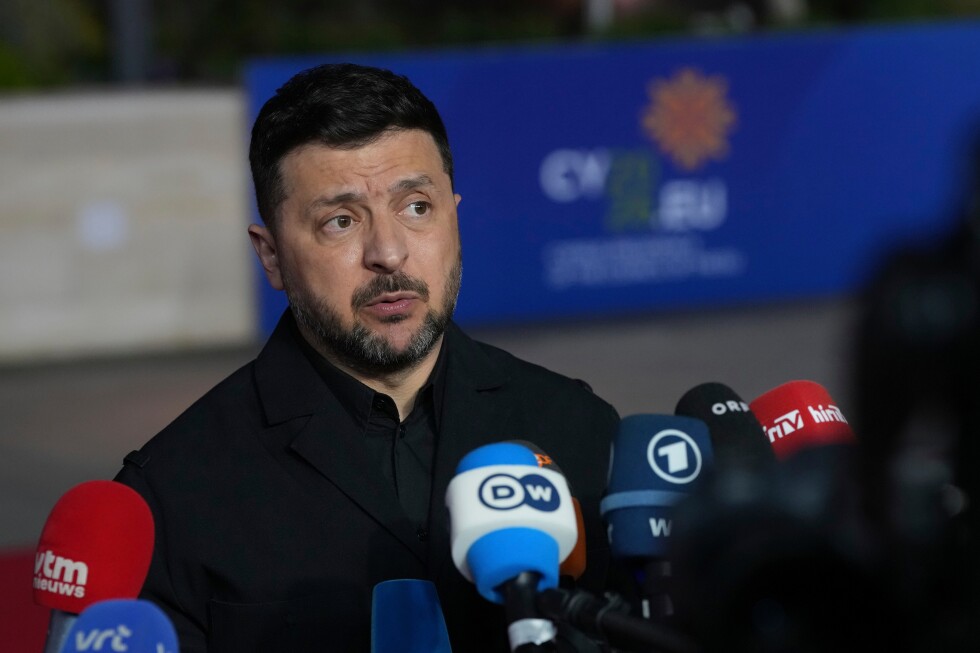
A shipment of Ukrainian cash and gold valued at approximately $82 million, seized by Hungarian authorities earlier this year, has been returned to Ukraine’s state-owned Oschadbank, Ukrainian President Volodymyr Zelenskyy announced Wednesday.
The seizure occurred on March 5 when Hungarian counter-terrorism forces detained two armored vehicles transporting the valuables through Hungarian territory. The incident sparked significant outrage in Ukraine, with officials accusing Prime Minister Viktor Orbán’s government of illegal action and using the seizure as a political tool during his reelection campaign.
“I am grateful to Hungary for its constructive approach and civilized step,” Zelenskyy wrote on social media. “I thank everyone on Ukraine’s team who fought for a fair decision and defended the interests of our state and our people.”
The return of the assets marks what Zelenskyy described as “an important step in relations with Hungary,” following Orbán’s defeat in recent parliamentary elections. The landslide victory for the opposition center-right Tisza party has raised hopes in Kyiv that Hungary will adopt a less antagonistic stance toward Ukraine.
When Hungarian authorities initially seized the shipment, they cited suspicions of money laundering. Orbán ordered a 60-day custody period while Hungary’s tax authority conducted an investigation into the $40 million and 35 million euros in cash, along with 9 kilograms (19.8 pounds) of gold.
The Ukrainian bank employees accompanying the shipment were detained by Hungarian authorities for more than 24 hours before being expelled from the country. In total, seven Ukrainian nationals were removed from Hungary as part of the operation.
Ukrainian officials maintained that the shipment represented a routine transfer of assets between state banks. They accused Orbán’s government of using the seizure as leverage to pressure Ukraine into restoring Russian oil shipments through the Druzhba pipeline, which had been damaged by a Russian drone strike.
The incident unfolded against the backdrop of already strained relations between the neighboring countries. Hungary and Ukraine had been locked in a bitter dispute over Hungary’s access to Russian oil via the pipeline that crosses Ukrainian territory.
Orbán, whose government has maintained closer ties with Moscow than other European Union members, ordered his tax authority to investigate not only the origin and destination of the shipment but also to determine “possible links to criminal or terrorist organizations” among the expelled Ukrainians.
In a controversial move that further strained diplomatic relations, Orbán suggested—without providing evidence—that the shipment may have been intended to fund his primary political opponent, the Tisza party, which ultimately defeated him in last month’s election with a two-thirds parliamentary majority.
The seizure was also connected to broader European tensions over support for Ukraine. Orbán’s government had previously blocked a substantial €90 billion ($106 billion) European Union loan package to Ukraine, citing the interruption of Russian oil flows via the Druzhba pipeline as justification.
However, once those oil flows resumed following Orbán’s electoral defeat, Hungary lifted its veto, allowing the critical financial assistance to proceed. This sequence of events highlights how energy politics and regional power dynamics have complicated European unity in supporting Ukraine throughout its conflict with Russia.
The return of the assets signals a potential thaw in Hungarian-Ukrainian relations, which have been particularly frosty during Orbán’s tenure. Political analysts suggest that Hungary’s incoming government may seek to realign the country more closely with mainstream European positions on Ukraine and distance itself from the pro-Russian stance that characterized Orbán’s administration.
Hungary’s tax authority has not yet publicly commented on the resolution of the case or the findings of its investigation.
Fact Checker
Verify the accuracy of this article using The Disinformation Commission analysis and real-time sources.

10 Comments
I appreciate Ukraine’s diplomatic efforts to resolve this matter constructively with Hungary. Building mutual trust and respect between nations is crucial during these complex geopolitical times.
This incident underscores the importance of clear, transparent, and consistent policies when it comes to the cross-border movement of valuable commodities like cash and gold.
I’m curious to learn more about the circumstances that led to the initial seizure of these Ukrainian assets by Hungary. Were there legitimate security concerns or was this more of a political move?
Good question. The article suggests this may have been a political move by the previous Hungarian government, but more details would be helpful to fully understand the situation.
While it’s good to see the assets returned, I hope this serves as a lesson for all countries to prioritize international cooperation and the rule of law when dealing with sensitive economic matters.
The return of these assets is a positive development, but it’s important that Ukraine continues to vigilantly protect its economic interests and resources moving forward.
This incident highlights the importance of respecting national sovereignty and following proper legal procedures when it comes to the movement of valuable assets across borders.
Absolutely. Transparent and lawful processes are critical to maintain trust and stability between nations.
It’s good to see Ukraine recovering these seized assets. Maintaining strong international relations and economic cooperation is crucial during these challenging times.
Agreed. The return of the $82M in cash and gold is an important step forward in Ukraine-Hungary relations.