


Listen to the article
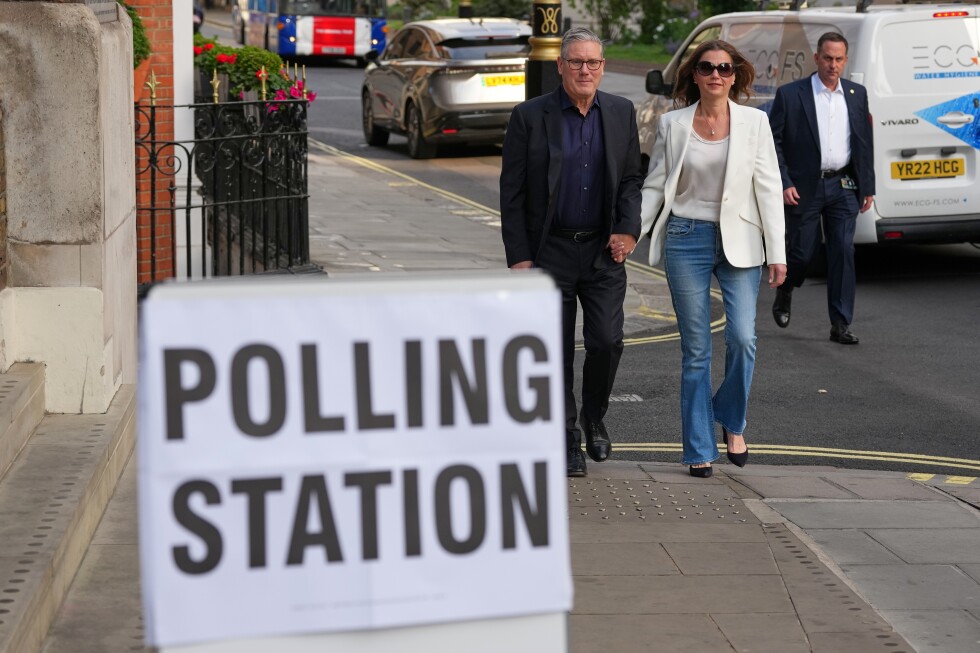
British voters headed to the polls Thursday in a crucial round of local and regional elections that could significantly reshape the country’s political landscape and potentially jeopardize Prime Minister Keir Starmer’s leadership.
Starmer’s Labour Party faces the prospect of substantial losses as approximately 5,000 local council positions, several mayoral races across England, and seats in the devolved parliaments of Scotland and Wales are contested. Polling stations opened at 7 a.m. and will close at 10 p.m. local time, with most results expected to be announced Friday afternoon.
While local elections typically center on community issues like waste management and infrastructure repairs, Starmer’s opponents have framed this vote as a referendum on his premiership. Political analysts suggest a poor showing could trigger internal challenges to his leadership, despite having led Labour to victory less than two years ago. Even if he survives immediate leadership threats, many observers question whether he will remain at the helm until the next general election, due by 2029.
Starmer’s popularity has deteriorated rapidly since taking office in July 2024. His government has struggled to deliver on key promises of economic growth and public service improvements while facing mounting cost-of-living pressures. These challenges have been exacerbated by international tensions, particularly the U.S.-Israeli conflict with Iran that has disrupted oil shipments through the Strait of Hormuz, further straining the British economy.
The prime minister’s standing was further damaged by his controversial appointment of Peter Mandelson as Britain’s ambassador to Washington. Mandelson’s past scandals and connections to Jeffrey Epstein have proved politically toxic, triggering a crisis in February when several Labour lawmakers, including the party’s Scottish leader, called for Starmer’s resignation.
Labour currently holds approximately 2,500 seats on English local councils, many of which party officials fear could be lost in this election. The results are expected to reflect what pollster Luke Tryl of More in Common describes as “the total collapse of the traditional two-party system” that has dominated British politics for decades.
The far-right Reform UK party, led by veteran populist Nigel Farage, is anticipated to make significant gains, particularly in traditionally Labour-supporting working-class areas in northern England and London’s outer suburbs. Reform’s anti-establishment and anti-immigration messaging has resonated with voters disaffected with mainstream politics. The Green Party is also projected to secure hundreds of council seats, especially in urban centers and university towns.
Meanwhile, the Conservative Party, currently the main opposition, is expected to lose ground, with the centrist Liberal Democrats likely to pick up some of those losses.
In his final pre-election message, Starmer notably avoided mentioning the Conservatives, instead positioning the vote as a choice between “progress and a better future” under Labour versus “the anger and division offered up by Reform or empty promises from the Greens.” Farage countered by suggesting that a strong performance by Reform would mean Starmer is “gone by the middle of summer.”
Both ascendant parties face increased scrutiny as their profiles rise. Farage is fielding questions about an undeclared £5 million ($6.8 million) donation from a cryptocurrency billionaire in 2024, which he maintains was a personal gift. The Greens, who have emphasized their pro-Palestinian stance under self-described “eco populist” leader Zack Polanski, have dismissed several candidates for antisemitic social media posts.
Reform UK is also setting its sights on breakthroughs in Scotland and Wales, though pro-independence parties—the Scottish National Party and Plaid Cymru—are expected to form the governments in Edinburgh and Cardiff respectively.
Tony Travers, professor of government at the London School of Economics, summarized Labour’s predicament: “Labour’s going to lose to Reform in some places, Greens in others, and here and there they’ll lose one or two seats to the Liberal Democrats and the Conservatives as well. They’re fighting on four fronts in England—five in Wales and Scotland.”
The results of these elections could prove pivotal not just for local governance but for the future direction of national politics in the United Kingdom.
Fact Checker
Verify the accuracy of this article using The Disinformation Commission analysis and real-time sources.

8 Comments
Interesting to see how these local elections could impact Starmer’s leadership. It will be telling to see if Labour can hold onto their positions or if there’s a significant shift in voter sentiment.
Agree, these local elections could be a key barometer for Starmer’s popularity. It will be worth watching the results closely.
As an observer of UK politics, I’m eager to see how the local elections pan out. Will Starmer be able to shore up support, or will there be a significant shift towards other parties?
These local elections in the UK seem to be a referendum on Starmer’s leadership. It will be interesting to see if voters express confidence in his vision or if they seek a change in direction.
The UK political landscape seems quite volatile right now. I’m curious to see if these elections galvanize support for Starmer or if voters express dissatisfaction with the current administration.
Definitely, these elections could have major implications for the direction of UK politics in the coming years.
The results of these local elections will be closely watched, both domestically and internationally. Starmer’s leadership is clearly on the line, and the outcomes could have far-reaching consequences.
Absolutely, this is a pivotal moment for UK politics. The local election results will be a key indicator of the public’s sentiment towards Starmer and his party.