


Listen to the article
Dozens of passengers from a cruise ship battling a deadly hantavirus outbreak were allowed to disembark without contact tracing, nearly two weeks after the first fatality occurred onboard, according to statements from the ship operator and Dutch officials on Thursday.
Oceanwide Expeditions revealed that 29 passengers left the vessel on April 24, while the Dutch Foreign Ministry placed the figure at approximately 40 individuals. The passengers, representing at least 12 different nationalities, departed at the remote South Atlantic island of St. Helena, with the cruise company acknowledging two additional passengers whose nationalities remain unidentified.
This disclosure marks the first time the company has acknowledged that a significant number of potentially exposed individuals had disembarked the ship during the developing health crisis. The revelation raises serious concerns about international disease containment protocols and the potential for wider spread of the virus.
The outbreak first became apparent when a Dutch passenger died on April 11. According to previous statements from the cruise operator, the man’s body was removed from the ship at St. Helena, where his wife also disembarked. She subsequently flew to South Africa, where she later died, becoming the second fatality linked to the outbreak.
A third death has now been confirmed, bringing the total fatalities to three, with several other passengers reportedly ill. The situation has prompted health authorities across Europe and South Africa to launch urgent contact tracing efforts to locate potentially infected individuals who may have traveled to various countries after leaving the vessel.
Adding to concerns, Swiss health officials reported Wednesday that a male passenger who disembarked at St. Helena and returned to Switzerland has tested positive for hantavirus. Details about his precise travel route remain unclear, potentially complicating containment efforts.
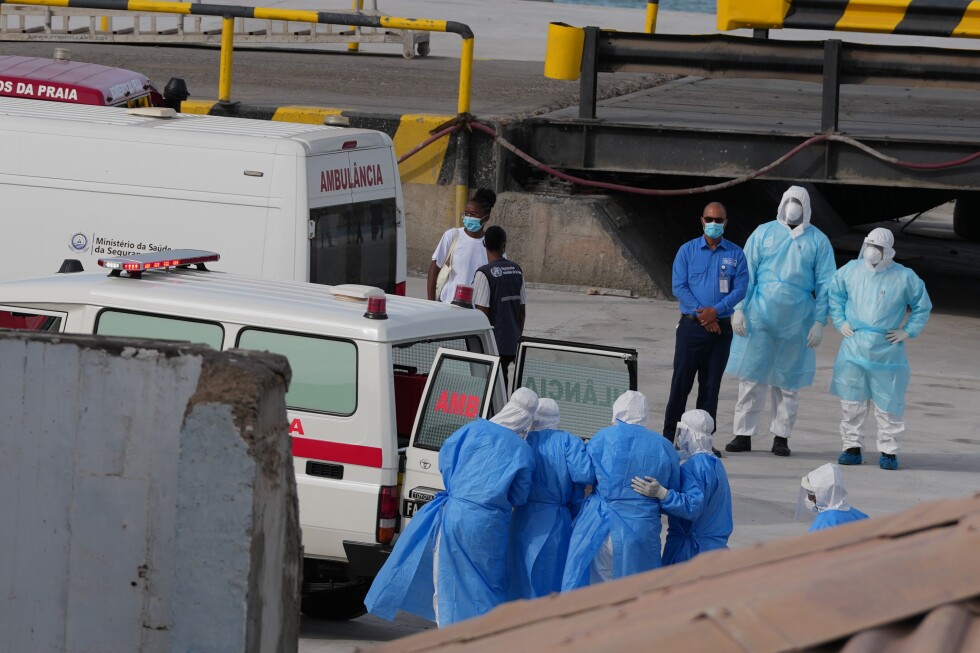
The outbreak has continued to affect those remaining aboard. A British passenger required medical evacuation to South Africa after the ship reached Ascension Island in the days following the St. Helena stop. More recently, three individuals, including the ship’s doctor, were evacuated near Cape Verde and transported to Europe for medical treatment on Wednesday.
Dutch authorities have not provided information about the current whereabouts of the other passengers who disembarked at St. Helena, further complicating international efforts to contain the virus.
Hantavirus infections, while rare in cruise ship settings, can be particularly dangerous. The virus is typically spread through contact with infected rodents or their droppings, urine, or saliva. Human-to-human transmission is possible but uncommon for most hantavirus strains, making this outbreak unusual from an epidemiological perspective.
The maritime tourism industry has faced significant health challenges in recent years, with the COVID-19 pandemic having previously brought cruise operations to a standstill worldwide. This hantavirus outbreak presents yet another public health challenge for an industry still recovering from previous disruptions.
Maritime health protocols typically require immediate reporting of infectious disease outbreaks onboard vessels and coordination with international health authorities. Questions remain about the timing of notifications and why passengers were permitted to disembark without appropriate contact tracing measures in place.
The incident highlights the unique challenges of managing public health emergencies in remote locations with limited medical infrastructure. St. Helena, with its isolated position in the South Atlantic Ocean between Africa and South America, has minimal healthcare facilities for handling serious infectious disease outbreaks.
International health organizations are likely to review the incident to identify potential improvements in emergency response protocols for vessels operating in remote waters. The case underscores the continuing importance of robust infectious disease monitoring and response mechanisms in the global travel and tourism sector.
Fact Checker
Verify the accuracy of this article using The Disinformation Commission analysis and real-time sources.

8 Comments
The lack of proper containment measures here is alarming. Hantavirus can be extremely dangerous, and the potential for wider spread due to this lapse in protocol is very worrying. Cruise companies need to be held to the highest standards when it comes to infectious disease outbreaks.
Hantavirus is no joke – it can be deadly. Letting potentially exposed passengers disembark without proper monitoring is extremely risky and irresponsible. The cruise company needs to be held accountable for this lapse in judgment.
While passenger safety is paramount, the cruise company’s handling of this outbreak raises many red flags. Transparent communication and stringent contact tracing are essential to mitigate the spread of hantavirus.
Absolutely. This type of lapse in protocol could have severe public health consequences if the virus spreads. Stricter regulations around infectious disease outbreaks on cruise ships may be warranted.
This is a concerning report. Hantavirus is a serious disease that can spread rapidly if proper containment protocols are not followed. Allowing potentially exposed passengers to disembark without tracing raises significant public health risks.
I agree, the cruise operator’s response seems quite problematic. Proper disease control measures must be taken to prevent further transmission.
This is a concerning development. Cruise lines must have robust outbreak response plans in place to protect both passengers and the broader public. Allowing people to simply disembark after a confirmed hantavirus death is extremely concerning.
I agree. Cruise companies should be required to follow strict disease control protocols, including mandatory quarantine and comprehensive contact tracing. Public health must be the top priority.