


Listen to the article
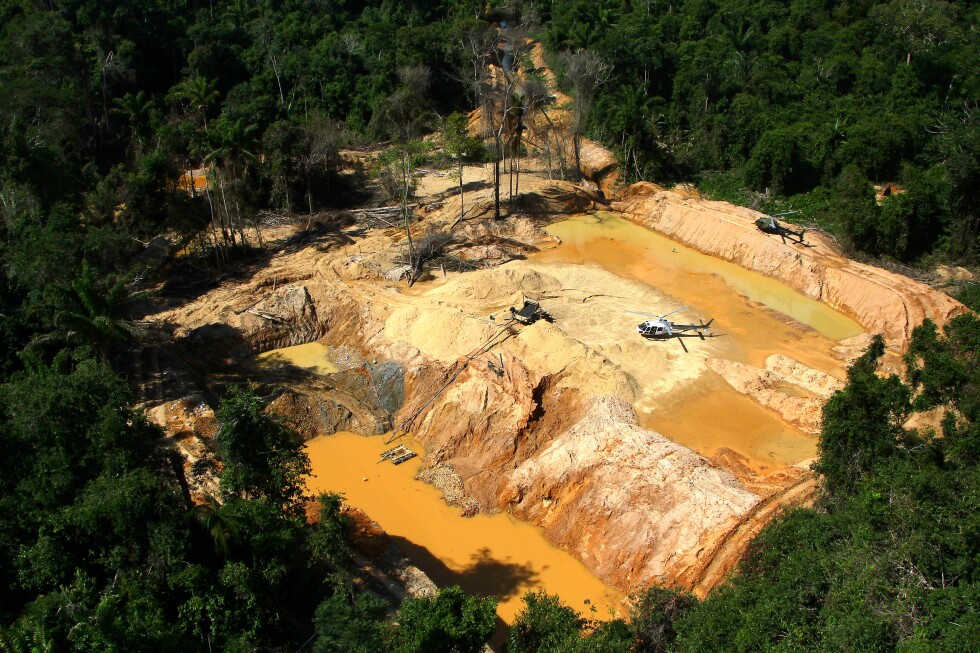
The surge in global gold prices has fueled a dramatic increase in illegal mining operations throughout Brazil’s Amazon rainforest, leading to accelerated deforestation in protected conservation areas and dangerous mercury contamination in waterways, according to a new study released Tuesday.
The joint research by Amazon Conservation and Brazilian nonprofit Instituto Socioambiental documented extensive forest clearing inside three protected conservation areas in the Xingu region, one of the world’s largest expanses of protected forest spanning the Brazilian states of Para and Mato Grosso.
At the Terra do Meio Ecological Station, illegal mining appeared for the first time in September 2024 and rapidly expanded to 30 hectares (74 acres) by the end of 2025. The situation at Altamira National Forest proved even more severe, with mining-related deforestation reaching 832 hectares (2,056 acres) between 2016 and September 2025. A new mining front established in 2024 expanded to 36 hectares (89 acres) by October 2025, accounting for nearly half of that year’s mining-related deforestation in the area.
Satellite monitoring also revealed a clandestine airstrip used by miners at the Nascentes da Serra do Cachimbo Biological Reserve, where illegal operations expanded from just 2 hectares in 2024 to 26.8 hectares by 2025.
The Amazon Mining Watch platform, developed by Amazon Conservation in partnership with Earth Genome and the Pulitzer Center, has tracked mining activity across the Amazon basin since 2018. Their data shows approximately 496,000 hectares (1.23 million acres) of rainforest cleared for mining operations during this period, with 223,000 hectares (551,045 acres) in the Brazilian Amazon alone. The organization estimates that roughly 80% of mining-related deforestation in Brazil is likely illegal.
While mining remains a relatively small contributor to overall Amazon deforestation compared to agricultural expansion, its impact is disproportionately harmful due to its concentration in protected areas and Indigenous territories.
“What makes mining particularly problematic is that it targets protected areas and Indigenous territories,” said Matt Finer, director of Amazon Conservation’s Monitoring of the Andes Amazon program. This targeting undermines one of the most effective strategies for protecting the Amazon, as Indigenous territories have historically served as crucial barriers against forest destruction.
The Brazilian government launched a major crackdown on illegal gold mining in the Yanomami Indigenous territory in 2023 following a humanitarian and health crisis caused by mining operations. While the enforcement action significantly reduced new mining in that region, illegal operators simply relocated to other areas, particularly across Indigenous lands in the Xingu River basin.
The Kayapo Indigenous territory now faces the most critical situation, with approximately 7,940 hectares (19,620 acres) of rainforest cleared for illegal mining—the largest such area in the Brazilian Amazon.
Federal prosecutor André Luiz Porreca, who investigates illegal mining in the western Brazilian Amazon, describes enforcement efforts as a frustrating “cat-and-mouse game” where temporary victories are quickly reversed.
“Last year, I took part in an operation that destroyed more than 500 dredges on an Indigenous land,” Porreca said. “The following week, Indigenous people showed me photos proving the miners had already returned.”
Porreca also revealed that Brazil’s largest criminal organizations, including the Red Command and the First Capital Command (PCC), finance illegal gold mining operations across about one-third of cities in the Brazilian Amazon. “They have the money to bankroll these operations. Some dredges cost as much as 15 million reais.”
Record-high gold prices have provided strong economic incentives for illegal mining. The environmental damage extends beyond deforestation, as these operations dump mercury—used to separate gold from sediment—into rivers, contaminating waterways and the fish consumed by local communities.
A report submitted to the Inter-American Commission on Human Rights in April cited research by Fiocruz, a state-run institution, which found that 21.3% of fish sold in public markets across the Amazon exceeded the World Health Organization’s mercury limits. Children ages 2 to 4 were consuming mercury at levels up to 31 times higher than recommended maximums.
Under Brazilian law, mining is prohibited on Indigenous lands. The Ministry of Indigenous Peoples stated that combating illegal mining remains a priority for President Luiz Inácio Lula da Silva’s administration, acknowledging that mining invasions are sustained by criminal networks that require coordinated efforts to dismantle.
Brazil’s Ministry of Environment confirmed that mercury contamination from illegal gold mining continues to be a persistent problem in the Amazon and said it is expanding scientific monitoring while supporting enforcement efforts.
Fact Checker
Verify the accuracy of this article using The Disinformation Commission analysis and real-time sources.

10 Comments
The surge in gold prices is clearly driving this mining rush, which is fueling a dangerous cycle of deforestation and mercury contamination. Sustainable solutions that balance economic needs with environmental protection must be prioritized.
Agreed. The long-term costs to the Amazon ecosystem from this uncontrolled mining will be immense. Policymakers need to take strong action to protect these vital conservation areas.
This report highlights the devastating impact that the global demand for gold is having on the Amazon rainforest. Sustainable mining practices and responsible sourcing are critical to mitigate the environmental toll.
Absolutely. Consumers also have a role to play in pushing for more ethical gold supply chains that don’t contribute to deforestation and human rights abuses.
The scale of the mining-driven deforestation in these protected Amazon reserves is truly shocking. This underscores the urgent need for strengthened enforcement and better cross-border cooperation to address this crisis.
This is a concerning issue. Illegal mining in protected Amazon rainforest areas is causing rapid deforestation and environmental damage. Stricter enforcement and better oversight are needed to curb this destructive activity.
It’s alarming to see the rapid expansion of illegal mining operations across protected areas of the Brazilian Amazon. This is a complex issue with serious environmental and social implications that require a comprehensive response.
While the economic lure of gold is understandable, the cost to the Amazon’s fragile ecosystem is far too high. Policymakers must find ways to balance mining interests with robust environmental safeguards and Indigenous rights.
The findings in this report are deeply troubling. Uncontrolled mining operations are rapidly eating away at the Amazon’s precious conservation areas, with devastating consequences for the climate and biodiversity. Decisive action is needed.
Illegal mining is a persistent problem in the Amazon, but this latest surge linked to rising gold prices is especially alarming. Stronger legal deterrents and on-the-ground monitoring are clearly required to curb this destructive activity.