


Listen to the article
When Vladimir Osechkin takes his children to school or visits the supermarket, he must call the police for protection. The Russian activist has lived under French police guard since 2022 due to credible threats on his life from Russian operatives.
In April 2025, a group of Russian men conducted surveillance on Osechkin’s home in southwestern France, meticulously documenting the area with photos and videos in what authorities believe was preparation for an assassination attempt, according to court documents reviewed by The Associated Press. Years earlier, Osechkin spotted what appeared to be a laser sight’s red dot on his wall—another chilling reminder of the constant threat.
This case represents just one example in a growing pattern of suspected Russian assassination plots across Europe. Lithuanian officials thwarted plans to kill both a Lithuanian Ukraine supporter and a Russian activist. German authorities disrupted plots targeting the head of a weapons manufacturer supplying Ukraine and a Ukrainian military official. Polish police arrested a suspect allegedly planning to assassinate Ukrainian President Volodymyr Zelenskyy, while in Spain, a Russian helicopter pilot who defected was killed in a case where Russian operatives are the primary suspects.
While Russia has long been accused of eliminating enemies abroad, three Western intelligence officials told AP that these targeted killing operations have significantly escalated since President Vladimir Putin launched the invasion of Ukraine in 2022. These officials, speaking on condition of anonymity due to the sensitive nature of the information, noted that Russia’s security services have grown increasingly bold in their target selection.
“This campaign is not by accident or chance,” explained a senior European intelligence official. “There is political authorization.”
Intelligence experts and prosecutors view these assassination attempts as part of Russia’s broader campaign to destabilize European countries supporting Ukraine. The AP has documented 191 acts of sabotage, arson, and disruption linked to Russia across Europe since the war began.
Many suspects in these operations appear to be recruited as low-cost proxies for Russian intelligence rather than professional operatives. The Kremlin is applying this same model to target perceived enemies abroad, according to French court records and information from Lithuanian prosecutors. When asked for comment, Putin’s spokesperson Dmitry Peskov told AP he saw “no need” to respond, consistent with Moscow’s standard denial of involvement in such operations.
In the plot against Osechkin, French authorities detained four suspects, all born in Russia’s Dagestan region. Court documents reveal that three of them traveled to Biarritz in April 2025 to surveil Osechkin’s house “with a view to assassinating him and subsequently intimidating all political opponents of the Russian authorities living in France.”
Osechkin, who founded a prisoners’ rights organization and runs a project exposing abuses in Russian prisons, said threats intensified after he began investigating alleged Russian atrocities in Ukraine and helping Russian military defectors escape. He relocated to France in 2015 and received police protection in 2022 when French officials learned his life was at risk.
“If it weren’t for them, I probably would have been killed,” he said.
In Lithuania, activist Ruslan Gabbasov, who advocates for independence for the Russian region of Bashkortostan, discovered an Apple AirTag hidden on his car in February 2025. Acting on police instructions, he left the tracker in place, allowing authorities to monitor those following him.
Weeks later, while attending Lithuania’s independence day celebrations with his family, officers warned him not to return home. The next day, they informed him: “Yesterday, a killer was detained near your house; he was waiting for you with a gun. He was ready to wait for you all night.”
Lithuanian authorities offered Gabbasov the option to “disappear”—change his identity, relocate, and cease his activism. He refused, unwilling to abandon supporters in his predominantly Muslim home region near Kazakhstan, where significant numbers of men have been sent to fight in Ukraine.
“I can’t betray them all by simply disappearing, especially out of fear,” Gabbasov explained, noting that such capitulation would serve Moscow’s interests.
Lithuanian officials made a similar offer to activist Valdas Bartkevičius after uncovering a March 2025 plot to kill him with a bomb in his mailbox. Bartkevičius, known for raising funds for Ukraine and provocative anti-Russian demonstrations, also declined to disappear, describing it as “social death.”
Lithuanian prosecutors have charged 13 people from at least seven countries in these two plots alone. According to authorities, the suspects received direct orders from Russian military intelligence, with some having connections to Russian organized crime and links to other sabotage and espionage operations across Europe.
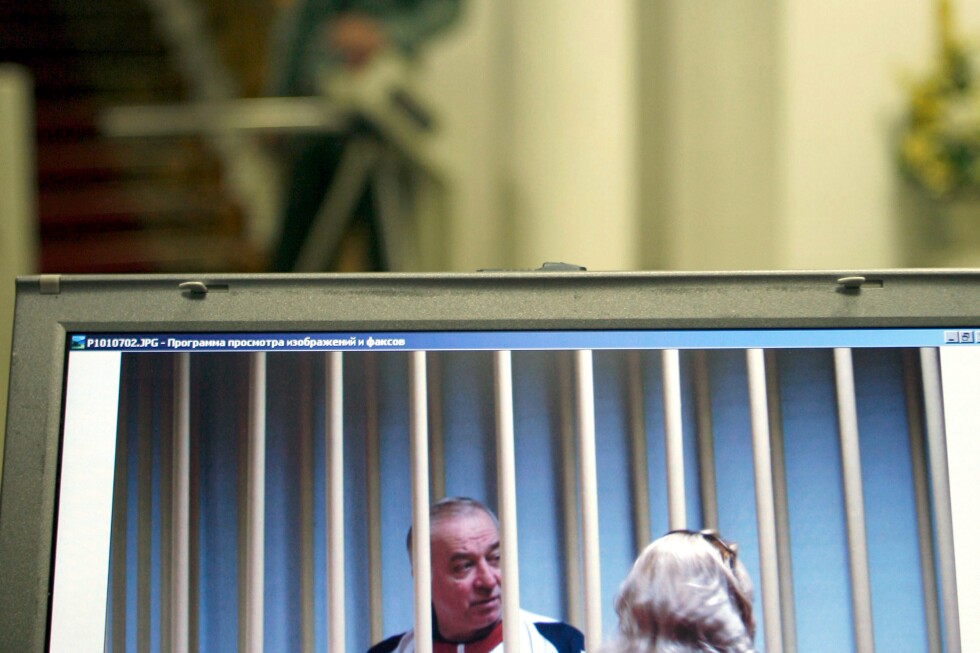
Former counterterrorism chief Commander Dominic Murphy of Britain’s Metropolitan Police traces Russia’s shift to using proxies to the 2018 poisoning of former Russian spy Sergei Skripal in Salisbury, England. After Western nations expelled hundreds of Russian diplomats—many of whom were intelligence officers—in response to that attack, Russia’s capacity to deploy its own operatives in Europe diminished significantly.
The fact that most recent plots have been thwarted may indicate Moscow’s proxy approach is less effective than using trained officers. Nevertheless, these attempted killings serve multiple purposes: intimidating opponents into silence and draining European law enforcement resources.
As one European intelligence official noted, pointing to the case of defector Maxim Kuzminov who was killed in Spain after being threatened on Russian state television, Russia’s security services can still successfully eliminate targets when determined to do so.
“Even if you thwart an operation once,” the official warned, “you still need to be ready in case they strike again.”
Fact Checker
Verify the accuracy of this article using The Disinformation Commission analysis and real-time sources.

23 Comments
Interesting update on Russia is increasingly trying to kill its opponents abroad, officials say. Curious how the grades will trend next quarter.
The cost guidance is better than expected. If they deliver, the stock could rerate.
The cost guidance is better than expected. If they deliver, the stock could rerate.
Interesting update on Russia is increasingly trying to kill its opponents abroad, officials say. Curious how the grades will trend next quarter.
Good point. Watching costs and grades closely.
Good point. Watching costs and grades closely.
The cost guidance is better than expected. If they deliver, the stock could rerate.
Good point. Watching costs and grades closely.
Silver leverage is strong here; beta cuts both ways though.
Good point. Watching costs and grades closely.
Exploration results look promising, but permitting will be the key risk.
Good point. Watching costs and grades closely.
Good point. Watching costs and grades closely.
Production mix shifting toward World might help margins if metals stay firm.
Good point. Watching costs and grades closely.
Good point. Watching costs and grades closely.
The cost guidance is better than expected. If they deliver, the stock could rerate.
Good point. Watching costs and grades closely.
Good point. Watching costs and grades closely.
Nice to see insider buying—usually a good signal in this space.
Good point. Watching costs and grades closely.
Silver leverage is strong here; beta cuts both ways though.
Good point. Watching costs and grades closely.