


Listen to the article
Philippine President Ferdinand Marcos Jr. Continues Official Duties Amid False Resignation Claims
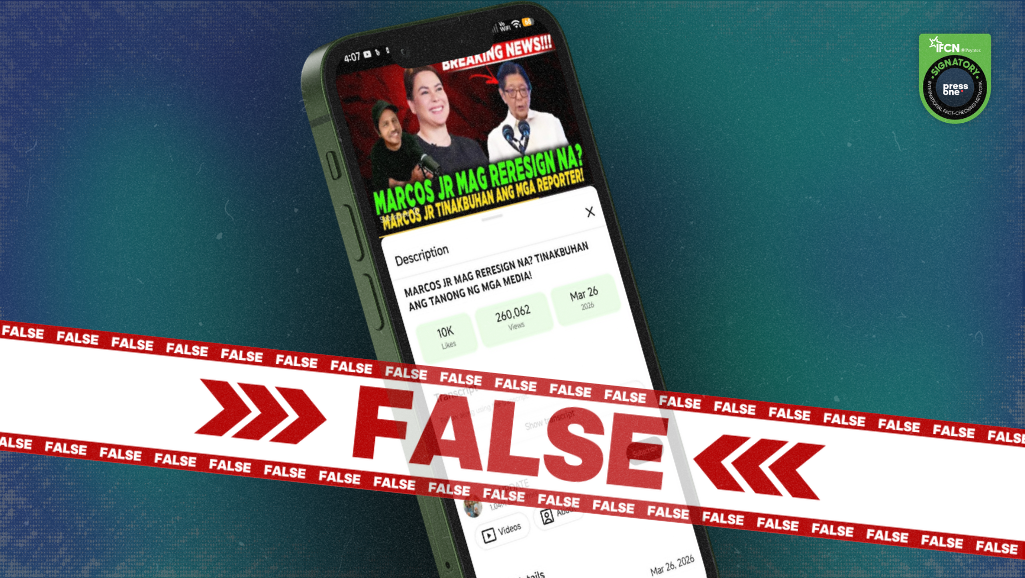
A misleading YouTube video circulating on social media has falsely claimed that Philippine President Ferdinand Marcos Jr. is resigning from office, prompting official denials from Malacañang Palace and raising concerns about the spread of misinformation.
The video, published by the YouTube channel “PH UPDATE,” featured clips of President Marcos addressing fuel price hikes and overseas worker safety, but carried the sensationalist headline: “MARCOS JR MAG RERESIGN NA? TINAKBUHAN ANG TANONG NG MGA MEDIA!” (Marcos Jr. resigning? Ran away from media questions!). The thumbnail also prominently displayed a “Breaking News” banner alongside photos of both President Marcos and Vice President Sara Duterte.
Despite these claims, President Marcos remains actively engaged in his official duties. On March 25, 2026, he signed Republic Act No. 12317 into law, which postpones the first regular elections in the Bangsamoro Autonomous Region in Muslim Mindanao (BARMM) until September 2026, a significant political development for the region.
Just one day earlier, the President led a public event distributing PHP 5,000 fuel subsidies to jeepney drivers, addressing the impact of ongoing oil price hikes on the public transportation sector. This initiative comes at a crucial time for Filipino commuters and drivers facing economic pressure from rising fuel costs.
The President’s international duties have also continued uninterrupted. On March 10, Marcos traveled to the United States on an official state visit, during which he addressed the United Nations General Assembly in New York, further demonstrating his active role in Philippine foreign policy.
Malacañang has explicitly denied rumors regarding both the President’s supposed resignation and claims of an impending Cabinet reshuffle. Press Officer Claire Castro dismissed these stories as “baseless” and characterized them as the work of “fake news peddlers” attempting to create political instability.
Political analysts note that such false claims emerge against a backdrop of persistent speculation about President Marcos’s health and reported tensions between his administration and Vice President Duterte. This political climate has created fertile ground for misinformation about potential leadership changes.
The false resignation video has already amassed over 250,000 views and thousands of comments, highlighting the rapid spread of misinformation on social media platforms. With more than a million subscribers, the channel behind the video represents a high-traffic conduit for potentially misleading content reaching a significant audience.
Media literacy experts recommend that citizens verify major government announcements through official channels, including the Official Gazette and verified government social media accounts. They warn against YouTube channels employing sensationalist headlines and unauthorized “Breaking News” banners designed to capture attention and drive engagement.
“A presidential resignation would be covered extensively by all major news networks in real-time,” noted one media analyst. “Citizens should be skeptical of ‘exclusive’ resignation claims that don’t appear on mainstream news outlets.”
This incident reflects a growing trend of political misinformation in the Philippines, where social media platforms have become battlegrounds for competing political narratives. Fact-checkers emphasize that distinguishing between authentic news and fabricated content remains crucial for maintaining an informed citizenry during politically sensitive periods.
As President Marcos continues his term in office, government communications officials have pledged increased vigilance against false information campaigns that could undermine public confidence in national institutions.
Fact Checker
Verify the accuracy of this article using The Disinformation Commission analysis and real-time sources.

9 Comments
This situation highlights the need for increased digital literacy and critical thinking skills among the public to identify and resist the spread of misinformation, especially on social media platforms. Fact-checking should be a routine part of consuming news and information.
You make a good point. Empowering citizens to be discerning consumers of information is crucial in the modern media landscape, where false narratives can spread rapidly. Strengthening media literacy is an important investment in the health of democracy.
This is quite concerning to hear about the spread of misinformation regarding the Philippine president’s status. It’s crucial that citizens have access to accurate, fact-based information from reliable sources, especially on important political matters.
Agreed. Misinformation can be very damaging, undermining public trust and causing unnecessary confusion. I’m glad to see the government is swiftly addressing these false claims.
This incident serves as a reminder of the importance of verifying information, especially when it comes to high-profile political figures and events. Relying on official sources and reputable news outlets is crucial to avoid spreading falsehoods.
It’s concerning to see how easily false claims can gain traction online, even when they are clearly contradicted by official statements and evidence. Vigilance and a commitment to truth-seeking are essential to maintain public trust in institutions.
I agree. The proliferation of misinformation is a serious challenge that requires a multi-pronged approach, involving media outlets, technology platforms, educators, and citizens working together to promote factual, responsible information-sharing.
It’s good that the Malacañang Palace has issued an official denial regarding the president’s supposed resignation. Maintaining transparency and combating the spread of disinformation is crucial for preserving democratic institutions.
Absolutely. Fact-checking and debunking false narratives is an important role that responsible media outlets and government bodies must fulfill to protect the integrity of the political process.