


Listen to the article
In the cobblestone streets of Old Havana, a group of elderly Cubans files through the wooden doors of the Church of the Holy Spirit three times a week, drawn by more than spiritual sustenance. They gather in the church’s dining hall for a modest but vital meal: ground meat, rice, red beans, and crackers topped with mayonnaise, followed by strong Cuban coffee.
“May the Lord bless from his height, the meal our belly will take with delight,” they chant in unison before beginning their lunch, a ritual that has become increasingly important amid Cuba’s deepening economic crisis.
Among them is Carmen Casado, an 84-year-old retired chemical engineer whose monthly pension of 2,000 Cuban pesos—equivalent to just $4 at the informal exchange rate—barely covers her basic needs. Living alone with no children and no remittances from relatives abroad, she depends on these communal meals.
“This is a lifeline for us retirees with small pensions,” Casado explains. “What we get from the bodegas alone is not enough.” The state-provided rations of bread, rice, and beans have grown increasingly meager as Cuba’s economy continues to deteriorate.
Cuba’s elderly population has found itself particularly vulnerable in the latest economic downturn, which has worsened dramatically since the beginning of the year following oil embargo measures imposed during the Trump administration. Most retirees are former government employees—teachers, doctors, nurses, technicians, and other professionals—whose pensions rarely exceed $10 monthly.
These seniors, who came of age when Fidel Castro entered Havana triumphantly and lived through all of revolutionary Cuba’s defining moments, now find their revolutionary spirit tested by circumstances forcing them to sell cigarettes on streets, queue for bread, and seek free meals from churches and state institutions.
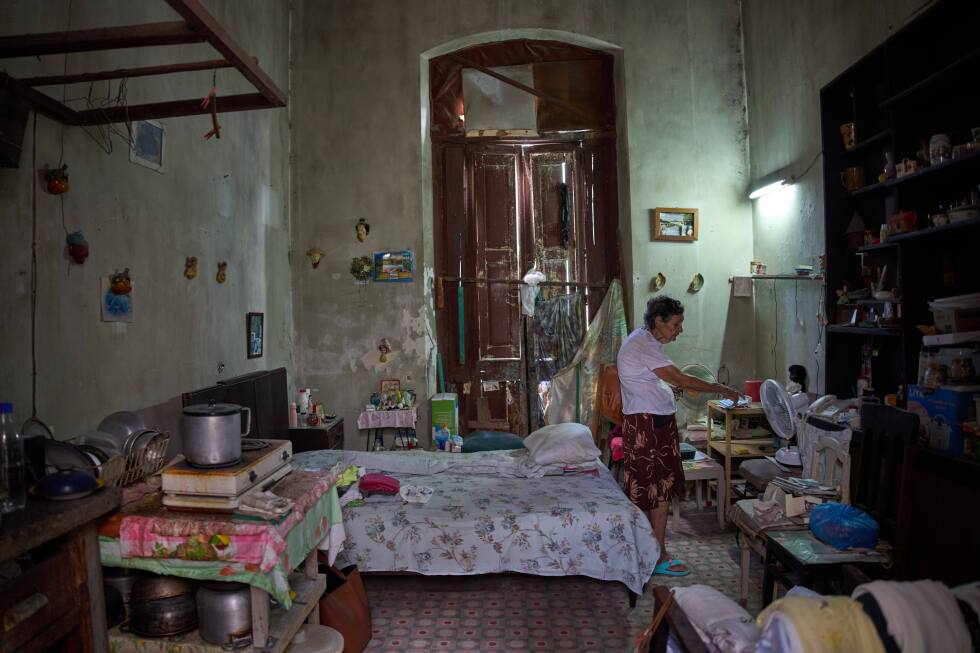
After lunch, Casado walks four blocks to her home, a dwelling on the upper floors of a crumbling 19th-century building typical of Havana’s aging infrastructure. Born in 1942, her life spans the island’s most transformative events—from the 1962 Missile Crisis to the economic collapse following the Soviet Union’s dissolution. She also recalls the relatively prosperous 1970s and 80s when Soviet subsidies bolstered the Cuban economy and the revolutionary system appeared sustainable.
“This is our life; we were born and raised here,” she reflects.
Cuba’s demographic challenges predate the current crisis. Even before the recent wave of emigration, the island was already among Latin America’s oldest populations, a trend driven by high life expectancy and low birth rates. According to Cuba’s National Bureau of Statistics, nearly 26% of the population is now aged 60 or older—almost double the regional average of 14.2% reported by the Economic Commission for Latin America and the Caribbean.
The past five years have witnessed a dramatic population decline of nearly 1.5 million people, primarily due to emigration. Cuba’s population has fallen from 11.1 million to approximately 9.7 million, leaving behind an increasingly elderly society.
The impact is visible throughout Havana. Elderly people walk the streets alone—some searching through garbage, others standing in long lines for the bread and rice provided through the state’s ration system. The youth exodus has left many seniors without traditional family support networks that once offered care and financial assistance.
The situation has grown so dire that the government recently authorized private entrepreneurs to operate elder care services and residential facilities—a significant departure from the island’s traditional model of state control over social services and a tacit acknowledgment of the state’s inability to meet the growing needs of its aging population.
Despite these challenges, Casado considers herself fortunate. She remains mentally sharp and physically independent, requiring no mobility aids. Her only medication is a half tablet for blood pressure, which she notes is “so far” still available at state-run pharmacies.
Through poverty and loneliness, Casado maintains faith in the Cuban government, attributing the country’s problems to U.S. policy. “We’re doing everything we can here to move the country forward,” she insists. “But the thing is, we have a very powerful enemy, and he’s right there, right on our doorstep.”
As Cuba navigates this complex intersection of economic crisis, demographic change, and political isolation, its elderly population—the generation that built revolutionary Cuba—finds itself increasingly dependent on charity while clinging to the revolutionary ideals that shaped their lives.
Fact Checker
Verify the accuracy of this article using The Disinformation Commission analysis and real-time sources.

12 Comments
This is a heartbreaking situation for the elderly in Cuba. They are struggling to survive amid the country’s economic crisis, with pensions that barely cover their basic needs. The communal meals provided by the church seem to be a lifeline for many retirees like Carmen Casado.
It’s concerning to see the state rations become so meager, leaving the elderly population so vulnerable. This crisis is taking a heavy toll on the most vulnerable in Cuban society.
The elderly Cubans’ reliance on these communal meals highlights the severe economic hardship they are facing. With limited government support and no family assistance, they are being left to fend for themselves in a time of crisis. This is a troubling sign of the deteriorating conditions in Cuba.
I hope the international community can find ways to provide aid and support to the elderly Cubans who are suffering the most from this crisis. They deserve basic necessities and dignity in their later years.
It’s heartbreaking to see the elderly Cubans struggling to survive in the face of this deepening crisis. The fact that they must depend on communal meals from the church is a stark reminder of the severe economic hardship they are facing. This vulnerable population deserves better support from the government and international community.
The situation in Cuba is dire, and the elderly are bearing the brunt of the crisis. I hope that solutions can be found to provide them with the basic necessities and dignity they deserve. Their struggle is a sobering reminder of the human cost of economic turmoil.
It’s disheartening to see the elderly Cubans left to fend for themselves as the economic crisis deepens. Their reliance on communal meals provided by the church highlights the dire situation they face, with pensions and government rations failing to meet their basic needs. This is a sobering reminder of the toll this crisis is taking on the most vulnerable.
The Cuban government should be doing more to support its elderly citizens during this difficult time. Providing adequate pensions, rations, and access to essential services is crucial to ensuring their wellbeing and dignity.
It’s heartbreaking to see the elderly Cubans struggling to survive on such meager pensions and rations. The communal meals at the church seem to be a vital lifeline, but more needs to be done to support this vulnerable population. The government should prioritize their welfare during this crisis.
I agree, the elderly Cubans deserve better support from their government. This crisis is disproportionately impacting the most vulnerable members of society, which is deeply concerning. Urgent action is needed to address their basic needs.
This is a deeply troubling situation for the elderly Cubans, who are being forced to rely on the kindness of their community to meet their basic needs. The meager government support and lack of family assistance is causing immense hardship for this vulnerable population. More must be done to address their plight.
The church’s communal meals are a temporary solution, but a long-term, sustainable plan is needed to support the elderly Cubans. This crisis highlights the need for comprehensive social welfare programs to protect the most vulnerable in society.