


Listen to the article
Alberta Government Launches Controversial Referendum Campaign Amid Constitutional Debate
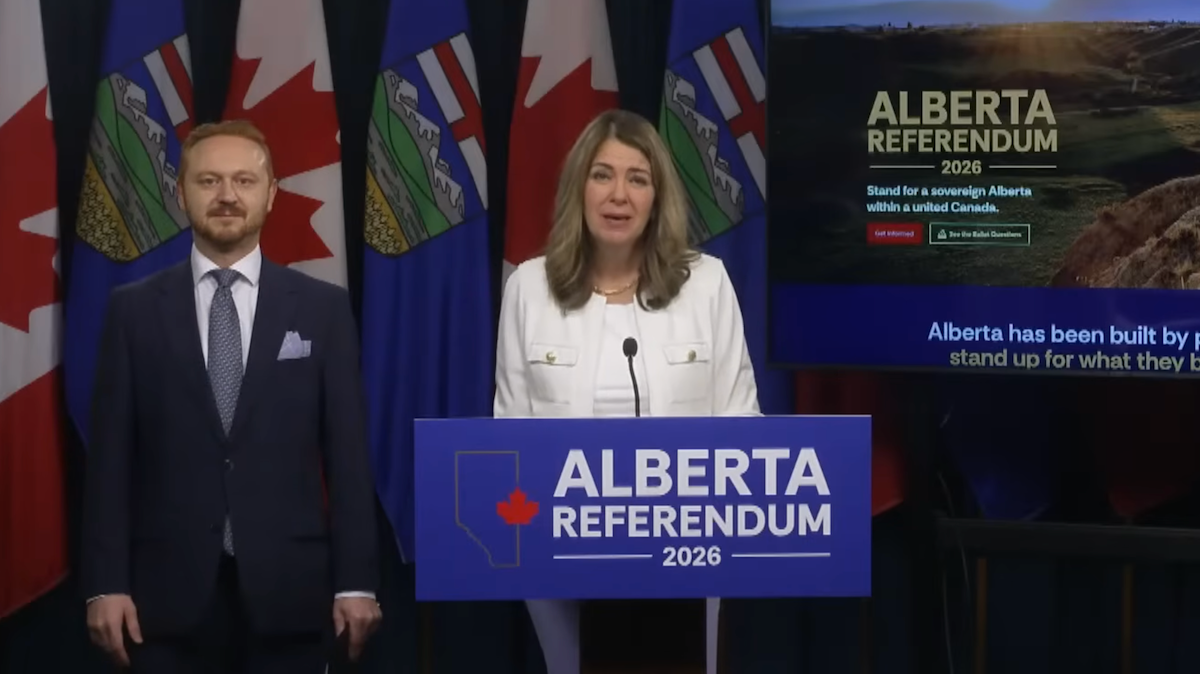
The United Conservative Party (UCP) government, led by Premier Danielle Smith, has initiated what critics call a propaganda campaign urging Albertans to vote “Yes” on a series of ballot questions related to constitutional and immigration issues scheduled for October 19.
The government’s announcement, presented as the launch of an informational website, appears to be part of a broader strategy with significant political implications. The site repeatedly encourages voters to “Stand for a sovereign Alberta within a united Canada,” revealing ambitions that extend beyond mere information sharing.
Considerable resources have evidently been invested in this campaign, which some observers view as an effort to undermine Canada’s federal structure. The website unveiled by Smith and Justice Minister Mickey Amery may represent only the beginning of a larger initiative.
Media coverage of the announcement has varied in tone, with The Globe and Mail describing it as a “lobbying campaign,” while CBC and Postmedia outlets adopted more neutral language like “information campaign.” Few outlets have directly challenged the government’s framing of the initiative.
According to the government, the nine questions slated for the October ballot emerged from recommendations by the Alberta Next Panel following “extensive consultations” with Albertans and subject matter experts. However, critics argue this characterization significantly distorts the panel’s process and findings.
Last summer’s Alberta Next Panel town halls, some observers note, were structured to guide participants toward supporting predetermined recommendations, including an Alberta Pension Plan and provincial police force. Despite efforts to ensure favorable outcomes, Albertans reportedly showed limited enthusiasm for some of the government’s priority initiatives.
The UCP appears to have selected the nine questions on immigration and constitutional matters strategically. The immigration questions appeal to the party’s base, while the constitutional items could potentially trigger the national constitutional crisis that aligns with the “Free Alberta Strategy” co-authored by the premier’s chief of staff, Rob Anderson.
Premier Smith acknowledged in her news conference that the questions were carefully crafted to gain majority support, saying, “We think we’ve done that initial culling of the questions to make sure that we found the ones that are likely to get majority support.”
Critics suggest the immigration questions unfairly blame newcomers for problems resulting from decades of neoliberal policies across Canadian governments. Meanwhile, the constitutional questions may serve as leverage for separatist rhetoric if other provinces reject Alberta’s proposals.
As political commentator Deirdre Mitchell MacLean noted, “The UCP doesn’t need ‘a mandate’ to work with other provinces to change the constitution.” This raises questions about why the government is using the referendum process rather than debating these initiatives in the Legislature.
Simultaneously, a separate petition campaign seeking to add a question about Alberta’s outright separation from Canada is approaching its May 2 deadline. The campaign requires approximately 178,000 signatures to place the question on the ballot alongside the government’s nine questions. Reports suggest Smith and the UCP have supported efforts to include this question.
The vote count process itself may generate controversy, as the UCP insists on using paper ballots with separate ballot boxes for each referendum question, potentially causing significant delays in results reporting after the October 19 vote.
Adding to concerns, foreign-influenced misinformation campaigns supporting Alberta separatism continue to spread online. The CBC has reported that three individuals in the Netherlands are behind YouTube channels that hired actors to create content promoting Alberta separation. Such activities are expected to intensify as the October vote approaches.
The referendum campaign represents a significant political gambit for the Smith government, with potential consequences for both provincial politics and Canada’s federal structure in the months ahead.
Fact Checker
Verify the accuracy of this article using The Disinformation Commission analysis and real-time sources.

16 Comments
This campaign raises valid questions about the appropriate use of public funds and the government’s role in informing the public. While the desire to engage citizens is understandable, the partisan nature of the messaging is troubling and could undermine the democratic process.
Well put. Governments should strive for transparency and objectivity when communicating with the public on critical issues. Taxpayer money should be used judiciously to empower citizens, not to sway them toward a predetermined outcome.
This taxpayer-funded campaign seems like a political move by the Alberta government to push its own agenda. While I appreciate the desire to inform voters, the partisan tone is concerning and could undermine democratic processes.
I agree, the language used in the campaign materials appears to favor a certain outcome rather than presenting balanced information. Voters should be able to make informed decisions without undue influence.
The Alberta government’s decision to launch this campaign raises questions about the appropriate use of public funds. Informing voters is important, but this seems more like a partisan effort to sway public opinion on sensitive constitutional issues.
You make a fair point. Taxpayer money should be used judiciously, and this campaign may blur the line between public information and political advocacy. Voters deserve unbiased facts, not a push toward a predetermined outcome.
While I appreciate the government’s desire to engage the public, the partisan tone of this campaign is concerning. Voters should have access to objective information to make their own informed decisions on important constitutional issues.
I agree. The government has a responsibility to uphold democratic principles and provide unbiased information, not use taxpayer funds to promote a specific political agenda. Maintaining impartiality is crucial for preserving the integrity of the electoral process.
The Alberta government’s decision to launch this campaign is concerning. While informing the public is important, the partisan tone and use of public funds for political messaging raise significant ethical and democratic questions. Voters deserve unbiased information to make their own informed decisions.
I agree completely. Governments have a responsibility to uphold democratic principles and maintain impartiality, not use public resources to advance their own political agendas. This campaign appears to be a concerning departure from those core principles.
While I understand the desire to engage the public on important issues, the tone of this campaign seems more focused on persuasion than education. I hope the government will strive for greater objectivity and transparency in its approach.
Agreed. Healthy democratic discourse requires balanced information from reliable sources, not what appears to be a partisan propaganda effort. The government should tread carefully to maintain public trust.
It’s important for the government to provide information to the public, but this campaign appears to be more about swaying opinion than educating voters. I hope the government will reconsider its approach and focus on objective, nonpartisan communication.
Well said. Governments should strive to empower citizens with factual information, not use public resources to advance their own political interests. Transparent, balanced communication is essential for a healthy democracy.
This campaign raises concerns about the use of public resources for political messaging. Voters should be able to access factual, unbiased information to make their own informed decisions on constitutional matters.
I share your concerns. The government has a responsibility to uphold democratic principles, not use taxpayer funds to push a particular agenda. Maintaining impartiality is critical for preserving the integrity of the political process.