


Listen to the article
For three years, Dr. Jamal Eltaeb faced harrowing decisions in a war-ravaged hospital in Sudan, choosing who might live or die with dwindling supplies and constant danger. As the orthopedic surgeon led Al Nao hospital in Omdurman, just outside Khartoum, many colleagues fled as the front line between Sudan’s army and paramilitary fighters inched closer. Eltaeb, however, remained.
“I weighed the options of staying here, and taking care of your patients and helping other people that need you as a skilled surgeon, rather than choose your own safety,” Eltaeb told The Associated Press in a recent interview.
His commitment exemplifies the resilience of countless Sudanese healthcare workers who continue providing critical care while global attention focuses on conflicts in the Middle East and Ukraine. Eltaeb has witnessed firsthand the human toll behind the statistics – tens of thousands killed and a healthcare system the United Nations warns is near collapse.
Nearly 40% of Sudan’s hospitals no longer function. Many facilities have been looted for equipment or repurposed as military bases. Al Nao remains one of the few operational medical centers in the Khartoum area, now back under army control.
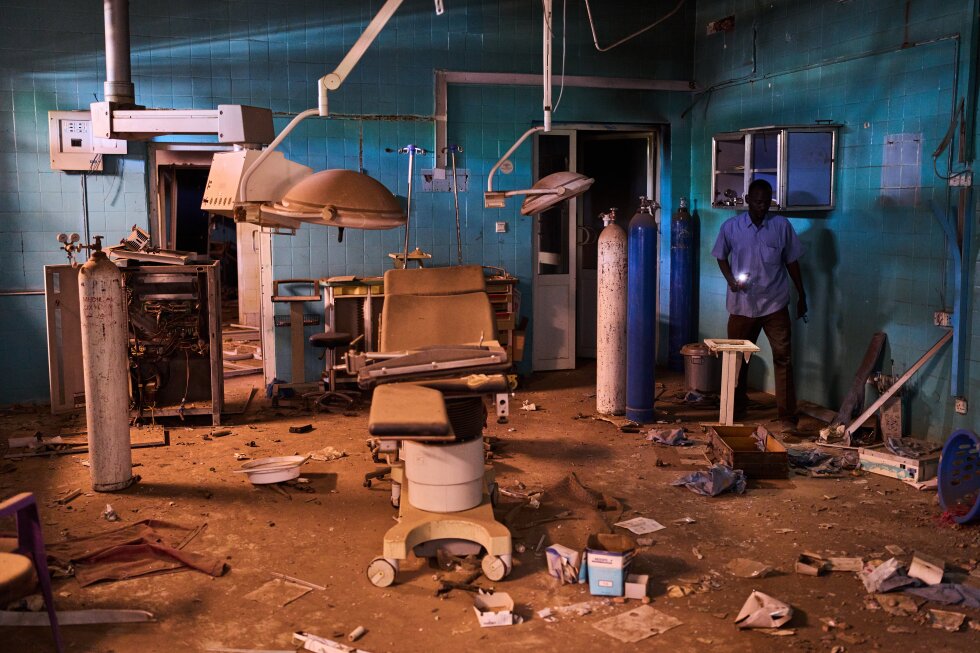
Walking through the complex, the 54-year-old doctor pointed out scars of violence – windows shattered by explosions, a courtyard where emergency tents once stood to handle mass casualties. “We were working everywhere, in tents, outside, on the floor, doing everything to save patients’ lives,” he recalled.
Eltaeb’s extraordinary dedication earned him the $1 million Aurora Prize for Awakening Humanity, awarded to individuals who risk their lives saving others. He distributed portions of the prize to medical and humanitarian organizations worldwide.
Before the conflict erupted in April 2023, Al Nao was a relatively quiet facility with its nearly 100 beds often unoccupied. When the Rapid Support Forces (RSF) paramilitary group captured parts of Khartoum, wounded civilians flooded in seeking care. Eltaeb’s primary hospital closed early in the fighting, prompting his move to Al Nao. By July, he found himself in charge as most staff fled.
With a skeleton crew of employees and volunteers, Eltaeb struggled to maintain operations. Power outages lasted weeks, with the facility depending on military-supplied fuel for generators. Essential medicines like antibiotics and painkillers quickly ran out.
The dangers intensified in August when the hospital was targeted for the first time. “From that moment, we knew that we are a target… And from that time, they didn’t stop targeting us,” Eltaeb said. The RSF would strike the facility three more times in the months that followed.
Some days tested the limits of human endurance. Following an attack on a nearby market in late 2024, Eltaeb’s team attempted to treat over 100 wounded people simultaneously. Eight died despite their efforts. “You choose… as if you can choose who is going to live and who is going to die,” he explained.
That same day, facing dire shortages, Eltaeb made the wrenching decision to amputate children’s limbs using only local anesthetic because they were bleeding heavily without time for proper surgical preparation. He performed these procedures on siblings – removing an arm and leg from a 9-year-old boy and a leg from his 11-year-old sister.
The hospital’s survival depended on extraordinary community support. Volunteers solicited supplies through social media, with local pharmacists providing keys to their shuttered shops, allowing access to medications at no cost. Nazar Mohamed, one volunteer, spent months navigating the dangerous streets of Omdurman, often by bicycle, delivering critical supplies as explosions echoed nearby.
International assistance came from organizations abroad and a network of Sudanese doctors overseas, who provided remote guidance on managing mass casualties and working with limited resources. The remaining staff improvised continuously, fashioning beds and crutches from wood and using clothing instead of gauze for makeshift splints.
As fighting has shifted away from Khartoum, the hospital faces new challenges. Resource-constrained organizations that previously supported Al Nao have redirected assistance to areas currently experiencing more intense conflict. Eltaeb indicates they have sufficient funding through June for salaries and generator operations but will need approximately $40,000 monthly to maintain functionality.
Despite pledges of international support for Sudan’s reconstruction, there are concerns that escalating tensions with Iran might divert attention and resources, particularly from Gulf countries that have promised aid.
The situation at Al Nao, challenging as it is, represents one of the more optimistic scenarios in the region. Across town, Al Shaabi hospital remains in ruins after occupation by RSF forces. Its director, Dr. Osman Ismail Osman, noted that government funding of several hundred thousand dollars barely addresses the facility’s massive reconstruction needs. Expensive medical equipment lies broken amid concrete rubble and twisted metal beds.
Throughout this ongoing crisis, medical workers like Eltaeb continue approaching seemingly impossible tasks with determination. Looking back on his extraordinary service, the surgeon offered a modest assessment: “I believe I did my best as a doctor as a Sudanese.”
As Sudan’s conflict continues into its third year, these healthcare professionals represent a critical lifeline for civilians caught in one of the world’s most severe humanitarian crises – a crisis that continues to unfold largely outside the global spotlight.
Fact Checker
Verify the accuracy of this article using The Disinformation Commission analysis and real-time sources.

7 Comments
Incredible story of Dr. Eltaeb’s dedication and resilience in keeping the hospital running amidst the war in Sudan. It’s inspiring to see healthcare workers continuing to provide critical care despite the immense challenges and dangers they face.
It’s remarkable that facilities like Al Nao hospital are still able to function at all given the dire conditions. Dr. Eltaeb and his colleagues deserve immense credit for their bravery and dedication to providing care under such extreme circumstances.
You’re absolutely right. The fact that these hospitals are still operating at all is a testament to the fortitude and commitment of the healthcare workers. They are true heroes in this conflict.
The collapse of Sudan’s healthcare system is truly tragic. With nearly 40% of hospitals no longer functioning, it must be an enormous struggle for the remaining operational facilities to meet the needs of the population. Dr. Eltaeb’s commitment is admirable.
Agreed. It’s heartbreaking to see the toll this conflict has taken on Sudan’s healthcare infrastructure. Brave people like Dr. Eltaeb are keeping hope alive amidst the devastation.
The statistics on the collapse of Sudan’s healthcare system are staggering. It’s a stark reminder of the devastating ripple effects that war can have on vital public services. Preserving and protecting medical infrastructure should be a top priority in conflict resolution efforts.
This story really highlights the human cost of war and the incredible sacrifices made by medical professionals to serve their communities. It’s a sobering reminder of the importance of conflict resolution and protecting vital civilian infrastructure.