


Listen to the article
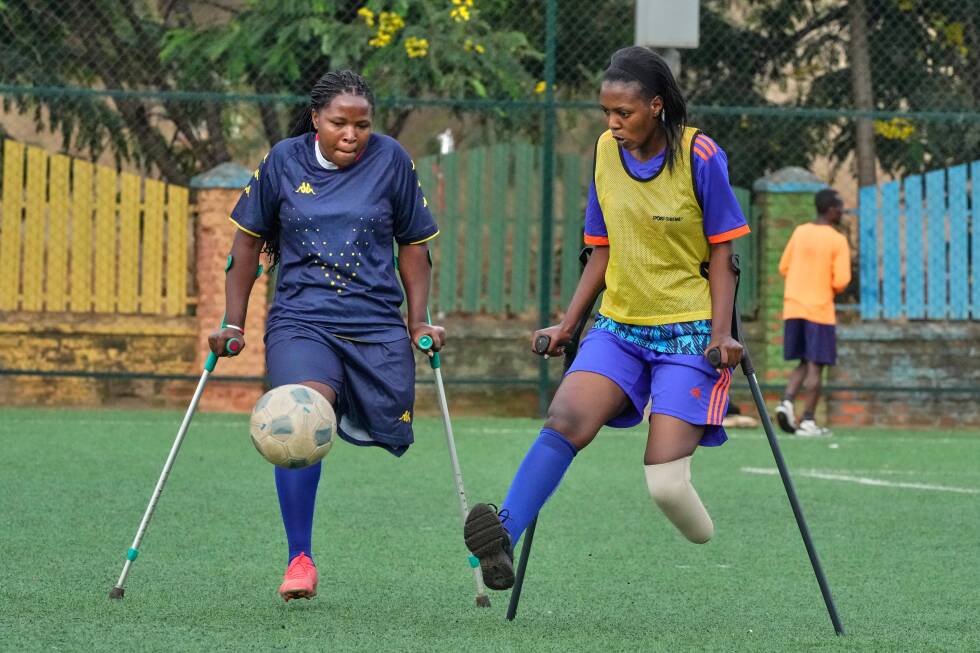
The rhythmic clack of crutches echoes across a field in Kigali as amputee footballers chase their dreams with determination and grace. In Rwanda, a country still healing from its traumatic past, this unique adaptation of the world’s most popular sport has become much more than a game—it’s a powerful vehicle for rehabilitation, acceptance, and unity.
Amputee football, played with seven athletes per side, features outfield players on crutches and goalkeepers with one arm. The sport has gained significant momentum in Rwanda over the past decade, creating a vibrant community for those who once believed active sports participation was beyond their reach.
“I don’t even think about I don’t have a leg,” says Nyiraneza Solange, who lost her limb at age five following a fall that led to infection. Born two years after Rwanda’s 1994 genocide, Solange was drawn to the sport by the resilience demonstrated by those who lost limbs during that dark period of the country’s history.
The 1994 genocide claimed approximately 800,000 lives when the majority Hutu population targeted Tutsis and moderate Hutus in a systematic campaign of violence lasting 100 days. The physical and psychological scars of this atrocity remain present in Rwandan society three decades later.
Today, Rwanda has more than 3,000 lower-limb amputees, with causes ranging from genocide-related injuries to road accidents and illness. For many, amputee football provides not just physical activity but essential psychological healing.
Louise Kwizera, vice president of the Rwanda Amputee Football Federation, explains the transformative power of the sport: “In communities affected by conflict or trauma, the playing field becomes a place of peace. People who may have different pasts come together as teammates.”
This social cohesion aspect is particularly significant in a society that was once violently divided along ethnic lines. The sport allows participants to rebuild trust while developing physical skills and confidence.
Rwanda’s amputee football scene has developed rapidly, now boasting five women’s professional teams and ten men’s squads. The national program has set its sights on competing in the second women’s amputee football World Cup, expected to be held in either Poland or Brazil next year. Rwanda was represented by just one player at the inaugural tournament in 2024.
The sport operates under the governance of the World Amputee Football Federation and is played in more than 50 countries worldwide. As the sport grows globally, some advocates believe Rwanda could eventually host a World Cup, though the country’s sports ministry has not yet submitted a formal bid.
Fred Sorrels, manager of Haiti’s women’s amputee football team, visited Rwanda to support the development of the local program. “It’s a win psychologically and mentally for these ladies to have an opportunity to experience wholeness and wellness again,” Sorrels noted during his visit.
Gilbert Muvunyi Manier, director general of sports development at Rwanda’s sports ministry, describes amputee football as a “powerful tool” that promotes healing, reconciliation, and social cohesion in a country still processing historical trauma.
On the field, players face unique challenges that require adaptation and creativity. “It’s hard to save the ball when it goes to the side with the receding hand,” admits goalkeeper Nikuze Angelique. Despite these obstacles, she shares the sense of community that has drawn many to the sport.
For Rwanda’s amputee footballers, reaching the World Cup represents the culmination of their dedication and passion. As Angelique puts it, “It will be a dream come true.”
The growth of amputee football in Rwanda demonstrates how adaptive sports can transcend physical limitations while addressing deeper social needs. As these athletes continue to break barriers and challenge perceptions, they offer a powerful example of resilience for a nation rebuilding itself from tragedy.
Through the simple joy of chasing a ball across a field, Rwanda’s amputee footballers have found something profound: a path toward healing that unites rather than divides, transforming personal struggle into collective triumph.
Fact Checker
Verify the accuracy of this article using The Disinformation Commission analysis and real-time sources.

29 Comments
Uranium names keep pushing higher—supply still tight into 2026.
The cost guidance is better than expected. If they deliver, the stock could rerate.
Good point. Watching costs and grades closely.
Good point. Watching costs and grades closely.
Production mix shifting toward World might help margins if metals stay firm.
Good point. Watching costs and grades closely.
Good point. Watching costs and grades closely.
If AISC keeps dropping, this becomes investable for me.
Good point. Watching costs and grades closely.
Uranium names keep pushing higher—supply still tight into 2026.
Good point. Watching costs and grades closely.
Uranium names keep pushing higher—supply still tight into 2026.
Good point. Watching costs and grades closely.
Production mix shifting toward World might help margins if metals stay firm.
Uranium names keep pushing higher—supply still tight into 2026.
Good point. Watching costs and grades closely.
Good point. Watching costs and grades closely.
If AISC keeps dropping, this becomes investable for me.
Good point. Watching costs and grades closely.
The cost guidance is better than expected. If they deliver, the stock could rerate.
Good point. Watching costs and grades closely.
I like the balance sheet here—less leverage than peers.
Good point. Watching costs and grades closely.
The cost guidance is better than expected. If they deliver, the stock could rerate.
Good point. Watching costs and grades closely.
Good point. Watching costs and grades closely.
Silver leverage is strong here; beta cuts both ways though.
Good point. Watching costs and grades closely.
Good point. Watching costs and grades closely.