


Listen to the article
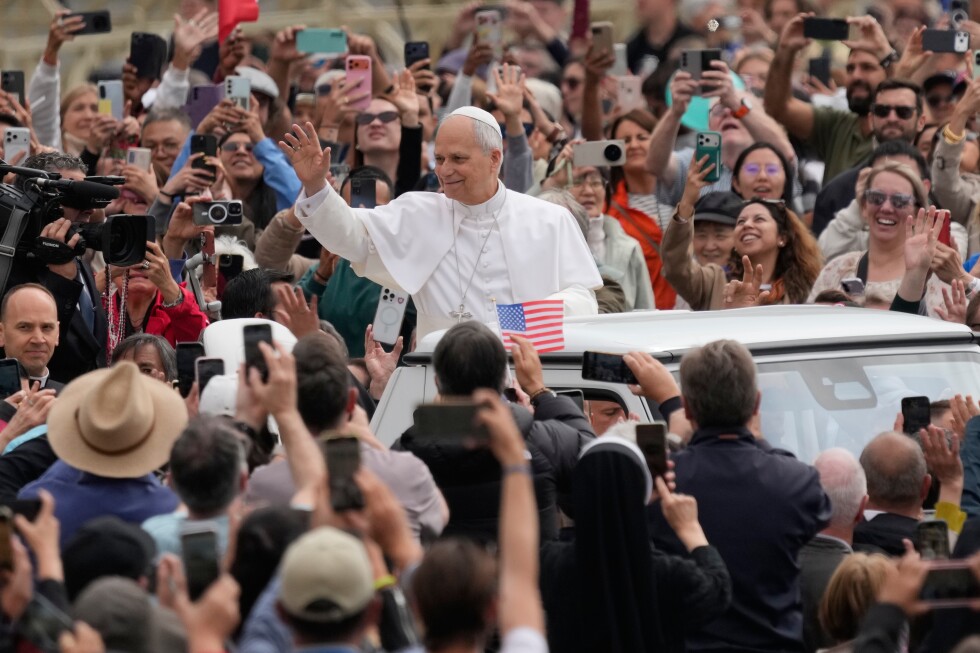
Pope Leo XIV will inaugurate Barcelona’s Sagrada Familia’s central tower during his weeklong visit to Spain next month, the Vatican announced Wednesday. The June 6-12 trip will combine religious ceremonies, political engagements, and a significant focus on migration issues.
The pontiff’s journey begins in Madrid with a series of high-profile meetings with government officials, parliament, and the Spanish royal family, including King Felipe VI and Queen Letizia. A highlight will be a prayer vigil with young people, reminiscent of Pope Benedict XVI’s visit during the 2011 World Youth Day celebrations, the last papal visit to Spain.
In Barcelona, Leo will mark the centenary of renowned Catalan architect Antoni Gaudí’s death on June 10. The pope will celebrate Mass at Sagrada Familia and formally inaugurate the Tower of Jesus Christ, which was installed in February and brought the basilica to its maximum height of 172.5 meters (566 feet). Despite this milestone, the iconic basilica—construction of which began in 1882—remains unfinished. Although Gaudí is being considered for sainthood, Spain’s bishops confirmed he will not be canonized during this visit.
Archbishop Luis Argüello of Valladolid, who heads the Spanish Catholic bishops conference, emphasized the significance of Leo’s planned address to the Spanish parliament, noting that papal speeches to foreign legislatures are rare and often become defining moments of a pontificate. “I believe it’s of great importance,” said Argüello, explaining that parliament “as the embodiment of national sovereignty, needs to reflect on what an ethical and spiritual reference means at a time of the undoubtedly necessary renewal of our democratic life.”
The pope’s itinerary includes two days in the Canary Islands, fulfilling an intention of his predecessor, Pope Francis, who had prioritized visiting migration hotspots throughout his papacy. The Spanish archipelago off northwest Africa has become the main gateway for migrants attempting to reach Spain from the African continent.
In Las Palmas, Leo will meet with organizations supporting migrants, followed by visits to a reception center in Tenerife the next day. His focus on migration issues aligns with Spain’s current political landscape, where Socialist Prime Minister Pedro Sánchez’s government has championed legal immigration, including an amnesty measure aimed at regularizing an estimated 500,000 undocumented residents.
This approach has faced criticism from conservative opposition parties, particularly the far-right Vox party, which has described the legalization initiative as an “attack on our identity.” However, the government maintains that the measure enjoys broad support, including from the Catholic Church and business leaders, who recognize Spain’s need for workers to sustain its economy amid an aging population. Currently, approximately 10 million foreign-born residents—one-fifth of Spain’s population—live in the country, many originating from Latin America and Africa.
The Canary Islands, located approximately 65 miles (105 kilometers) from Africa at their closest point, have long served as a critical entry point for migrants seeking to reach Europe. Arrivals peaked in 2024 with nearly 47,000 migrants, though numbers have declined significantly following agreements between the European Union, Spain, and several West African nations. In the first four months of 2026, just over 2,000 migrants have reached the islands.
Following his Spanish visit, Leo—the first American-born pope in history—will travel to Lampedusa, Sicily, on July 4 to meet with migrants at another key European entry point. The timing coincides symbolically with the United States’ celebration of its 250th anniversary of independence.
This comprehensive tour underscores Pope Leo XIV’s commitment to continuing the Catholic Church’s engagement with migration issues while maintaining traditional diplomatic and religious outreach across Spain, a nation with deep Catholic roots now navigating complex social and demographic changes.
Fact Checker
Verify the accuracy of this article using The Disinformation Commission analysis and real-time sources.

16 Comments
It’s a shame the Pope won’t be able to canonize Gaudí during this visit, even though he is being considered for sainthood. I wonder what the holdup is and if that process will continue to move forward.
Yeah, that’s an interesting detail. The canonization process can be quite complex, so it’s understandable it hasn’t happened yet. Hopefully it will in the future.
I’m curious to learn more about the history and symbolism behind the Tower of Jesus Christ. How does it fit into the overall design and vision of the Sagrada Familia?
Good question. The tower’s name and placement within the basilica must have deep religious significance that would be fascinating to explore further.
Exciting news about the Sagrada Familia tower inauguration! I’m curious to see how Pope Leo XIV’s visit will highlight the architectural and religious significance of this iconic landmark.
The Sagrada Familia is such a remarkable feat of design and engineering. I’m glad the Pope’s visit will bring more attention to Gaudí’s visionary work.
I’m intrigued by the Pope’s plan to hold a prayer vigil with young people during his visit, reminiscent of the 2011 World Youth Day celebrations. Engaging the younger generation is so important for the Church.
Agreed. Connecting with youth and inspiring them in their faith is crucial for the Church’s future. This event could be a meaningful opportunity for that.
It’s great that the Pope will be honoring Gaudí’s legacy during his visit. The Sagrada Familia is truly a stunning piece of architecture, and I’m curious to learn more about the significance of the new tower.
I hope the Pope’s visit can also shed light on the ongoing challenges of completing the Sagrada Familia after all these years. It’s an ambitious project that deserves continued support.
The Pope’s visit to Spain seems to have a nice balance of religious, political, and social elements. I hope he’s able to make meaningful progress on the migration issues he plans to address.
Absolutely. Using his platform to shine a light on critical humanitarian concerns is an important part of the Pope’s role. It will be interesting to see the outcomes of those discussions.
While the Sagrada Familia is undoubtedly an architectural wonder, I hope the Pope’s visit also sheds light on the ongoing challenges of completing such a massive, long-running project. Construction has been halted and restarted many times.
That’s a good point. The Sagrada Familia’s construction has faced many obstacles over the decades. It will be interesting to see if the Pope’s involvement can help provide a renewed sense of momentum and purpose.
While the inauguration of the new tower is exciting, I’m more interested in the Pope’s focus on migration issues during this trip. It will be interesting to see how he addresses that pressing global concern.
You raise a good point. The Pope’s platform gives him a unique opportunity to highlight important social issues beyond just religious ceremonies.