


Listen to the article
Michigan GOP Raises Election Oversight Concerns as Secretary of State Benson Runs for Governor
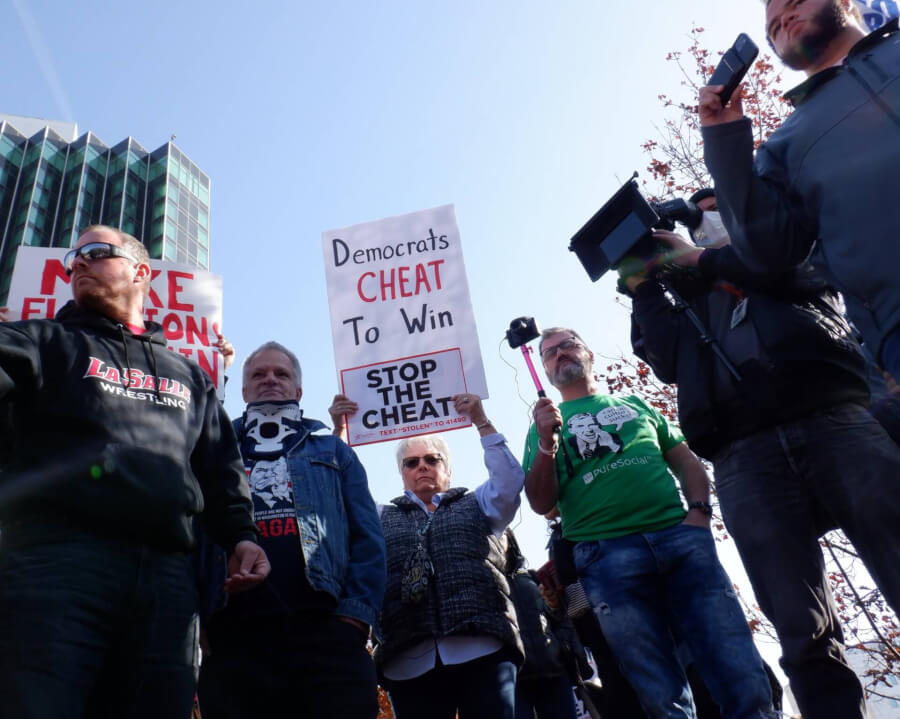
Accusations of potential electoral interference have emerged as Michigan’s Secretary of State Jocelyn Benson pursues the governor’s office while maintaining her role as the state’s chief election officer. Republicans have raised concerns about a perceived conflict of interest, though election experts describe these claims as largely unfounded.
Michigan’s electoral system operates through a deliberately decentralized structure where municipal clerks—not the Secretary of State—handle the practical aspects of elections from ballot preparation to vote counting. Former Michigan Director of Elections Chris Thomas has emphasized that Benson lacks both the authority and operational capability to manipulate election outcomes.
“The system is designed with multiple safeguards,” explained Thomas. “The bipartisan Board of State Canvassers handles election certification, not the Secretary of State.”
This four-member board, composed of two Republicans and two Democrats, requires bipartisan consensus for election certification—a system that withstood significant pressure during the 2020 presidential election. Reports indicate that then-President Donald Trump personally attempted to prevent certification of Wayne County’s results, which heavily favored Joe Biden, yet the system’s checks and balances prevailed.
Despite these structural protections, Republican figures including candidates John James and Perry Johnson continue to question Benson’s neutrality. Representative Rachelle Smit, who chairs the House Election Integrity Committee, has warned of a potential “constitutional crisis” regarding proposed regulatory clarifications—though experts note these merely codify existing responsibilities rather than expanding Benson’s powers.
The situation reflects broader national tensions surrounding election administration. Election historians point out that Michigan secretaries of state have regularly campaigned for other offices while serving—five have done so since 1955—without controversy. When Republican Ruth Johnson ran for Michigan Senate in 2018 while serving as secretary of state, similar concerns were notably absent from political discourse.
The current criticisms extend beyond the gubernatorial race. Former U.S. Rep. Mike Rogers, the likely Republican nominee for U.S. Senate, has continued to make unsubstantiated claims about election irregularities, including a disproven assertion about a mysterious van delivering ballots in Detroit following his 2024 Senate defeat.
Rogers has also proposed recruiting off-duty police officers as poll watchers in Detroit, a city with a predominantly Black population. This suggestion comes in the wake of the U.S. Supreme Court’s decision in Louisiana v. Callais, which weakened key Voting Rights Act protections. In Louisiana, Republicans have already used this ruling to suspend congressional primary elections while redrawing districts in ways critics say will further diminish minority voting influence.
Election integrity advocates view these developments as part of a coordinated effort to undermine public confidence in electoral systems. “Understanding the distinction between oversight and operation matters for the integrity of public discourse,” said one election policy analyst who requested anonymity to speak candidly. “The secretary isn’t ‘running the election’ any more than a quarterback writes the referee’s rulebook.”
Michigan’s electoral system has maintained its reputation for fairness and robustness under both Republican and Democratic leadership. Experts emphasize that the current allegations appear politically motivated rather than substantively grounded in real vulnerabilities within the system.
As the 2026 election cycle progresses, Michigan voters face the challenge of distinguishing between legitimate concerns about electoral processes and partisan rhetoric designed to sow doubt about election outcomes before votes are even cast.
Fact Checker
Verify the accuracy of this article using The Disinformation Commission analysis and real-time sources.

9 Comments
I’m glad to hear that the system has multiple layers of safeguards to protect the integrity of Michigan’s elections. With the high stakes involved, it’s essential that the process remains fair and nonpartisan. Ongoing vigilance will be needed to uphold democratic principles.
This is concerning to hear about potential misinformation around Michigan elections. It’s crucial that the electoral process remains transparent and secure, with checks and balances in place to prevent manipulation. I hope the state’s decentralized election system and bipartisan oversight can uphold the integrity of the vote.
The concerns raised by Michigan Republicans about a potential conflict of interest merit close examination. While the decentralized structure and bipartisan oversight seem robust, it’s important to ensure that all aspects of the electoral process are truly impartial and secure.
I agree that any perceived conflicts of interest, even if unfounded, need to be addressed transparently. Maintaining public trust in the democratic process should be the top priority.
This is a complex issue with valid concerns on both sides. I hope that Michigan’s election officials can work in a bipartisan manner to uphold the integrity of the vote and reassure the public that the process is fair and secure, regardless of political affiliations.
The details about Michigan’s electoral system and the checks and balances in place are encouraging. However, the allegations of potential interference cannot be dismissed lightly. Vigilant monitoring and transparent communication from election authorities will be essential to maintain public trust.
Interesting that the Secretary of State’s dual role as both election official and gubernatorial candidate has raised concerns. While the system seems to have safeguards, it’s important to address any perceived conflicts of interest to maintain public trust in the process.
You raise a good point. Voters deserve confidence that elections are run fairly and without partisan influence, regardless of who is in office. Robust oversight and transparency will be key.
The details about Michigan’s electoral structure, with municipal clerks and a bipartisan board overseeing certification, are reassuring. It sounds like there are strong checks and balances in place to prevent any individual from manipulating the outcome. Diligent election monitoring remains crucial, though.