


Listen to the article
Malaysian authorities have removed hundreds of false online content items related to the global supply crisis, as the battle against digital misinformation intensifies amid growing concerns about artificial intelligence’s role in spreading deceptive information.
Deputy Communications Minister Teo Nie Ching revealed that officials identified 464 pieces of false content linked to the global supply crisis between March 29 and April 30 this year, with 312 of these items successfully taken down from digital platforms.
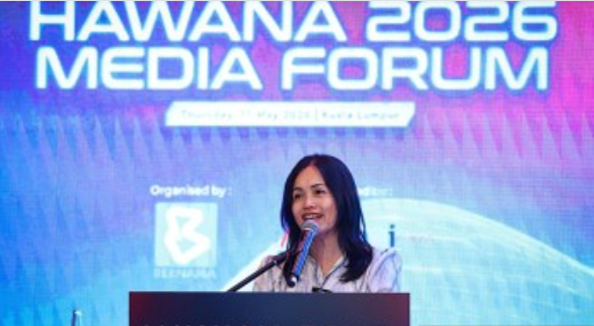
Speaking at the opening of the HAWANA 2026 Media Forum, Teo highlighted that law enforcement agencies have opened 65 investigation papers, with 15 cases already referred to the Attorney-General’s Chambers while others remain under investigation.
“The spread of misinformation—increasingly fuelled by artificial intelligence technologies—has become a growing challenge to public confidence, media integrity and social stability,” Teo said.
The deputy minister pointed to alarming trends in the proliferation of fraudulent digital content, noting a dramatic increase in reported cases over the past three years. Incidents rose from 6,297 in 2023 to 63,652 in 2024, before surging further to 98,503 cases in 2025. The first four months of 2026 alone have seen 60,829 content items removed from online platforms.
According to Teo, artificial intelligence has accelerated the spread of deceptive material online through sophisticated manipulation and impersonation tactics. These include the creation of fake social media accounts and the fabrication of public figure identities, making it increasingly difficult for users to distinguish genuine information from false content.
The global supply crisis, which has affected markets worldwide, has become a particular focal point for misinformation campaigns. False narratives about supply chain disruptions, resource scarcity, and market manipulations have created confusion among consumers and potentially impacted market stability.
Against this backdrop of growing digital misinformation, Teo emphasized the crucial role of professional journalism in maintaining public trust. Her comments came as Malaysia continues to face challenges in press freedom, having recently slipped to 95th place from 88th in the Reporters Without Borders World Press Freedom Index.
“While journalist safety has improved, declines in the media economy and legislative environment remain a concern, and this is not a position we are satisfied with,” she acknowledged. “Journalism is a pillar of democracy.”
The deputy minister called for the Malaysian Media Council (MMC) to take a more proactive role in resolving disputes involving media reporting. The council, established in February 2025 as an independent self-regulatory body, was formed to uphold journalistic ethics, develop codes of professional conduct, and safeguard the welfare of media practitioners.
“Disputes arising from news reporting should primarily be addressed through the Malaysian Media Council,” Teo stressed, highlighting the importance of industry self-regulation rather than government intervention in media matters.
The MMC’s governance structure includes representatives from various stakeholders, including media organizations, journalists, academics, civil society groups, and public interest representatives. The council’s formation has been seen as a positive step toward improving media standards in Malaysia, with provisions ensuring gender balance and representation from the states of Sabah and Sarawak.
As digital misinformation continues to evolve with technological advancements, the Malaysian government’s efforts to combat false content underscore the global challenge facing authorities, media organizations, and technology platforms in preserving information integrity in the digital age.
Fact Checker
Verify the accuracy of this article using The Disinformation Commission analysis and real-time sources.

10 Comments
The supply chain disruptions have been a major source of anxiety and uncertainty globally. I hope the government’s efforts to remove false information can help provide more clarity and reassurance for people during these turbulent times.
Absolutely, access to reliable, fact-based information is crucial when dealing with complex, fast-moving issues like supply chain challenges. Kudos to the Malaysian authorities for proactively tackling this problem.
Kudos to the Malaysian government for their diligence in identifying and removing hundreds of false posts related to the global supply crisis. Staying on top of AI-driven misinformation is no easy task, but it’s crucial for maintaining public trust and confidence.
Absolutely, this is an important step in the right direction. Ongoing vigilance and swift action will be key to staying ahead of bad actors trying to sow chaos and confusion through the use of AI-generated content.
The rise of AI-driven misinformation is a major challenge that will require innovative solutions and close collaboration between governments, tech companies, and civil society. I’m curious to learn more about the specific strategies and tools Malaysia is employing to combat this threat.
Agreed, a multi-pronged, collaborative approach is essential. It will be interesting to see if Malaysia’s efforts can serve as a model for other countries grappling with similar issues.
It’s troubling to see the dramatic rise in reported cases of fraudulent digital content over the past few years. Tackling the spread of AI-driven misinformation should be a top priority for governments around the world.
Agreed, this is a global issue that requires coordinated, multi-stakeholder efforts to address effectively. Glad to see Malaysia taking a firm stance and using legal tools to combat the problem.
Interesting to see the Malaysian government taking such proactive steps to tackle the rise of AI-driven misinformation. This is a concerning trend that many countries will need to grapple with going forward. Curious to learn more about the methods they’re using to identify and remove false content.
Agreed, the proliferation of AI-generated fake content is a major challenge. Glad to see authorities taking it seriously and leveraging investigative tools to combat the spread of misinformation.