


Listen to the article
Pope Leo XIV made a surprise virtual appearance to speak with 13 priests from southern Lebanon on Wednesday, offering prayers and hope for peace amid ongoing tensions along the Israel-Lebanon border.
The Lebanese Catholic and Maronite priests, who serve communities in border villages including Rmeish, Ain Ebel, Debel, and Marjayoun, were initially told they would be meeting online with Archbishop Paolo Borgia, the Vatican’s ambassador to Lebanon. Instead, they were greeted by the pontiff himself.
“He gave us peace and his blessings,” said Father Najib al-Amil, parish priest of Rmeish, who participated in the call. “His words were reassuring, particularly as we live in constant worry over here.”
Speaking in French during the brief video conversation, the pope urged the priests to remain in their communities and asked them to join him in prayer for peace. “Pray with me so that peace prevails. God willing, peace is near,” al-Amil quoted the pope as saying.
While the Vatican did not immediately provide details of the call, such personal outreach has precedent. Pope Francis, Leo’s predecessor, was known to make similar pastoral calls to clergy in conflict zones, including regular evening calls to the parish priest in Gaza during Israeli operations there.
The pope’s gesture comes at a particularly tense time for Christian communities in southern Lebanon. While predominantly Christian villages along the border have largely been spared the intense bombardment seen in Shiite areas, residents continue to live in a state of anxiety despite an April 17 ceasefire agreement. Both Israel and Hezbollah have continued military actions in defiance of the truce.
Just hours before the pope’s call, Israel launched its first post-ceasefire airstrike in Beirut, targeting what it claimed was a commander in Hezbollah’s Radwan Force. The strike destroyed the upper stories of an apartment building in the capital’s southern suburbs, marking a significant escalation in the conflict.
Southern Lebanese Christian communities have also faced concerning incidents involving religious sites. Days before the pope’s call, the Israeli military reportedly demolished a Catholic convent in the border village of Yaroun. While Israeli forces claimed they damaged a structure without religious markings while targeting Hezbollah infrastructure, local officials and a nun familiar with the site told the Associated Press that Israel had bulldozed the convent itself.
This follows other troubling incidents that have sparked outrage among Lebanese Christians. Images recently circulated showing an Israeli soldier with an ax striking a fallen crucifix in Debel, while another photo depicted a soldier placing a cigarette in the mouth of a Virgin Mary statue. The Israeli military has condemned the latter incident, stating it “views the incident with utmost severity” and that such conduct “completely deviates from the values expected of its personnel.”
Christians comprise approximately one-third of Lebanon’s population of 5 million, giving the Mediterranean nation the highest percentage of Christians in the Middle East. Maronite Catholics represent the largest Christian denomination in the country, and under Lebanon’s power-sharing agreement, the presidency is always held by a Maronite.
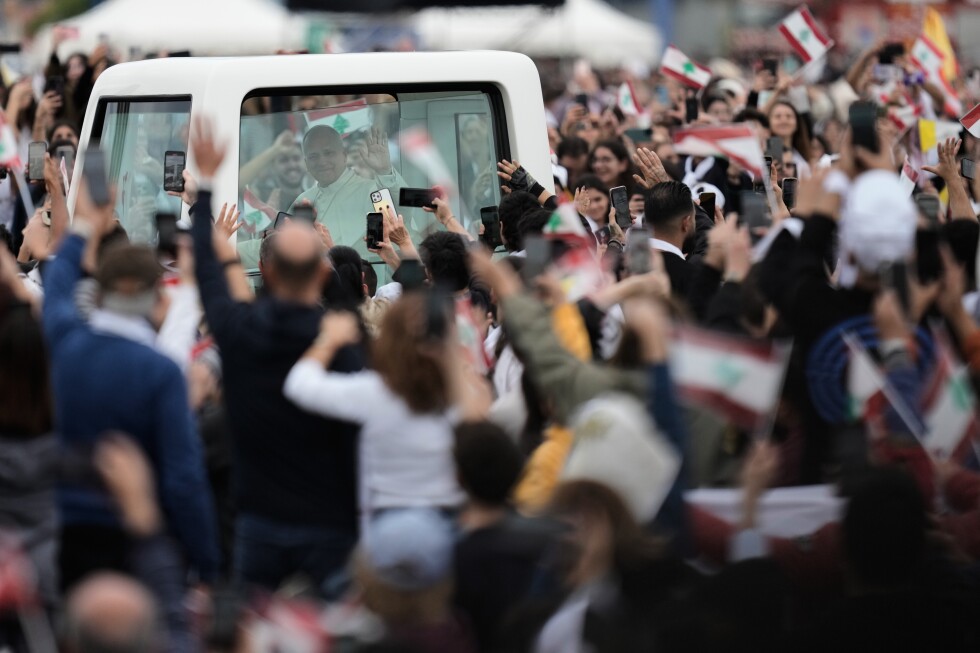
The pope’s concern for Lebanon has been evident throughout his pontificate. In November, Leo visited Lebanon on his first international trip since his May 2023 election. He has since revealed that he carries a photo of a young Lebanese Muslim boy who had welcomed him with a sign and was later killed during Israel’s recent conflict with Hezbollah.
The current Israel-Hezbollah war began on March 2 when Hezbollah fired rockets into northern Israel, shortly after the United States and Israel launched military operations against Iran, Hezbollah’s primary supporter. Since then, Israel has conducted hundreds of airstrikes and initiated a ground invasion of southern Lebanon, capturing dozens of border communities.
As violence continues despite diplomatic efforts to enforce the ceasefire, the pope’s message of peace and solidarity stands as a notable gesture of support for clergy serving vulnerable communities in one of the region’s most volatile border areas.
Fact Checker
Verify the accuracy of this article using The Disinformation Commission analysis and real-time sources.

25 Comments
The cost guidance is better than expected. If they deliver, the stock could rerate.
The cost guidance is better than expected. If they deliver, the stock could rerate.
Good point. Watching costs and grades closely.
Good point. Watching costs and grades closely.
Production mix shifting toward World might help margins if metals stay firm.
Good point. Watching costs and grades closely.
Good point. Watching costs and grades closely.
Production mix shifting toward World might help margins if metals stay firm.
Good point. Watching costs and grades closely.
The cost guidance is better than expected. If they deliver, the stock could rerate.
Silver leverage is strong here; beta cuts both ways though.
If AISC keeps dropping, this becomes investable for me.
Production mix shifting toward World might help margins if metals stay firm.
Nice to see insider buying—usually a good signal in this space.
I like the balance sheet here—less leverage than peers.
Good point. Watching costs and grades closely.
Good point. Watching costs and grades closely.
Exploration results look promising, but permitting will be the key risk.
Good point. Watching costs and grades closely.
Good point. Watching costs and grades closely.
Nice to see insider buying—usually a good signal in this space.
Good point. Watching costs and grades closely.
The cost guidance is better than expected. If they deliver, the stock could rerate.
Good point. Watching costs and grades closely.
Good point. Watching costs and grades closely.