


Listen to the article
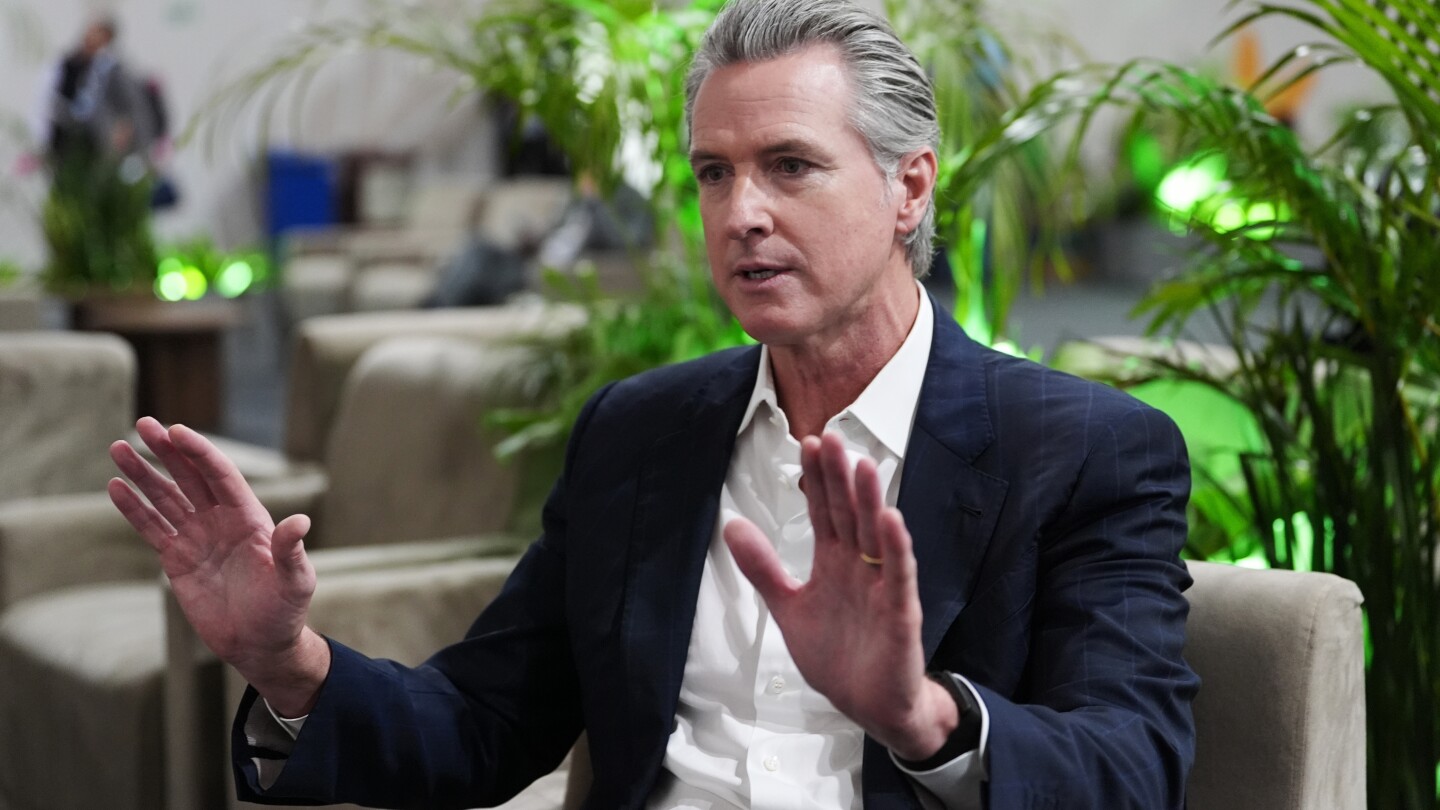
Calling America’s absence from the United Nations climate negotiations “doubling down on stupid,” California Governor Gavin Newsom warned Tuesday that the United States risks losing its economic edge on the global stage by turning its back on climate action.
Speaking from Belem, Brazil, where the COP30 climate talks are underway, Newsom—the highest-profile U.S. representative at the summit—delivered a stark message about the consequences of America’s federal disengagement.
“This idea that somehow we can put up walls, we can put up barriers, we could put up tariffs, we put up our middle fingers and just turn our back is lunacy,” Newsom said in an exclusive interview with The Associated Press. “And every other country in the world understands that. That’s why every other country in this world is moving in a different direction.”
The absence of the United States marks a significant diplomatic void, with U.N. organizers noting that only four nations are missing from the negotiations: war-torn Afghanistan and Myanmar, tiny San Marino, and the United States—historically the world’s largest carbon emitter.
Newsom, whose potential 2028 presidential ambitions add weight to his presence, argued that the Trump administration’s decision to withdraw from the 2015 Paris Agreement and dismantle environmental protections sends a dismissive message to international partners: “You don’t matter, we don’t care.”
The governor highlighted the economic consequences of America’s retreat from climate leadership, particularly as competitors advance in clean energy technologies. “We’re ceding cheap energy, green energy, infrastructure, supply chain manufacturing. We’re ceding economic power to other countries, notably China, taking advantage of that absence,” he warned.
California, with its nearly 40 million residents and position as the fifth-largest economy globally, has emerged as a counterweight to federal climate inaction. However, the Trump administration has actively worked to curtail the state’s environmental policies, including blocking California’s regulation to phase out sales of new gas-powered vehicles.
The White House quickly responded to Newsom’s comments. “Governor Newscum flew all the way to Brazil to tout the Green New Scam, while the people of California are paying some of the highest energy prices in the country. Embarrassing!” said spokesperson Taylor Rogers, using one of Trump’s preferred nicknames for the governor.
Rogers added that “President Trump will not allow the best interest of the American people to be jeopardized by the Green Energy Scam,” emphasizing the administration’s focus on what it calls a “common sense energy agenda.”
Newsom, however, pointed to the escalating climate impacts already affecting California, which has warmed 1.8 degrees Fahrenheit over the past three decades and now receives nearly 7 inches less annual rainfall than in 1995. The state has experienced some of its largest and most destructive wildfires in history within the last five years, including January infernos that devastated Los Angeles neighborhoods.
“I’m just privileged to represent one of the most blessed and cursed states in the world that’s on the tip of the spear of the impacts of climate change,” Newsom said. “How about the simultaneous crisis of wildfires, drought, and floods stacked on top of each other.”
California faces its own challenges balancing ambitious climate goals with economic realities. The state aims to achieve carbon neutrality by 2045, but Newsom recently signed legislation boosting oil production in certain regions, while his administration grapples with high gas prices and electricity rates that rank among the nation’s highest.
The state is also addressing growing energy demands from tech industries, particularly data centers powering artificial intelligence development. Newsom noted that California is extending the operation of its last nuclear plant while simultaneously investing in solar power, battery storage, and nuclear fusion technologies.
Alden Meyer, a veteran climate negotiations analyst with European think tank E3G, lamented the absence of America’s federal government but welcomed the participation of state and local leaders. “It is very positive that we have these other leaders from the United States that are here in Belem,” Meyer said.
As the climate summit continues, Newsom’s presence underscores the growing role of sub-national governments in international climate diplomacy—particularly as federal positions shift with changing administrations.
Fact Checker
Verify the accuracy of this article using The Disinformation Commission analysis and real-time sources.

10 Comments
Newsom’s warning about the U.S. losing its economic edge by turning its back on climate action is a sobering wake-up call. We can’t afford to be left behind as the global economy shifts towards clean energy and sustainability. This is a critical moment, and we need to respond accordingly.
Absolutely. The U.S. has a responsibility to be a leader in the fight against climate change, not a laggard. Newsom’s comments highlight the urgent need for a comprehensive, forward-looking strategy to ensure our competitiveness and our planet’s future.
It’s concerning to see the U.S. disengaging from global climate action efforts. Newsom’s warning about losing our economic edge is a sobering wake-up call. We need to be at the forefront of the clean energy transition, not falling behind.
Absolutely. Turning our back on climate change is short-sighted and will have serious consequences. The rest of the world is moving forward, and the U.S. risks being left behind if we don’t take this seriously.
This is a disappointing development. The U.S. should be at the forefront of global efforts to combat climate change, not absent from the table. Newsom’s comments highlight the need for a more proactive and forward-looking approach on this critical issue.
Exactly. The U.S. has the resources and expertise to be a leader in the clean energy transition, but we’re squandering that opportunity by turning our back on international climate negotiations. This is a missed chance to shape the global agenda.
Newsom makes a fair point. Putting up barriers and ignoring climate change is not a sustainable strategy. We need to be proactive and find ways to address this global challenge, both for the environment and our economic competitiveness.
I agree. The U.S. has a responsibility to lead on climate action, not retreat from it. Newsom’s criticism of the federal government’s approach is warranted, and I hope it serves as a wake-up call.
Newsom’s blunt assessment of the U.S. absence from the COP30 talks is concerning. Ignoring climate change and withdrawing from global cooperation on this issue is a shortsighted and potentially damaging strategy. We need to reengage and find ways to be part of the solution.
I agree. The U.S. can’t afford to sit on the sidelines while the rest of the world moves forward on climate action. We need to be at the table, contributing our expertise and resources to drive the transition to a more sustainable future.