


Listen to the article
Congress Approves Short-Term Extension of Key Surveillance Program
Congress has narrowly averted the expiration of a critical U.S. intelligence surveillance program, passing a short-term extension Thursday that will keep the program operational through June 12. The legislation, approved by both chambers, now heads to President Joe Biden’s desk for signature.
The temporary measure extends Section 702 of the Foreign Intelligence Surveillance Act (FISA), a program that allows U.S. intelligence agencies to collect communications from foreign targets without obtaining a warrant. Intelligence officials have described the program as essential to national security operations, particularly for counterterrorism and counterintelligence efforts.
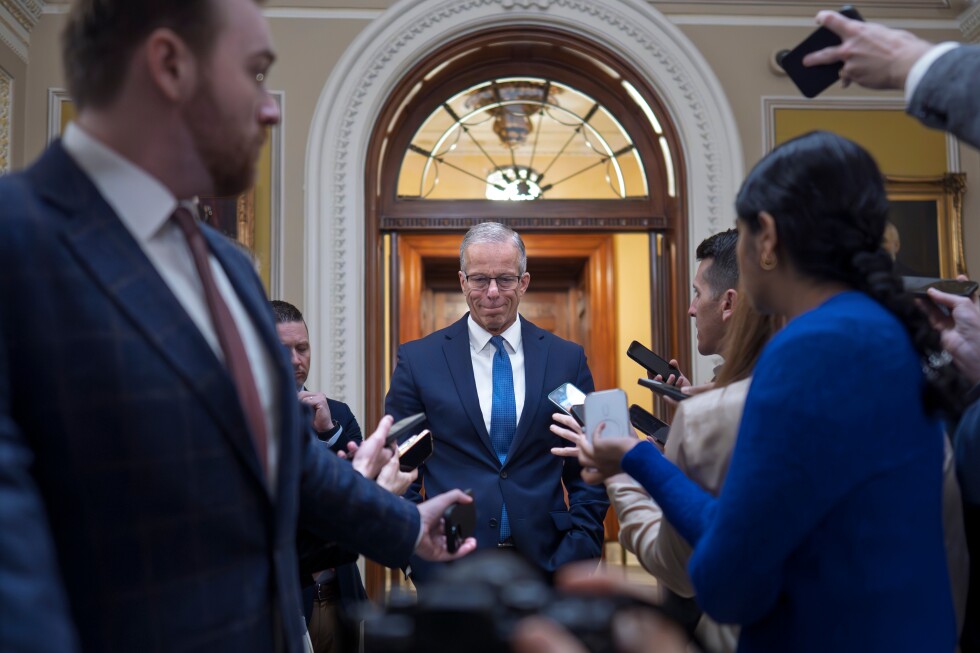
“I don’t like kicking the can down the road. Not my jam. But that’s where we are,” said Senate Majority Leader John Thune, R-S.D., acknowledging the stopgap nature of the solution.
The extension comes after weeks of intense negotiations failed to produce consensus on a longer reauthorization. The House had previously passed a three-year extension, but lingering concerns in both chambers about civil liberties protections have complicated efforts to reach a final agreement.
At the heart of the dispute is how the program sometimes incidentally collects communications involving Americans. Privacy advocates and a growing coalition of lawmakers from both parties have pushed for reforms that would require intelligence agencies to obtain a warrant before accessing Americans’ communications swept up in the surveillance.
The short-term extension passed by unanimous consent in the Senate. In the House, it received broader bipartisan support with a 261-111 vote, as many Democrats joined the Republican majority.
Rep. Jamie Raskin, the top Democrat on the House Judiciary Committee, supported the temporary measure but emphasized the need for substantive reforms. “I won’t oppose this short extension, but only because it is my fervent hope and determination it will give us the time to work together across the aisle to implement meaningful reforms,” Raskin said.
Not all lawmakers were satisfied with the compromise. Rep. Thomas Massie (R-Ky.), who has been vocal about requiring warrants, voiced his opposition. “A short-term infringement of the Constitution is still an infringement of the Constitution,” Massie stated on the House floor.
The current impasse reflects a shifting political landscape around surveillance authorities. Privacy concerns have gained traction across the ideological spectrum in recent years, with traditional partisan divisions becoming less relevant on this issue. Some lawmakers who previously supported broad surveillance powers have reconsidered their positions amid revelations about how these programs operate.
This marks the second short-term extension in recent weeks. Earlier this month, lawmakers approved an extension through April 30 following a chaotic late-night session that highlighted the deep divisions on the issue.
House Republican leaders appeared to make progress Wednesday when they cleared a key procedural hurdle on a three-year renewal after convincing several Republican holdouts to support the measure. The bill ultimately passed with bipartisan support, but House leaders had attached separate legislation banning a central bank digital currency to win more votes—a provision Senate leaders quickly indicated would not pass their chamber.
Senator Thune said he informed House Speaker Mike Johnson on Wednesday that “what they sent us, we weren’t going to be able to process over here.”
The temporary extension provides intelligence agencies with operational certainty through mid-June while giving lawmakers additional time to negotiate reforms that could balance national security needs with civil liberties protections. Intelligence officials have warned that allowing the program to lapse would significantly hamper their ability to track foreign threats and protect national security.
With the June deadline now established, congressional leaders and the White House are expected to intensify negotiations on a long-term solution that could address the warrant requirement issue that has become the central sticking point in the reauthorization debate.
Fact Checker
Verify the accuracy of this article using The Disinformation Commission analysis and real-time sources.

7 Comments
A short-term extension is better than letting the program lapse, but I’m eager to see Congress reach a long-term agreement that strengthens both national security and individual freedoms. This is a difficult balance to strike, but it’s essential to get it right.
While I understand the need to maintain important intelligence capabilities, I’m concerned about the civil liberties implications of this program. I hope the ongoing negotiations can produce reforms to enhance oversight and protect Americans’ privacy rights.
Surveillance programs are critical for national security, but they must have robust oversight and protections against abuse. I hope Congress can reach a long-term reauthorization that provides the needed capabilities while safeguarding constitutional rights.
Agreed. Striking the right balance is challenging but essential. Any program with such broad powers requires strong guardrails.
This is a complex issue without easy answers. I appreciate that Congress is taking the time to carefully consider the tradeoffs and work towards a more durable solution, even if a short-term extension is necessary in the interim.
Surveillance is a complex and contentious issue. I appreciate that Congress is taking the time to carefully consider all perspectives and work towards a sustainable solution, even if a temporary extension is needed in the short term.
This is a divisive issue with valid concerns on both sides. Reasonable people can disagree on how to balance national security and civil liberties. A short-term extension is a pragmatic solution to avoid a lapse while Congress continues negotiations.