


Listen to the article
Polish Teen’s Scientific Accolades Unravel as Citizens Expose Exaggerated Claims
What began as a celebrated moment of national pride has evolved into a sobering lesson in media scrutiny after ordinary Polish citizens dismantled the extraordinary achievements attributed to a teenage scientist.
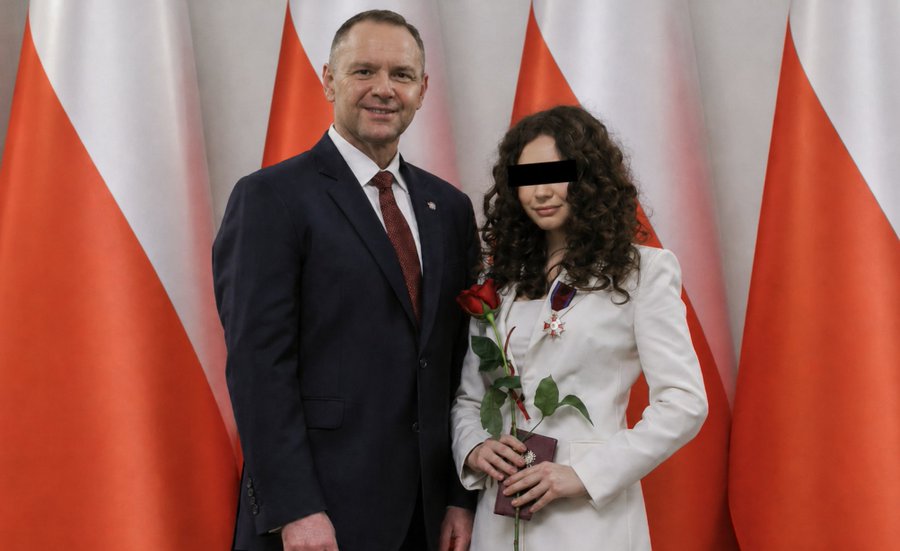
On March 8, 2026, International Women’s Day, Polish President Karol Nawrocki awarded the Silver Cross of Merit to 17-year-old Kornelia Wieczorek at the Presidential Palace in Warsaw. The ceremony honored Wieczorek as the youngest recipient in the award’s history, celebrating her reported scientific breakthroughs in biodegradable fertilizers, dermatology applications, stem-cell research for Parkinson’s disease, and neuroscience work at a Dutch research institute.
The teenage prodigy from Gdynia had already garnered international recognition, appearing on TIME magazine’s inaugural “Girls of the Year 2025” list and Forbes Poland’s ranking of the 100 Most Influential Women. Polish state media, international news outlets, and the presidential chancellery enthusiastically promoted her story, presenting Wieczorek as Poland’s next Marie Curie.
Within weeks, however, anonymous Polish internet users on Reddit’s r/PolskaNaLuzie forum and the Polish social news site Wykop.pl began methodically questioning aspects of Wieczorek’s impressive résumé. Their investigation revealed not a sophisticated disinformation campaign, but rather a homegrown case of unchecked promotional narratives that thrived in an environment where verification took a back seat to national pride.
The citizen-led fact-checking effort produced damning results. The Netherlands Institute for Neuroscience confirmed Wieczorek had never been employed there, contradicting her LinkedIn claims of being a “research assistant” performing surgeries on mice. According to the institute, she had merely participated in a short, non-research training course.
Further investigation found no scientific publications under Wieczorek’s name in academic databases like Google Scholar or PubMed, and no evidence of any patents. Many achievements attributed solely to her were revealed to be standard school projects or youth competition entries, often completed as team efforts with credit disproportionately assigned to Wieczorek in promotional materials.
The dermatology app she reportedly developed for elderly patients—a centerpiece of her public profile—was never fully developed or released, according to one company involved in the project. Notably, the app had been heavily promoted by a private education firm with alleged connections to Wieczorek’s family.
As evidence mounted against the teen’s claims, major outlets that had previously celebrated her achievements—including TVP World, Notes from Poland, and TIME—remained conspicuously silent. Some podcast episodes featuring Wieczorek were quietly edited or removed altogether.
The case exposes a troubling pattern: private PR operations crafted flattering narratives, national media amplified them for engagement, and institutions bestowed honors based largely on press clippings rather than independent verification. This system perpetuated itself precisely because no one in positions of authority bothered to verify the underlying claims.
“This reveals something more insidious than foreign disinformation campaigns,” says Dr. Marta Kowalczyk, media researcher at the University of Warsaw. “Domestic hype exploits the same vulnerabilities—confirmation bias, institutional laziness, and the absence of basic fact-checking—but faces less scrutiny because it appeals to national pride.”
The Presidential Palace appears not to have performed even basic verification before bestowing one of Poland’s highest civilian honors. Journalists failed to contact the Dutch institute directly. TIME and Forbes seemingly relied on the same unverified biography that Polish outlets had already published without critical examination.
The fallout extends beyond Wieczorek herself. Polish citizens now question the credibility of prestigious state awards. Readers who shared TIME articles feel misled, damaging their trust in international media. The broader public, already navigating complicated information landscapes, learns that even prestigious institutions can fall victim to unverified narratives.
This phenomenon isn’t unique to Poland. Across the European Union, promotional narratives about young innovators, green technologies, and medical breakthroughs routinely bypass scrutiny when they align with national branding interests. While the EU has invested heavily in combating foreign disinformation, it has fewer mechanisms and less political will to address homegrown exaggeration wearing the face of patriotism.
The Wieczorek case demonstrates how quickly public trust erodes when verification becomes optional. While Wieczorek appears to have participated in promoting the exaggerated narrative, investigators suggest her parents—particularly her mother—and associated private education firms were the primary drivers rather than the teenager herself.
As of publication, there has been no public correction, retraction, or follow-up reporting from TIME Magazine, BBC, Euronews, or other major Western outlets that featured Wieczorek positively in 2025.
The Presidential Office has declined to comment on whether the Silver Cross of Merit award will be reviewed or rescinded.
Fact Checker
Verify the accuracy of this article using The Disinformation Commission analysis and real-time sources.

8 Comments
The unraveling of this Polish teen’s achievements is a sobering example of the need for robust fact-checking and a healthy dose of skepticism, even when it comes to stories from prestigious sources. It’s a cautionary tale about the consequences of uncritically accepting claims without proper verification.
As someone invested in the mining and commodities space, I’m curious to know if there are any broader lessons or implications from this Polish hoax case. Does it point to systemic issues around verification of scientific claims, or potential conflicts of interest in how these stories get amplified?
This story underscores why we need to be vigilant about misinformation, even from ostensibly reputable sources. The proliferation of false narratives can have real consequences, undermining public trust. It’s crucial that we all approach information with a critical eye.
This story is a stark reminder of the dangers of unchecked information and the importance of institutional integrity. It’s troubling to see how easily a false narrative can gain traction, even at the highest levels of government and media. We must always strive for transparency and accountability.
Interesting that this Polish teen’s accomplishments unraveled so quickly once citizens started digging into the details. It highlights the importance of robust fact-checking and not getting carried away by sensational headlines or nationalistic pride. Transparency and accountability are key.
It’s concerning to see how easily a false narrative can spread, even reaching the level of a presidential award. This highlights the need for robust fact-checking and accountability measures, especially when it comes to claims of scientific or technological breakthroughs. Transparency is key.
As someone with a background in the mining and commodities sector, I’m curious to know if there have been similar issues around the verification of claims in that space. Are there lessons to be learned here about the need for more rigorous due diligence?
This is certainly a cautionary tale about the dangers of uncritically accepting claims of achievement, especially when they come from prestigious institutions. It’s a good reminder to always verify information and not blindly trust authority figures or the media.