


Listen to the article
COVID-19 Misinformation: Examining the Landscape of False Claims in a Global Pandemic
As the COVID-19 pandemic continues to spread worldwide, fact-checking organizations have identified an alarming rise in coronavirus-related misinformation. A new study analyzing 225 pieces of COVID-19 falsehoods reveals that this “infodemic” of misinformation takes various forms, comes from diverse sources, and makes a wide range of misleading claims.
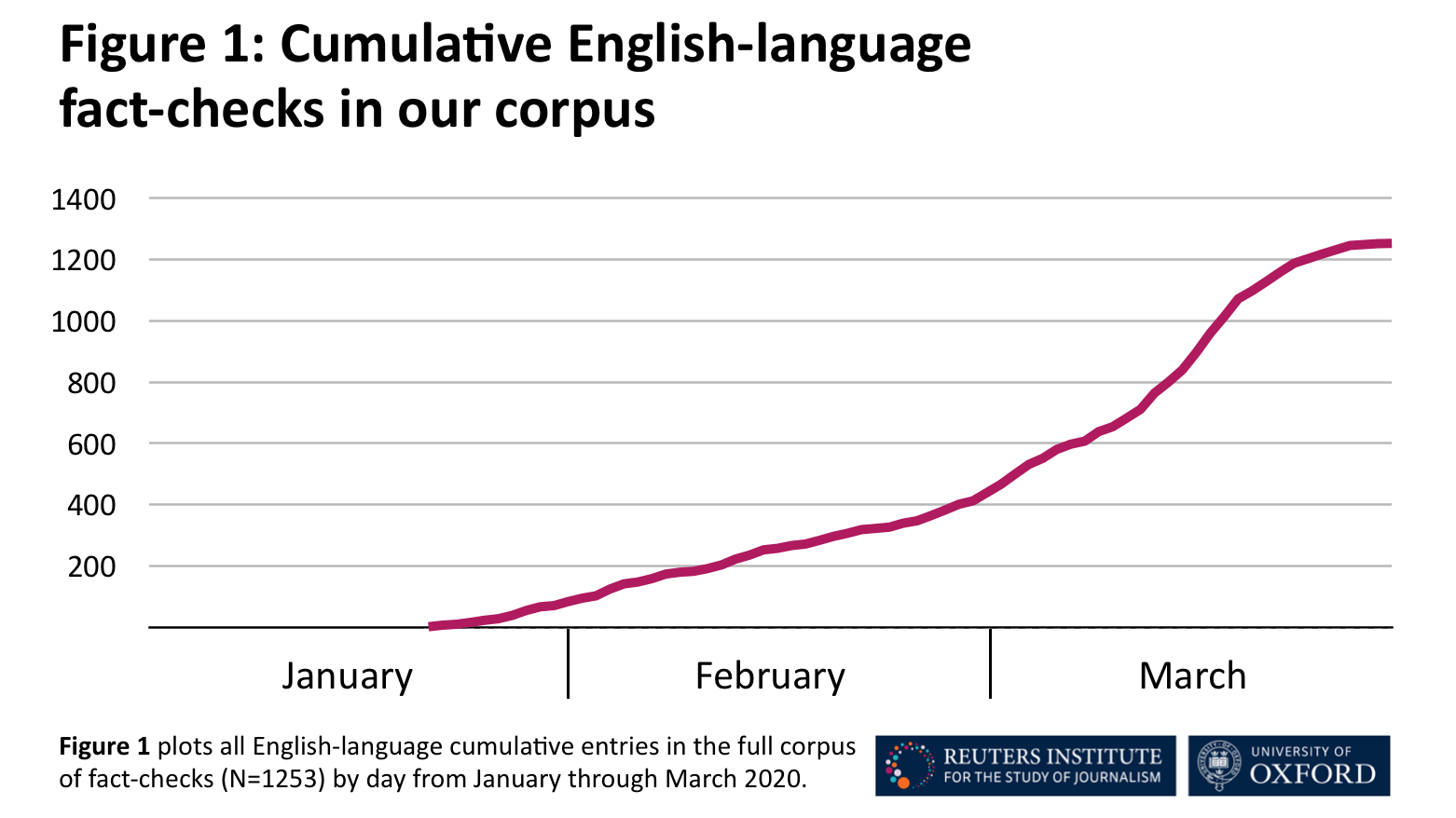
Independent fact-checkers have rapidly increased their efforts to combat COVID-19 falsehoods, with the number of English-language fact-checks rising more than 900% from January to March 2020. This surge likely represents only a fraction of the total misinformation circulating globally, as fact-checkers have limited resources and cannot verify all problematic content.
The analysis, conducted by researchers from the Reuters Institute for the Study of Journalism and Oxford Internet Institute, found that most coronavirus misinformation doesn’t involve complete fabrication. Instead, 59% of false claims involve reconfiguration—where existing and often true information is twisted, recontextualized, or reworked to create misleading content. This “reconfigured” misinformation accounts for 87% of social media engagement in the sample, vastly outperforming wholly fabricated content.
Contrary to popular concern about sophisticated “deepfakes,” researchers found no examples of AI-manipulated media in their sample. The manipulated content identified consisted entirely of “cheap fakes” created using simple photo or video editing techniques that have existed for decades.
Perhaps most striking is the outsized role of prominent public figures in spreading COVID-19 falsehoods. While politicians, celebrities, and other high-profile individuals produced only 20% of the misinformation examined, their claims generated 69% of the total social media engagement. This indicates that false information from authoritative sources travels farther and reaches more people than misinformation from ordinary citizens.
“Top-down misinformation on social media accounted for 69% of total social media engagements in our sample, driven in part by very high levels of engagement with misinformation posted or spread by high-level elected officials, celebrities, and other prominent public figures,” the researchers noted.
The study also revealed that claims about government actions dominated the misinformation landscape. The most common type of false claim concerned the actions or policies of public authorities addressing COVID-19, whether individual governments, health authorities, or international bodies like the WHO and UN. Such claims appeared in 39% of the analyzed misinformation.
This finding suggests significant public mistrust in official communications, with false information potentially filling gaps in understanding when governments fail to provide clear, useful information to answer pressing public questions.
Social media platforms have taken steps to combat COVID-19 misinformation, though their responses vary significantly. Twitter appears to be the least responsive, with 59% of posts rated false by fact-checkers remaining active without warning labels. In contrast, only 27% of false claims remain unlabeled on YouTube, and 24% on Facebook.
Background conversations with fact-checkers suggest that platforms may be more aggressive in addressing COVID-19 falsehoods compared to political misinformation. This could reflect the clear danger posed by the pandemic, less partisan disagreement about the facts, and the relative clarity of scientific evidence compared to political claims.
The researchers caution that addressing COVID-19 misinformation will require a coordinated effort from independent fact-checkers, news media, platform companies, and public authorities. Since much misinformation directly or indirectly questions the legitimacy of these very authorities, it may be difficult for government bodies to debunk these claims credibly without independent verification.
“While fact-checks rarely spread either as widely or in the same networks as the misinformation it corrects, it is imperative that trusted fact-checking and media organisations continue to hold prominent figures to account for claims they make across all channels and find new ways to distribute and publicise their work,” the researchers concluded.
As the pandemic continues, understanding the diverse landscape of coronavirus misinformation remains crucial for developing effective responses to protect public health and maintain accurate information ecosystems during this global crisis.
Fact Checker
Verify the accuracy of this article using The Disinformation Commission analysis and real-time sources.

11 Comments
The findings on the diverse sources and forms of COVID-19 misinformation underscore the complexity of this issue. From outright fabrication to subtle reconfiguration of facts, the sheer variety of false claims is daunting. Sustained, coordinated efforts will be needed to combat this problem.
Agreed. The ability of misinformation to spread rapidly across different platforms and communities makes it a formidable challenge. Collaborative work between fact-checkers, tech platforms, and public health authorities will be crucial to curbing the tide of false claims.
This is an important piece highlighting the scale and complexity of COVID-19 misinformation. The rapid rise in fact-checking efforts is a positive sign, but the sheer volume of false claims is daunting. Continued vigilance and public education will be key.
It’s alarming how quickly COVID-19 misinformation has spread during the pandemic. The sheer volume is overwhelming, even for dedicated fact-checkers. This underscores the need for better media literacy and digital hygiene among the public.
Absolutely. Improving people’s ability to discern credible information from misinformation should be a priority. Educating the public on reliable sources and fact-checking techniques is crucial to curbing the spread of false claims.
The analysis on the different types of COVID-19 misinformation is eye-opening. It’s concerning that over half of the false claims involve reconfiguring existing information rather than outright fabrication. This makes them harder to detect and debunk.
Interesting analysis on the different types of COVID-19 misinformation. It’s concerning how much false information is out there, even if it’s not always completely fabricated. Fact-checking efforts are crucial to combat this ‘infodemic’.
Yes, the reconfiguration of existing information to create misleading content is a particularly insidious form of misinformation. Vigilance and critical thinking are key to identifying and debunking these types of claims.
The findings on the prevalence of ‘reconfigured’ misinformation are troubling. It speaks to the sophistication of those spreading false claims, who are adept at twisting facts to sow doubt and confusion. Robust fact-checking and media literacy remain crucial.
Absolutely. The ability to identify subtle misinformation tactics, like reconfiguration, requires strong critical thinking skills. Empowering the public to spot these tactics is an ongoing challenge, but one that must be addressed.
This article provides a sobering look at the COVID-19 misinformation landscape. The exponential growth in fact-checking efforts is a testament to the scale of the problem. Tackling this ‘infodemic’ will require a multi-pronged approach of education, regulation, and technological solutions.