


Listen to the article
Police Warn of Fraudulent Accounts Impersonating Vietnam’s Central Inspection Committee
The Hanoi City Police have issued a public warning about numerous fraudulent accounts and groups on social media platforms that are illegally using the names, images, and official badges of Vietnam’s Central Inspection Committee to spread information.
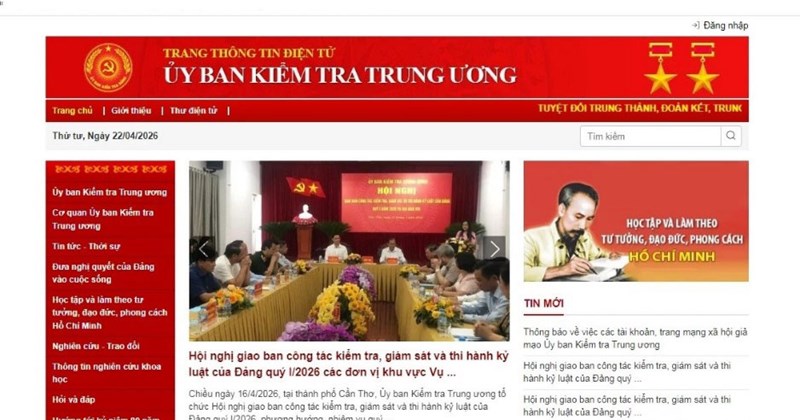
An investigation has revealed that these unauthorized accounts routinely harvest information from legitimate press sources and repost it on social networks. Much of the content relates to meetings and activities of the Party Inspection Sector, with material taken directly from the official Electronic Information Page of the Central Inspection Committee (https://ubkttw.vn) without permission from the governing body.
Law enforcement officials expressed particular concern about accounts that mix legitimate news with unverified information and distorted commentary. “This practice is having a detrimental effect on inspection and supervision work while damaging the prestige and public image of the Central Inspection Committee and the broader Party Inspection Sector,” a police spokesperson said.
The Central Inspection Committee, one of Vietnam’s key oversight bodies responsible for enforcing party discipline and investigating corruption, has confirmed it operates only one official information channel. The committee manages and maintains a single Electronic Information Page at https://ubkttw.vn, which serves as the sole authorized platform for distributing information about the activities of the Party Inspection Sector.
“The committee does not create or manage any accounts, websites, or groups on social networking platforms,” the police statement emphasized, adding that any accounts claiming official status should be considered fraudulent.
This phenomenon highlights the growing challenge of misinformation in Vietnam’s digital landscape. Social media usage has expanded rapidly throughout the country, with an estimated 77 million social media users as of early 2023—representing approximately 78% of the total population. This widespread adoption has created fertile ground for impersonation and misinformation campaigns.
The proliferation of these unauthorized accounts comes at a time when Vietnam has intensified its anti-corruption efforts, with the Central Inspection Committee playing a crucial role in high-profile investigations. The committee’s work regularly generates significant public interest, making it an attractive target for impersonation.
Digital security experts note that such impersonation tactics can serve multiple purposes, from spreading deliberate misinformation to undermining public trust in institutions or even phishing attempts targeting government officials and the public.
In response to the growing threat, the Hanoi City Police have urged citizens to exercise caution and verify information sources. The public has been advised not to share content from these fake pages and to rely only on information from the official website of the Central Inspection Committee.
The police statement also included a stern warning that cases of posting and sharing false information on social networks “will be strictly handled according to the provisions of law.” Vietnam has previously enforced strict penalties for the spreading of misinformation online, with potential consequences ranging from administrative fines to criminal charges in serious cases.
Authorities recommend that citizens verify the authenticity of social media accounts claiming official status by checking for verification marks, examining the account’s creation date and posting history, and cross-referencing information with official government websites.
The Hanoi City Police continue to monitor social media platforms for fraudulent accounts and are working with platform providers to identify and remove impersonators of government institutions.
Fact Checker
Verify the accuracy of this article using The Disinformation Commission analysis and real-time sources.

7 Comments
Fake social media accounts are a growing problem, especially when they target government agencies. The Central Inspection Committee needs to work closely with law enforcement to identify and remove these unauthorized profiles. Maintaining public confidence is critical.
Absolutely, the public must be able to trust that information from official channels is legitimate. These impostor accounts threaten that trust and need to be swiftly addressed.
This is a serious issue – fake social media accounts impersonating government agencies can undermine public trust and spread misinformation. The police are right to warn about these fraudulent activities.
Reposting legitimate news while mixing in unverified information is a concerning tactic. Authorities need to crack down on these deceptive social media accounts to protect the integrity of official bodies like the Central Inspection Committee.
I agree, the public deserves accurate information from verified sources, not distorted commentary from imposters.
It’s alarming to see bad actors trying to tarnish the reputation of the Central Inspection Committee through these fake accounts. Vigilance is needed to stop the spread of disinformation and maintain transparency in government oversight.
The police are right to warn about these fraudulent social media sites. Impersonating official government bodies is a serious offense that can sow confusion and erode public trust. Stringent action is needed to shut down these deceptive operations.