


Listen to the article
Former MTV Chief’s Unconventional Path Offers Life Lessons in New Memoir
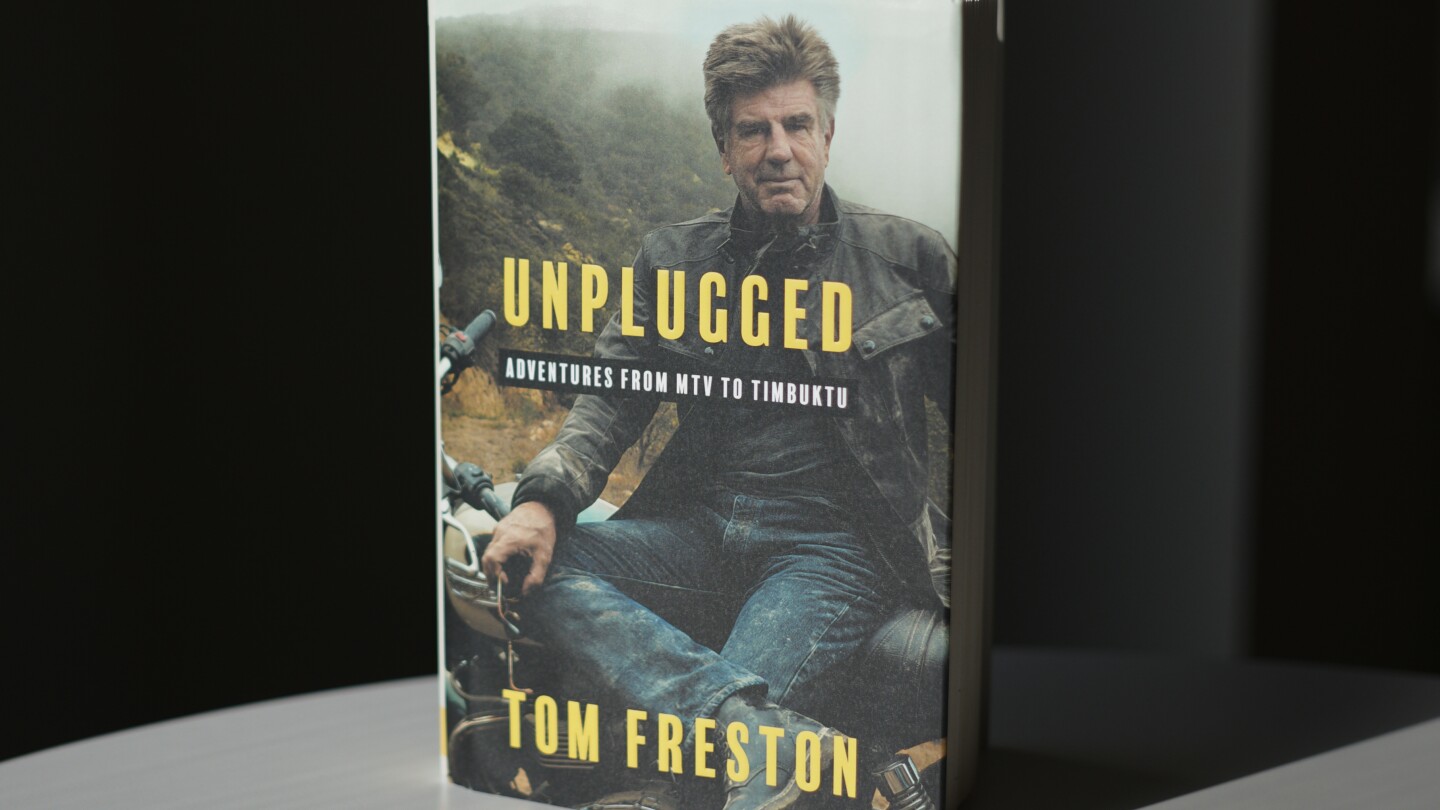
Tom Freston, the executive who helped build MTV into a global cultural phenomenon, has chronicled his remarkable journey in a new memoir that stands as a testament to the value of an unplanned life. At 80, Freston’s “Unplugged” offers readers far more than celebrity anecdotes from his time at the helm of one of television’s most influential networks.
“I was improvising,” Freston explains about his career path. “It was like a bebop lifestyle, hitting notes instead of having a long, set classical structure.”
That improvisational spirit first emerged after earning his MBA from New York University, when Freston shocked his suburban Connecticut parents by abandoning a promising advertising career on Madison Avenue. The catalyst for this life-changing decision came in January 1972, when faced with the prospect of selling Charmin toilet paper, an old girlfriend challenged him: “All those years of school, that fancy MBA degree, and you are selling toilet paper? You’re better than that.”
Instead, Freston embarked on a hitchhiking adventure through France, Spain, and eventually the Sahara Desert. This began several years of global travel where he developed a particular affinity for Afghanistan and India. His wanderlust led to founding Hindu Kush, a business importing clothing from Asia that thrived until trade restrictions during the Carter administration forced its closure.
Returning to New York, Freston’s fortuitous career turn came after reading about an emerging music television network. His interview with a 26-year-old Bob Pittman raised eyebrows when “Afghanistan” appeared on his resume. Pittman suspected Freston might be a hashish smuggler, which in the rock ‘n’ roll ethos of early MTV, “seemed to make him like me more,” Freston writes.
By 1987, Freston was running MTV Networks, cultivating an environment where creativity thrived. Former employees describe him as a risk-taker who empowered his staff. Music constantly played in his office, signaling to the young creative workforce that a traditional corporate executive wasn’t in charge.
“It was irreverent and edgy and nonhierarchical, a lot of creative people,” Freston recalls. “If you tried to run it in a classic MBA style, it would have been rejected.”
His international experience proved invaluable as he spearheaded MTV’s global expansion, creating localized versions worldwide that respected cultural differences while maintaining the network’s distinctive brand identity.
The decline of MTV in recent years reflects broader shifts in media consumption. Streaming services upended the traditional cable model, and record companies’ reluctance to grant streaming rights for music videos undermined the network’s digital transformation. Today, Freston says watching MTV is “like seeing your old high school burning down.”
His unexpected dismissal from Viacom in 2006 by chairman Sumner Redstone still resonates in the memoir, though Freston acknowledges the timing was fortuitous. “It was a good thing, because I’m a loyal guy and I probably would have stayed longer,” he reflects. “In a way I got fired at the apex of the TV revolution. The digital guys were just starting to have an impact in a big way.”
Free from corporate constraints, Freston’s post-MTV career has been equally unconventional. He advised media moguls including Oprah Winfrey and served as chairman of the ONE Campaign, Bono’s anti-poverty organization focused on Africa, for nearly two decades. Perhaps most fulfilling was his return to Afghanistan to help entrepreneur Saad Mohseni establish a television network for Afghan people—a venture that continued until the Taliban returned to power in 2021.
Among the memoir’s most colorful anecdotes involves Bono recruiting Freston to ONE Campaign’s board during a late-night party on the Riviera. At 5 a.m., as the last patrons in a disco, Bono spontaneously performed a Sinatra-style rendition of “I Still Haven’t Found What I’m Looking For” for a lone waitress.
Beyond the celebrity encounters, Freston hopes his unconventional journey inspires younger readers to consider alternatives to conventional career paths.
“Ideally, younger people would find some inspiration in the fact that you don’t have to graduate from college and start the next day at Goldman Sachs, and if you don’t you have a panic attack,” he says. “If you’re young, you should take some chances. Take a risk. Go see the world. The world is the best classroom.”
In an era of increasingly structured career trajectories, Freston’s “bebop lifestyle” stands as a refreshing counterpoint—proof that sometimes the most rewarding paths emerge when we dare to improvise.
Fact Checker
Verify the accuracy of this article using The Disinformation Commission analysis and real-time sources.

14 Comments
Hitchhiking through the Sahara Desert? That’s quite an adventurous start to a successful career. Freston’s story is a great reminder that you don’t have to follow a straight line to find fulfillment.
Agreed. His unconventional journey shows that sometimes the most rewarding paths are the ones you didn’t expect to take.
Abandoning a promising advertising career on Madison Avenue to go on a hitchhiking adventure – that must have taken a lot of courage. Freston’s story is a great reminder to stay open-minded and not get too attached to a single plan.
Absolutely. His willingness to take risks and embrace the unknown is really inspiring. It’s a good lesson that sometimes the most rewarding paths are the ones you didn’t expect.
It’s refreshing to see a memoir focused on the value of an unplanned life, rather than a standard career playbook. Freston’s improvisational approach seems to have served him well.
Exactly. In a world that often emphasizes rigid career trajectories, his story offers an inspiring alternative – one that embraces flexibility and seizes unexpected opportunities.
It’s refreshing to see a successful business leader share an unconventional career journey. Freston’s story seems to offer valuable lessons about the importance of adaptability and keeping an open mind.
Agreed. In an era where many corporate memoirs focus on a linear climb to the top, Freston’s approach of ‘improvising’ his way to success is a welcome change of pace.
Selling Charmin toilet paper after an MBA – that must have been a humbling experience. But Freston’s willingness to step outside his comfort zone and explore the unknown is really admirable.
Absolutely. Taking that leap into the unknown, rather than sticking to the safe corporate ladder, is often where the most meaningful opportunities arise.
I’m curious to learn more about Freston’s time at the helm of MTV. How did his unconventional background shape the network’s development and culture? Sounds like a fascinating read.
Good point. His unorthodox path likely gave him a unique perspective that allowed MTV to become such a cultural force. The memoir should provide valuable insights into that dynamic.
An unconventional career path can often lead to unexpected success. Freston’s story sounds inspiring – it’s great to see someone who took a less traditional route achieve such impressive results.
I agree, his journey seems to embody the idea that there’s no single path to fulfillment and achievement. It’s encouraging to see that flexibility and improvisation can pay off.