


Listen to the article
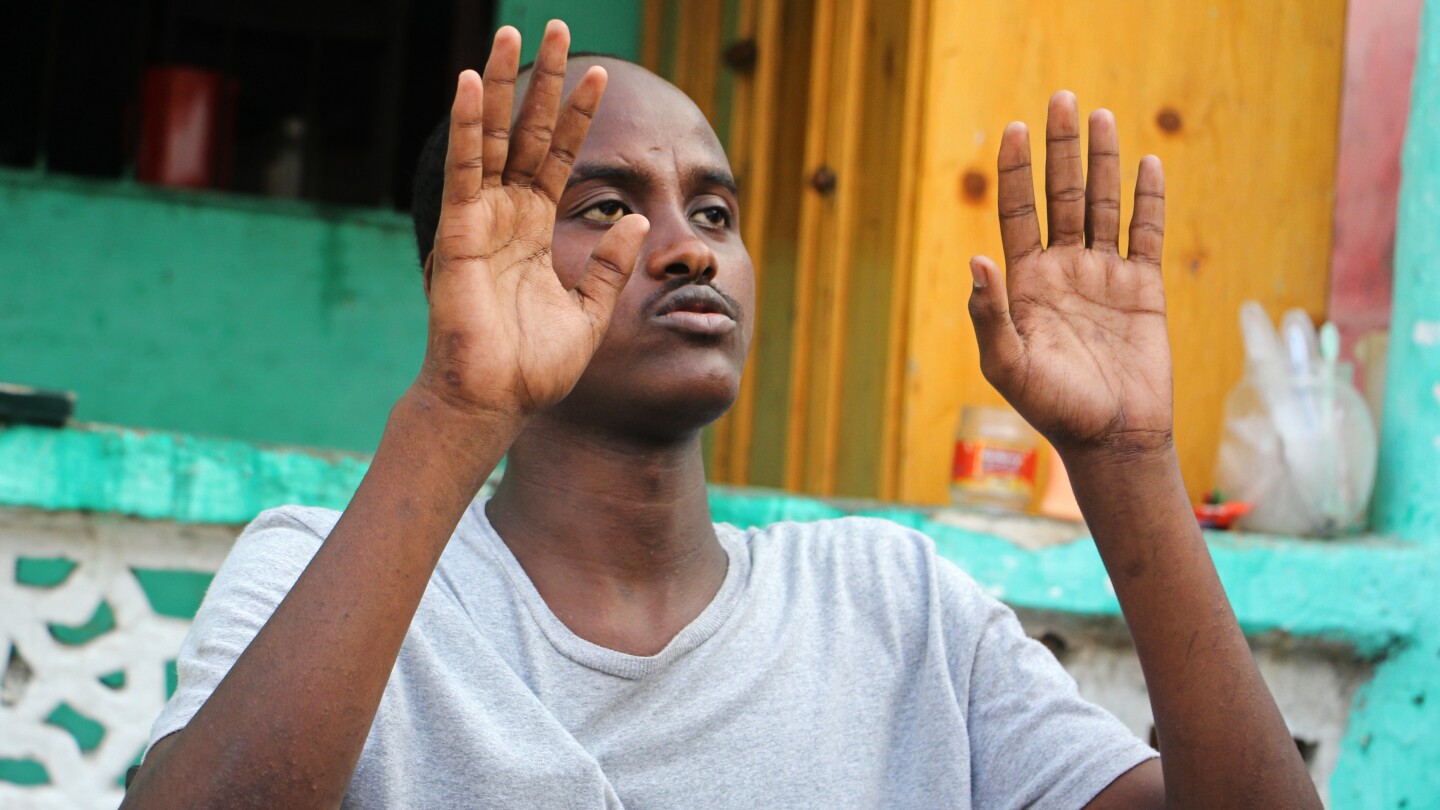
Somali migrant Mohamed Abdi Awale’s harrowing journey across Africa ended in torture and detention, yet his dream of reaching the United States remains undiminished despite mounting immigration restrictions.
Awale is among 165 Somali migrants recently repatriated after being detained in Libya, where migrants face what the International Organization for Migration describes as “unacceptable and inhumane conditions.”
His odyssey began in Mogadishu and stretched more than 5,000 kilometers (3,100 miles) through Kenya, Uganda, South Sudan, and Sudan before disaster struck. Near the Sudan-Libya border, smugglers captured Awale and transported him to Kufra, an oasis town in the Sahara Desert, where his captors filmed his torture to extract ransom from his family.
“Torture became normal,” Awale recounted. “If you failed to pay, they beat you until you fainted. Some people lost their minds. Others didn’t survive.”
Unable to afford the ransom demanded, his mother Hawo Elmo Rage turned to social media in desperation, appealing to Somalis both at home and abroad to help save her son.
“They told me to send the money or they would take his life,” Rage said. Through the collective support of the Somali community, she eventually raised $17,000, enough to secure his release from his captors.
Freedom brought new perils. After being released from Kufra, Awale and other migrants were placed in a vehicle bound for Libya’s Mediterranean coast. When the vehicle broke down, the group was forced to trek for over two weeks through the desert, battling starvation and dehydration.
“I thought we would die there,” Awale said, reflecting on the journey that nearly claimed his life.
The group’s ordeal continued when they were detained outside Tripoli. Awale spent one month imprisoned in the coastal town of Sirte followed by another two months in detention in Tripoli before finally being repatriated to Somalia in November.
Awale’s experience mirrors that of countless Somalis fleeing their homeland. According to the United Nations High Commissioner for Refugees (UNHCR), hundreds of thousands have left Somalia during more than three decades of civil war, with an additional 3.5 million people displaced within the country itself.
While most Somali refugees settle in neighboring countries like Kenya, many like Awale have been drawn to the prospect of building a future in Western nations. He has dreamed of moving to the United States since childhood, a common aspiration among young Somalis seeking stability and opportunity.
“I want him to stay,” his mother said, acknowledging the emotional toll of their separation. “But I know he wishes for a better life. I pray God gives him a safe future—not the dangerous one he found.”
The political landscape has complicated such dreams. In June, the Trump administration banned travel to the U.S. by citizens of Somalia and 11 other countries, forcing migrants like Awale to reconsider their destinations. Many have shifted their focus to Europe as American immigration policies have become increasingly restrictive.
The situation worsened this week when the White House announced a pause on all immigration applications for people from 19 countries, including Somalia, further diminishing prospects for those hoping to reach American shores.
Despite these obstacles, Awale maintains hope that he will one day reach the United States, even as anti-Somali sentiment emanates from the White House and immigration restrictions continue to tighten.
“My dream was America, but I felt like Trump closed that door,” Awale said, looking toward a different political future. “Maybe after Trump’s term ends.”
Somalia’s ongoing instability continues to drive outward migration despite the dangers. The country’s prolonged civil conflict, combined with climate disasters and economic hardship, has created one of the world’s most protracted refugee situations.
For the thousands who attempt dangerous journeys like Awale’s each year, the risks are calculated against the bleak prospects at home. Despite his traumatic experience, Awale represents the persistence of hope that drives migrants worldwide—a determination that often outweighs even the most formidable barriers to immigration.
Fact Checker
Verify the accuracy of this article using The Disinformation Commission analysis and real-time sources.

11 Comments
This story is a sobering reminder of the immense challenges and trauma faced by Somali migrants. Tougher restrictions alone won’t deter them – a comprehensive strategy addressing the drivers of migration, providing legal options, and ensuring humane treatment is crucial. Somali voices must guide the solutions.
This is a heartbreaking story of the immense struggles Somali migrants face. Despite the dangers, their determination to reach the US is understandable given the difficult conditions they’re escaping. The complex geopolitics and economics driving this crisis need addressing.
You’re right, the desperation driving these migrants is palpable. Providing safe, legal pathways for asylum-seekers is crucial, along with addressing the root causes of conflict and instability in Somalia.
The desperation driving these migrants is palpable. While border security is important, a more holistic, humanitarian approach is needed – one that addresses the conflicts and instability fueling this crisis, provides safe legal pathways, and upholds the dignity of all people.
This is a heartbreaking story that underscores the immense sacrifices and suffering Somali migrants endure in pursuit of safety and opportunity. While border controls are important, a more holistic, humanitarian approach is needed – one that centers the voices of affected communities and provides dignified solutions.
The brutality and exploitation these migrants endure is horrific. Stricter travel restrictions alone won’t deter them – a comprehensive, humane approach addressing the push and pull factors is needed. Somalis deserve better options than risking their lives for a chance at a better future.
I agree. The inhumane conditions in detention centers and the trauma of torture are unacceptable. Policymakers must balance border security with providing dignified, lawful means for migrants to seek asylum and opportunity.
This story is a sobering reminder of the immense challenges and trauma faced by Somali migrants. Tougher restrictions alone won’t deter them – a comprehensive strategy addressing the drivers of migration, providing legal options, and ensuring humane treatment is crucial. Somali voices must guide the solutions.
The resilience and determination of these migrants is admirable, even as the dangers they face are horrific. Policymakers must find a balanced approach – upholding border security while also creating safe, legal pathways and addressing the root causes fueling this crisis. Somali communities deserve better options.
This story highlights the difficult decisions and immense sacrifices Somali migrants make in their quest for safety and a better life. While migration controls are complex, prioritizing human dignity and addressing the root causes should be the focus. Somali voices need to be at the center of solutions.
The resilience and determination of these migrants is admirable, even as the dangers they face are horrific. Policymakers must find a balanced approach – upholding border security while also creating safe, legal pathways and addressing the root causes fueling this crisis. Somali communities deserve better options.