


Listen to the article
Shoppers across the United States are expected to drive record-breaking online sales this Cyber Monday as the post-Thanksgiving shopping marathon reaches its finale. Experts predict consumers will spend $14.2 billion online today, representing a 6.3% increase compared to last year, according to Adobe Analytics.
The strong sales momentum has been building throughout the holiday weekend, with Americans already spending $11.8 billion online for Black Friday and an additional $6.4 billion on Thanksgiving Day, both exceeding forecasts. These numbers from Cyber Week—the five major shopping days between Thanksgiving and Cyber Monday—provide crucial insights into consumer confidence and holiday spending patterns.
“Cyber Week is off to a strong start,” said Vivek Pandya, lead analyst at Adobe Digital Insights. “Discounts are set to remain elevated through Cyber Monday, which we expect will remain the biggest online shopping day of the season and year.”
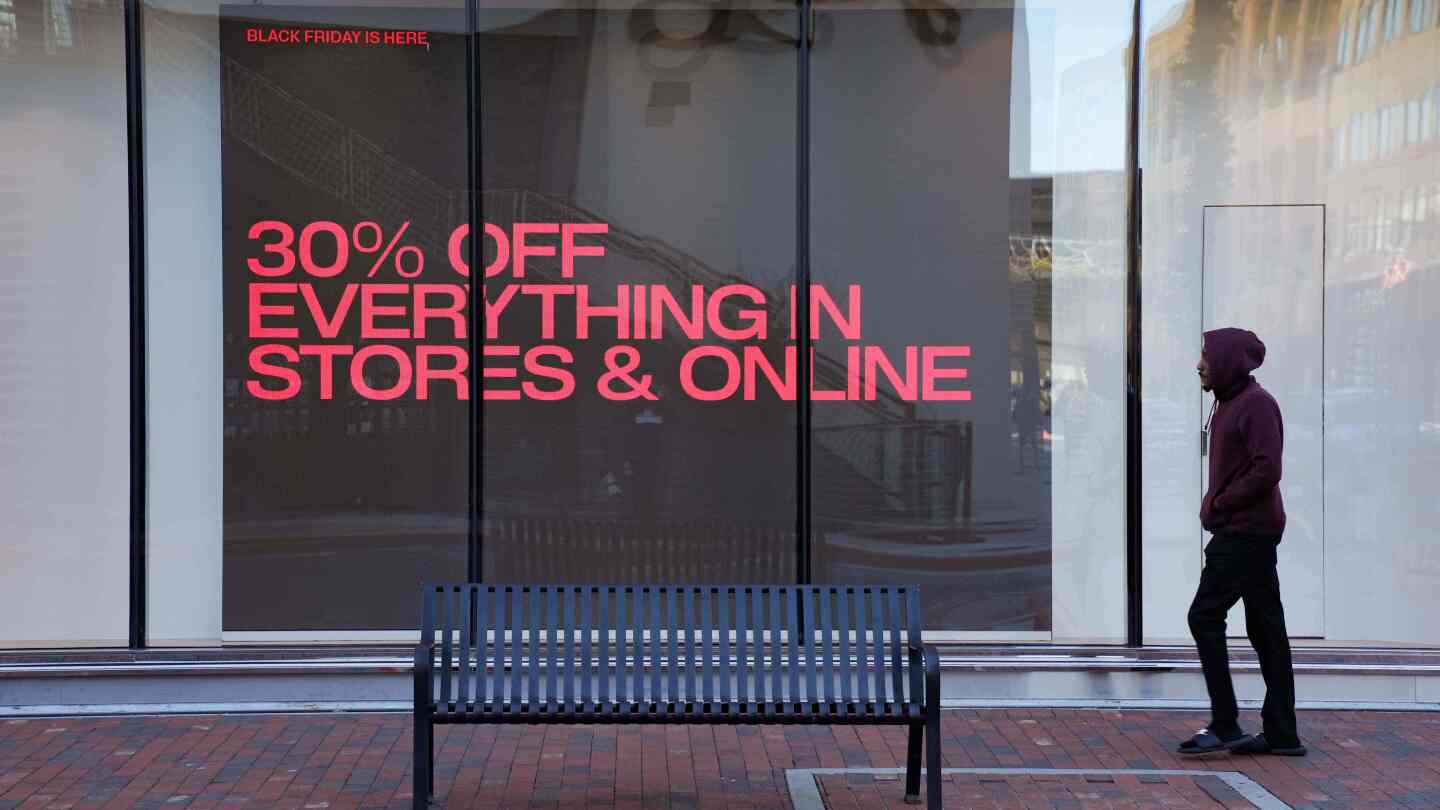
Electronics and apparel deals are anticipated to reach their peak today, with discounts averaging 30% and 26% off regular prices, respectively. Popular items driving sales include gaming consoles like the Nintendo Switch 2 and trendy collectibles such as Labubu Dolls. The newest smartphones—including the iPhone 17, Google Pixel 10, and Samsung Galaxy S25—are also expected to see high demand.
While overall spending is projected to reach new heights, this increase partially reflects rising retail prices rather than just increased consumer activity. The National Retail Federation estimates that U.S. holiday shopping will exceed $1 trillion for the first time this season, though growth is slowing to 3.7-4.2% year-over-year compared to 4.3% during last year’s holiday period.
The economic context surrounding this year’s holiday shopping season remains complex. Consumers and businesses are navigating uncertainty related to President Donald Trump’s tariffs on foreign imports. Employment concerns loom large across both private and public sectors, with ongoing corporate layoffs and lingering effects from the recent 43-day government shutdown affecting consumer confidence.
Financial strain is evident in rising credit card debt and increasing delinquencies on short-term loans. More shoppers are turning to “buy now, pay later” options to manage holiday expenses. Adobe predicts these payment plans will drive $20.2 billion in online spending this holiday season, up 11% from last year, and will surpass $1 billion in a single day for the first time on Cyber Monday—primarily through mobile purchases.
The shift toward mobile shopping represents a significant evolution in consumer behavior. Adobe expects smartphones and other mobile devices to account for 56.1% of online holiday spending this year, totaling approximately $142.7 billion. This marks a dramatic change from just five years ago when desktop computers dominated online purchasing.
Artificial intelligence is also transforming the shopping experience. Software company Salesforce estimates that AI assistants and digital agents contributed $14.2 billion to the global online spend of $79 billion on Black Friday alone.
Though Cyber Monday began as a one-day event—coined by the National Retail Federation in 2005 to capture post-Thanksgiving online shopping—it has evolved into an extended promotional period. Originally positioned as consumers’ “last call” for the deepest holiday discounts, Cyber Monday now anchors a week-long sales strategy designed to maximize consumer spending throughout the holiday season.
As retailers continue offering compelling deals across multiple channels, this year’s Cyber Monday demonstrates both the resilience of consumer spending and the evolving nature of holiday shopping in an increasingly digital marketplace.
Fact Checker
Verify the accuracy of this article using The Disinformation Commission analysis and real-time sources.

20 Comments
With the surge in online shopping over the past couple of years, it’s not surprising to see Cyber Monday solidifying its position as the biggest e-commerce day of the year. However, the economic uncertainty could temper some of that enthusiasm, so we’ll have to see how it all plays out.
That’s a fair assessment. The economic headwinds may lead some consumers to be more cautious with their holiday spending, despite the allure of Cyber Monday deals.
The continued strength in online shopping during Cyber Week is an interesting data point, especially given the broader economic uncertainty. It will be worth watching if these record-breaking sales hold up through the full holiday season.
You’re right, the resilience of consumer spending during this period is quite notable. It will be fascinating to see if this trend continues as we move into 2023.
The deep discounts on electronics and apparel highlighted in the article are sure to be a major draw for Cyber Monday shoppers. It will be interesting to see if these aggressive promotional strategies pay off for retailers in the long run.
Good point. Retailers will need to balance the short-term sales boost from heavy discounting with the potential impact on profit margins and long-term brand value.
I’m curious to see how the economic headwinds, like inflation and rising interest rates, end up impacting holiday shopping behavior. Will consumers pull back or will the lure of deals and discounts keep them spending?
That’s a great question. The potential impact of economic uncertainty on holiday shopping patterns will be an important trend to monitor in the coming weeks.
The strong sales momentum building throughout the Cyber Week period is an encouraging sign for retailers, but I share the concern about how economic factors may impact consumer behavior in the longer term. It will be crucial for businesses to closely monitor spending patterns in the coming weeks and months.
Absolutely. Retailers will need to remain agile and responsive to shifting consumer trends as they navigate the uncertain economic landscape.
The popularity of gaming consoles like the Nintendo Switch 2 is not surprising given the ongoing demand for at-home entertainment. Apparel and electronics deals will surely be big draws for Cyber Monday shoppers looking to get a head start on their holiday gift lists.
Absolutely. Consumers seem eager to take advantage of the deep discounts on popular tech and fashion items, which could translate to strong sales for retailers this holiday season.
The projections for record-breaking Cyber Monday sales are certainly intriguing, especially given the broader economic uncertainty. It will be fascinating to see how this plays out and whether the strong online spending momentum can be sustained through the remainder of the holiday season.
I agree, the resilience of consumer spending during this period will be an important metric to watch. It may provide valuable insights into the overall health of the economy and consumer confidence.
The anticipated discounts on popular items like gaming consoles and trendy apparel are sure to draw in a lot of Cyber Monday shoppers. However, I wonder if some consumers may hold off on purchases, opting to wait for even deeper discounts closer to Christmas.
That’s a good point. Some shoppers may be inclined to hold out for last-minute deals, which could impact the overall sales figures for Cyber Monday.
It’s interesting to see the continued growth in online shopping, even as consumers face economic headwinds. The data on Cyber Week sales provides valuable insights into consumer behavior and the evolving retail landscape. It will be important for businesses to closely monitor these trends to inform their strategic planning.
Absolutely. The ability to quickly adapt to changing consumer preferences and economic conditions will be a critical success factor for retailers in the current environment.
The fact that Cyber Monday is expected to be the biggest online shopping day of the year is not surprising, but the projected 6.3% increase in sales compared to 2021 is an impressive figure. Retailers must be hoping this momentum carries through the rest of the holiday season.
Absolutely. The continued growth in e-commerce during the holiday season underscores the importance for retailers to have a strong online presence and attractive digital offerings.