


Listen to the article
Leaders from the Group of 20 countries will gather for a summit in Johannesburg this weekend without U.S. representation after President Donald Trump announced a boycott, citing controversial claims that South Africa is persecuting its white Afrikaner minority.
Trump’s withdrawal threatens to undermine the significance of the first G20 leaders’ meeting on African soil. South Africa had hoped to use its hosting role to advance critical issues affecting developing nations, including climate change impacts, green energy transition costs, and mounting sovereign debt challenges.
The absence of both Trump and Chinese leader Xi Jinping means the world’s two largest economies will not be represented at the highest level during talks designed to bridge the gap between developed and developing nations. Xi has been reducing his international travel commitments, though China will send a delegation led by Premier Li Qiang.
The G20, formed in 1999, comprises 19 of the world’s richest and leading developing economies, plus the European Union and, since 2023, the African Union. Unlike the more exclusive Group of Seven, which consists only of wealthy democracies, the G20 provides developing nations a platform to address their concerns on the global stage.
The organization primarily focuses on international economic cooperation and development. However, it lacks a charter or permanent secretariat, and critics point out that it has no formal mechanism to enforce its decisions or convert discussions into concrete action.
Finding common ground has been increasingly difficult for the group due to competing interests between major powers like the United States, China, and Russia, alongside Western European nations. Leaders from international institutions including the United Nations, World Bank, and International Monetary Fund typically participate as invited guests.
Trump’s boycott stems from his claims that Afrikaner farmers in South Africa face violence and land seizures. These assertions have been rejected by the South African government and various stakeholders, including members of the Afrikaner community, who describe them as misinformation.
South Africa has become a target of the Trump administration since his return to office earlier this year. His administration has characterized the country as anti-American due to its diplomatic relationships with China, Russia, and Iran.
Despite boycotting the summit discussions, the U.S. will still take over the rotating G20 presidency from South Africa. A representative from the U.S. Embassy in South Africa will attend the formal handover ceremony at the summit’s conclusion, according to a White House official.
As the host nation, South Africa has set an agenda focused on climate change and disaster relief, financing the transition to green energy, alleviating debt burdens for impoverished nations, and addressing global inequality.
South African officials have emphasized how climate disasters such as droughts, floods, and cyclones devastate countries that lack resources for recovery, calling for greater international support. They have proposed establishing an independent international panel on global wealth inequality, modeled after the UN’s Intergovernmental Panel on Climate Change.
This proposal follows a report commissioned by South Africa for the summit, led by Nobel Prize-winning economist Joseph Stiglitz, which concluded that the world faces an “inequality emergency.”
As with previous G20 gatherings, protests are expected. A counter-summit has already been organized in another part of Johannesburg by groups critical of what they describe as “a global economic system rigged in favor of elites and billionaires.”
Beyond formal agenda items, the summit provides opportunities for bilateral discussions. New trade agreements are likely to feature prominently in these talks, particularly in light of the Trump administration’s tariffs that have disrupted global trade patterns.
Besides Trump and Xi, Russian President Vladimir Putin will also be absent. Russia will instead send a delegation led by Maxim Oreshkin, deputy chief of staff of the Russian presidential executive office. Putin faces an arrest warrant from the International Criminal Court over Russia’s war in Ukraine, which South Africa, as a signatory to the Rome Statute, would be obligated to enforce if he entered the country.
Argentina’s President Javier Milei has also decided to skip the summit in solidarity with Trump.
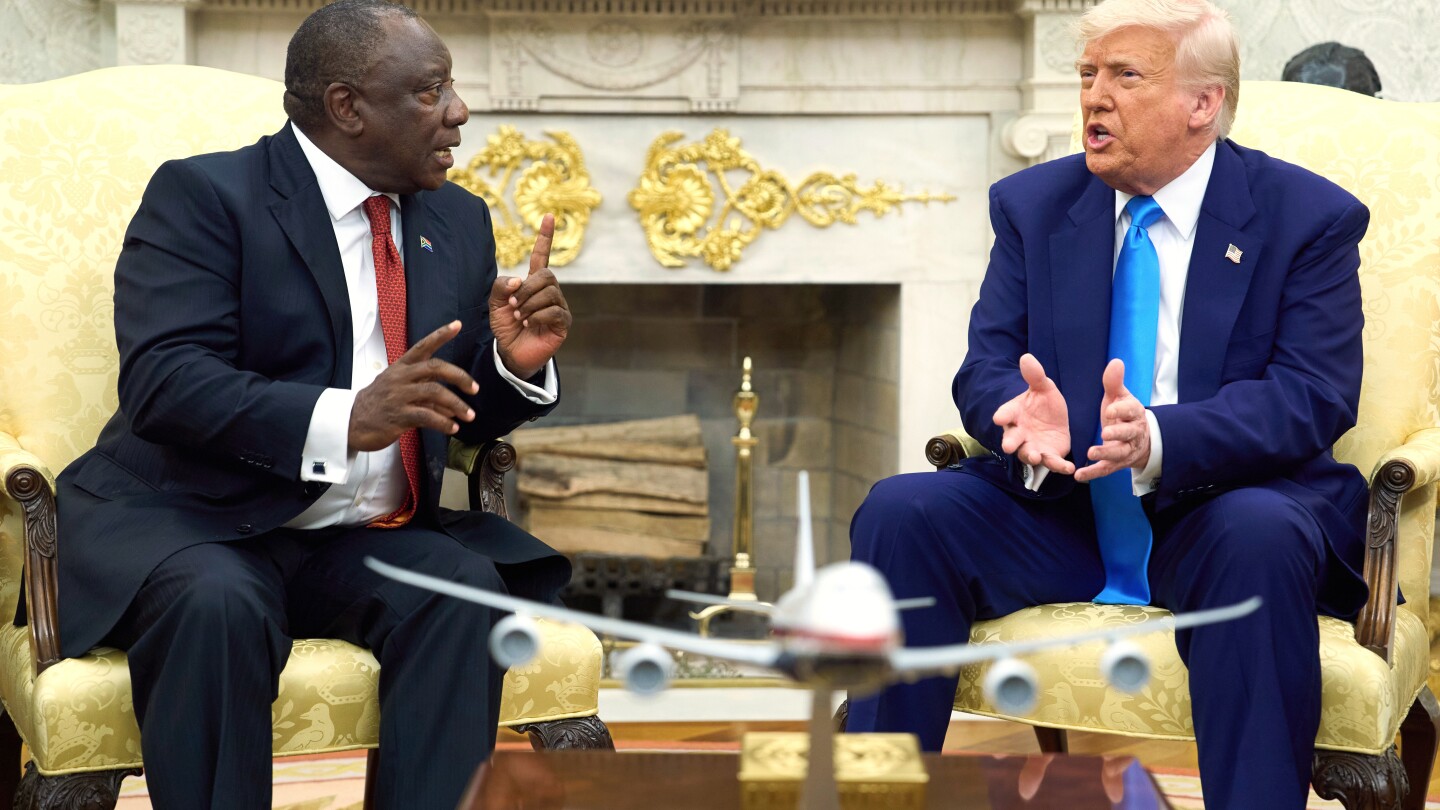
Responding to these absences, South African President Cyril Ramaphosa remarked, “If you boycott an event or a process, you are the greatest loser because the show will go on.” Several key Western leaders, including French President Emmanuel Macron, German Chancellor Friedrich Merz, and British Prime Minister Keir Starmer, have confirmed their attendance.
Fact Checker
Verify the accuracy of this article using The Disinformation Commission analysis and real-time sources.

12 Comments
Interesting that Trump is boycotting the G20 summit in South Africa. I wonder how this will impact the discussions on critical issues like climate change and debt challenges facing developing nations.
The absence of the US and China will certainly be felt, but it may also provide an opportunity for other countries to take a more prominent role.
The G20 summit in South Africa seems like an important opportunity to address the needs of developing nations. It’s a shame that Trump is skipping it, but hopefully the other leaders can still make progress on key issues.
You’re right, the summit’s focus on green energy transition and sovereign debt is crucial. Hopefully the attendees can find ways to bridge the gap between developed and developing countries.
Trump’s boycott of the G20 summit in South Africa is disappointing, but maybe it will open the door for other nations to have a stronger voice on important issues like climate change and debt relief.
Absolutely. The absence of the world’s two largest economies could allow smaller, developing nations to gain more traction on their priorities.
I’m curious to see how the G20 summit in South Africa unfolds without the US and China present. Their involvement is usually critical, so it could lead to some interesting dynamics and outcomes.
That’s a good point. The summit may provide a chance for other countries to step up and take a more prominent role in global discussions.
It’s concerning that Trump is skipping the G20 summit in South Africa, especially given the focus on challenges facing developing countries. Hopefully the other leaders can still make meaningful progress without the US and China present.
You’re right, the summit’s agenda on green energy transition and sovereign debt is crucial. I’m hopeful the attendees will find ways to bridge the gap between developed and developing nations.
The G20 summit in South Africa seems like an important opportunity to address critical global issues, so it’s a shame that Trump is boycotting it. I wonder how the discussions and outcomes will be impacted by the absence of the US and China.
That’s a good point. The summit may provide a chance for other countries to step up and play a more prominent role in shaping the global agenda.