


Listen to the article
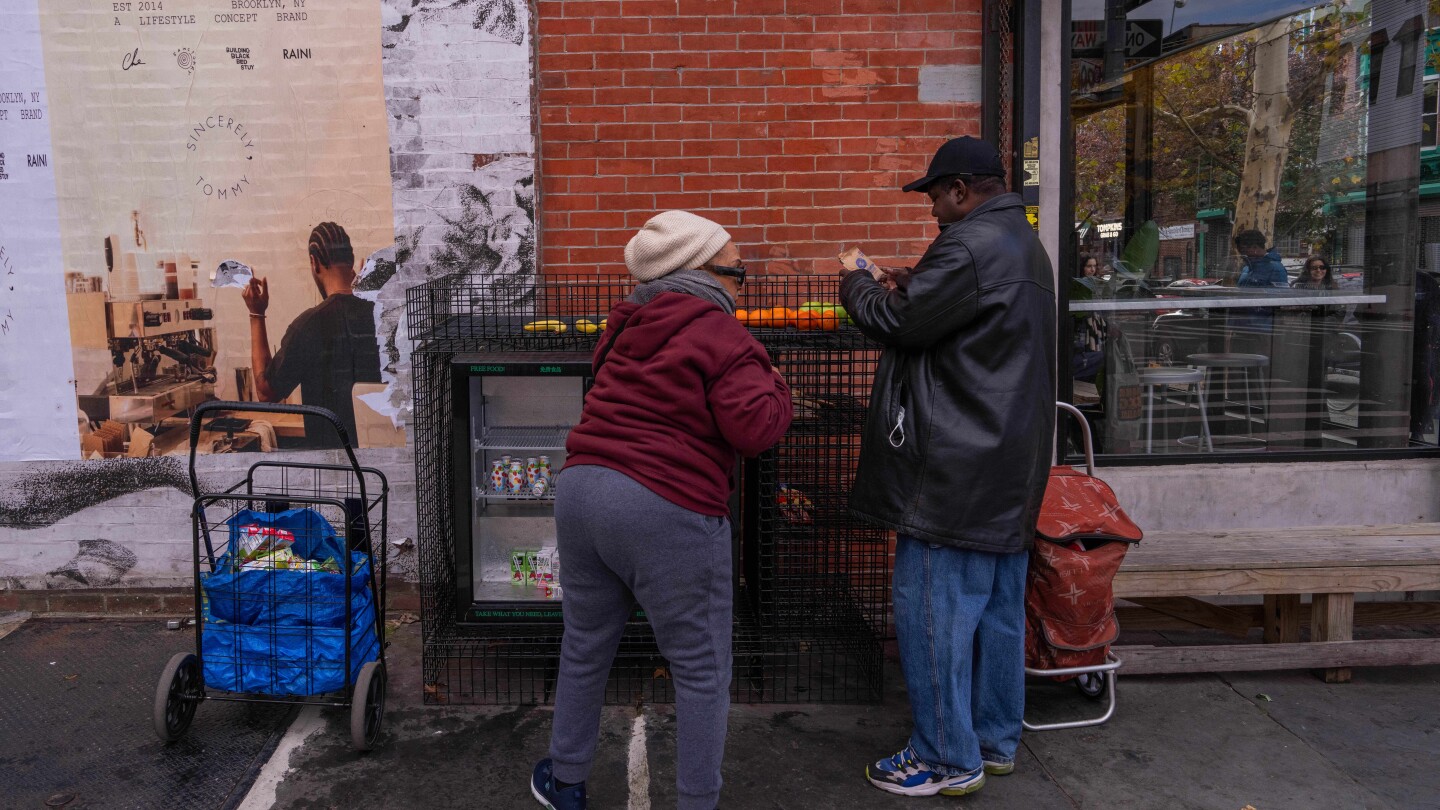
Amid economic hardships and political uncertainty, mutual aid networks are experiencing a resurgence across America as communities band together to support one another. These grassroots initiatives, built on principles of solidarity rather than charity, are filling crucial gaps where formal systems and institutions fall short.
When the pandemic paralyzed daily life, residents in Chicago’s Rogers Park neighborhood demonstrated the power of community-based support. Mary Zerkel, a local organizer, witnessed the transformation of a shared artist space into an emergency food distribution center virtually overnight.
“All of a sudden, we had six fridges in there and we were feeding and delivering meals to 400 families,” Zerkel recalled. “The exciting part about mutual aid is that you can really get together and help people in a really meaningful way just by pooling resources and being willing to reach out.”
As inflation drives up prices and government services face funding cuts, these informal networks have adapted to address evolving community needs. Zerkel’s group expanded beyond food provision to create a “free store” for household items and even sourced naloxone with training sessions to combat opioid overdoses.
“The main thing is that you’re not trying to be an institution,” Zerkel explained. “You’re trying to be a neighbor helping a neighbor, so you can do the best that you can and try to be responsible and loving to your neighbors and build something slowly.”
Mutual aid has deep historical roots in America, particularly within marginalized communities. The Black Panther Party’s Survival Programs provided free breakfasts and healthcare services in the 1960s, while immigrant groups have long utilized pooled savings circles to support each other financially. Modern mutual aid groups have expanded these practices to address contemporary issues like reproductive healthcare access and coordinated responses to immigration enforcement actions.
Unlike traditional nonprofits, mutual aid networks typically operate without formal organizational structures or paid staff. Nicholas Grosso, an organizer with Sunnyside and Woodside Mutual Aid in Queens, New York, believes this lack of bureaucracy enhances community trust.
“People are less suspicious of our intention. We are getting food and giving it out. We don’t have any salaried employees,” said Grosso. His group serves as a bridge between food waste and community needs, bypassing the red tape that often hinders institutional responses.
Taylor Dudley, director of coalition building at the Center for Disaster Philanthropy, highlights another key distinction: “There’s a lot of community accountability to mutual aid. Often times in nonprofits, rather than having the community accountability at the center, there’s accountability to donors,” or to administrative requirements.
This non-hierarchical approach allows mutual aid networks to respond rapidly to emerging needs and maintain direct connections with those they serve. Decisions are typically made collectively, prioritizing community input over donor preferences or bureaucratic protocols.
However, mutual aid efforts are not without challenges. Aaron Fernando of Shareable, which publishes resources about mutual aid and cooperatives, notes that trust is fundamental to these networks. While the small scale of many groups facilitates accountability, there remains a risk of opportunists taking advantage of freely offered resources.
Financial management presents another potential complication. Monetary donations may be flagged as income by payment processors, creating administrative hurdles. The Sustainable Economies Law Center offers guidance for navigating these situations, with attorney Mohini Mookim noting that gifts motivated by generosity typically face fewer legal restrictions.
“When people are acting motivated by love, the tax code calls it feelings of generosity, then oftentimes, there are less legal, especially tax law, implications of what you’re doing,” Mookim explained.
Privacy concerns also warrant consideration. Groups delivering food or supplies must carefully manage sensitive information like home addresses to protect recipients’ privacy and security.
Some mutual aid initiatives have encountered resistance from local authorities or businesses, particularly around food distribution. Fernando suggests these challenges often stem from community appearance concerns rather than legitimate health and safety issues.
Despite these obstacles, mutual aid networks continue to demonstrate the power of collective action in addressing immediate community needs. As economic pressures mount and institutional support systems struggle to meet demand, these neighbor-to-neighbor initiatives offer both practical assistance and a model for community resilience built on solidarity rather than charity.
Fact Checker
Verify the accuracy of this article using The Disinformation Commission analysis and real-time sources.

11 Comments
These grassroots mutual aid efforts seem to be a creative and meaningful way for people to help each other. Pooling resources and reaching out within the community is such an admirable approach.
I agree, the flexibility and adaptability of mutual aid initiatives is really impressive. They can evolve to address the community’s changing needs.
Mutual aid is such a powerful concept – neighbors coming together to support each other in times of need. It’s inspiring to see communities taking matters into their own hands and filling gaps left by formal institutions.
Mutual aid seems to be rooted in principles of solidarity rather than charity, which makes it a unique and empowering approach. I’m curious to learn more about how these networks function and the types of support they provide.
Yes, the shift away from a traditional charity model towards mutual aid and collective problem-solving is really intriguing. It speaks to a desire for more equitable, community-driven solutions.
Sourcing naloxone and providing training sessions is a great example of how these mutual aid networks can address critical community needs. Expanding beyond just food and household items is an important evolution.
Absolutely, the ability to adapt and respond to changing priorities is a real strength of mutual aid. Addressing public health issues like the opioid crisis is a vital role these networks can play.
The free store concept is a clever way for mutual aid groups to facilitate the sharing of resources within the community. It’s an innovative approach to supporting each other beyond just financial means.
With inflation squeezing budgets and government services strained, mutual aid is a critical lifeline for many. It’s great to see neighbors band together and use their collective power to support one another.
In these uncertain times, it’s heartening to see people coming together to support one another through informal mutual aid efforts. This grassroots approach seems like it could be a powerful complement to formal institutions and services.
The transition of an artist space into an emergency food distribution center is such a powerful example of the community-driven spirit behind mutual aid. Stepping up to meet local needs in real-time is truly inspiring.