


Listen to the article
The United Nations General Assembly has voted decisively to establish a new 40-member global scientific panel focused on artificial intelligence, despite strong opposition from the United States. The resolution passed with an overwhelming 117-2 vote, with only the U.S. and Paraguay voting against it.
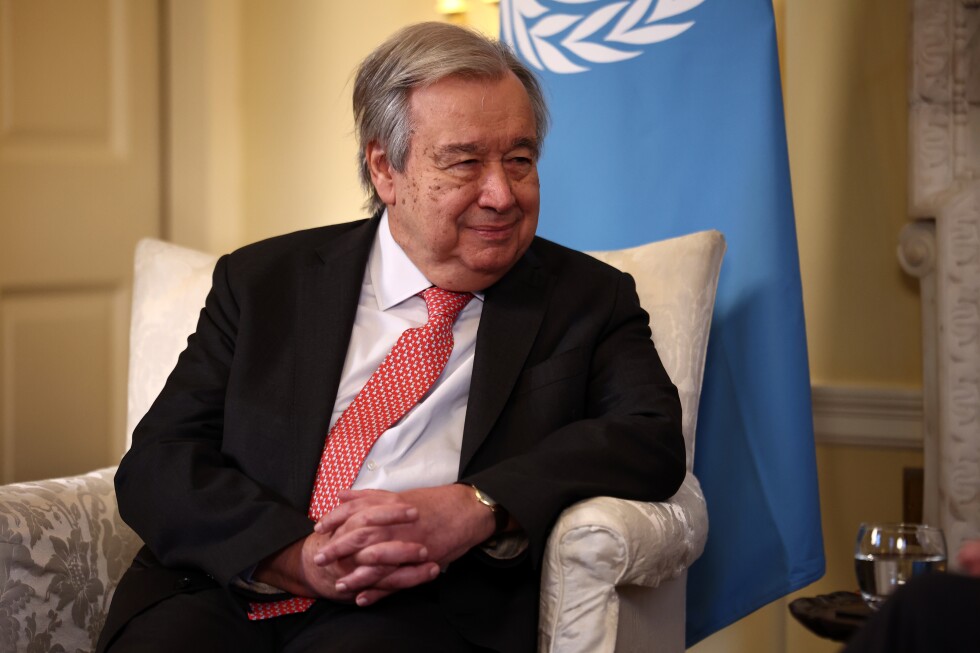
U.N. Secretary-General Antonio Guterres, who spearheaded the panel’s creation, called the decision “a foundational step toward global scientific understanding of AI.” He emphasized the panel’s importance in a rapidly evolving technological landscape: “In a world where AI is racing ahead, this panel will provide what’s been missing — rigorous, independent scientific insight that enables all member states, regardless of their technological capacity, to engage on an equal footing.”
The panel represents the first fully independent global scientific body dedicated to addressing knowledge gaps in AI and assessing its real-world economic and social impacts. Most of the international community, including American allies in Europe and Asia, along with Russia and China, supported the resolution.
U.S. Mission counselor Lauren Lovelace firmly rejected the initiative, describing it as “a significant overreach of the U.N.’s mandate and competence” and stating that “AI governance is not a matter for the U.N. to dictate.” Lovelace emphasized that as the world leader in AI development, the United States intends to maintain its autonomous approach to artificial intelligence policy.
She further noted that the incoming Trump administration would work with “like-minded nations” to advance AI development aligned with shared values rather than submit to international oversight. “We will not cede authority over AI to international bodies that may be influenced by authoritarian regimes seeking to impose their vision of controlled surveillance societies,” Lovelace declared.
The U.S. also expressed concerns about the selection process for panel members, which Guterres defended as transparent. According to the Secretary-General, the 40 experts were chosen from more than 2,600 candidates following an independent review conducted by several U.N. agencies, including the International Telecommunications Union and UNESCO.
Despite U.S. objections, two American experts were appointed to the panel: Vipin Kumar, a University of Minnesota professor specializing in AI and high-performance computing research, and Martha Palmer, a retired University of Colorado professor and linguistics expert whose work involves capturing word meanings for complex sentences in AI systems.
The panel’s composition reflects global representation, with experts from various countries including China. Song Haitao, dean of Shanghai Jiao Tong University and the Shanghai Artificial Intelligence Research Institute, and Wang Jian, a cloud-computing expert at the Chinese Academy of Engineering, will represent Chinese expertise on the panel.
Notably, Ukraine abstained from the vote, citing objections to the inclusion of Russian AI expert Andrei Neznamov, who specializes in AI regulation, ethics, and governance.
The panel also includes experts from diverse backgrounds, including Filipino journalist and 2021 Nobel Peace Prize laureate Maria Ressa, highlighting the U.N.’s intent to examine AI’s impacts beyond purely technical considerations.
This development comes at a critical juncture in the evolution of AI governance, as nations worldwide grapple with regulating rapidly advancing technologies that cross national boundaries and present both unprecedented opportunities and risks. While the European Union has implemented the AI Act and other countries are developing national frameworks, this U.N. panel represents one of the first attempts at establishing a truly global approach to AI assessment and potential governance.
The stark division between the U.S. position and the broad international consensus highlights the growing tensions between national sovereignty in technology policy and calls for coordinated global oversight of technologies with far-reaching societal implications.
Fact Checker
Verify the accuracy of this article using The Disinformation Commission analysis and real-time sources.

11 Comments
Interesting development. A global scientific panel on AI could help ensure its impacts are properly understood and managed, especially for less tech-savvy countries. Curious to see the panel’s findings and recommendations.
Given the rapid pace of AI development, a dedicated global scientific body to study its impacts is sorely needed. Glad to see the UN taking this initiative, even with the US opposition.
A 40-member global AI scientific panel? That’s an ambitious and necessary undertaking. With so many complex economic and social implications, this kind of rigorous, impartial analysis is long overdue.
Establishing a global scientific body to study AI’s impacts is a smart move. With so much uncertainty and rapid advancement, we need rigorous, impartial analysis to inform responsible development of these powerful technologies.
A 40-member global AI panel – that’s an impressively large and diverse group. Excited to see what kind of cutting-edge research and policy recommendations they’re able to produce.
This panel represents an important milestone in efforts to establish global scientific oversight of AI. Its independence and diverse expertise could provide crucial guidance to policymakers worldwide.
While the US opposition is puzzling, I’m encouraged to see broad international support for this AI scientific panel. Multilateral cooperation will be key to ensuring these technologies are deployed ethically and equitably.
As AI capabilities rapidly evolve, independent scientific oversight is crucial. Glad to see the UN taking this step, even if the US dissented. Hopefully the panel can provide valuable insights to guide responsible AI development.
The US objection is curious. Perhaps they’re concerned about ceding influence over AI policymaking. Nonetheless, this panel represents an important step toward establishing independent scientific oversight of these transformative technologies.
The US opposition is noteworthy. Perhaps they are concerned about losing some control or influence over AI governance? This panel could provide more transparency and balance in AI policymaking at the global level.
The US seems to be resisting multilateral efforts on AI governance. I wonder if they’re worried about ceding any of their technological advantage. In any case, this panel could be an important step toward more global cooperation on AI policy.