


Listen to the article
Britain’s Labour Government Unveils Tax-Raising Budget Amid Political Turmoil
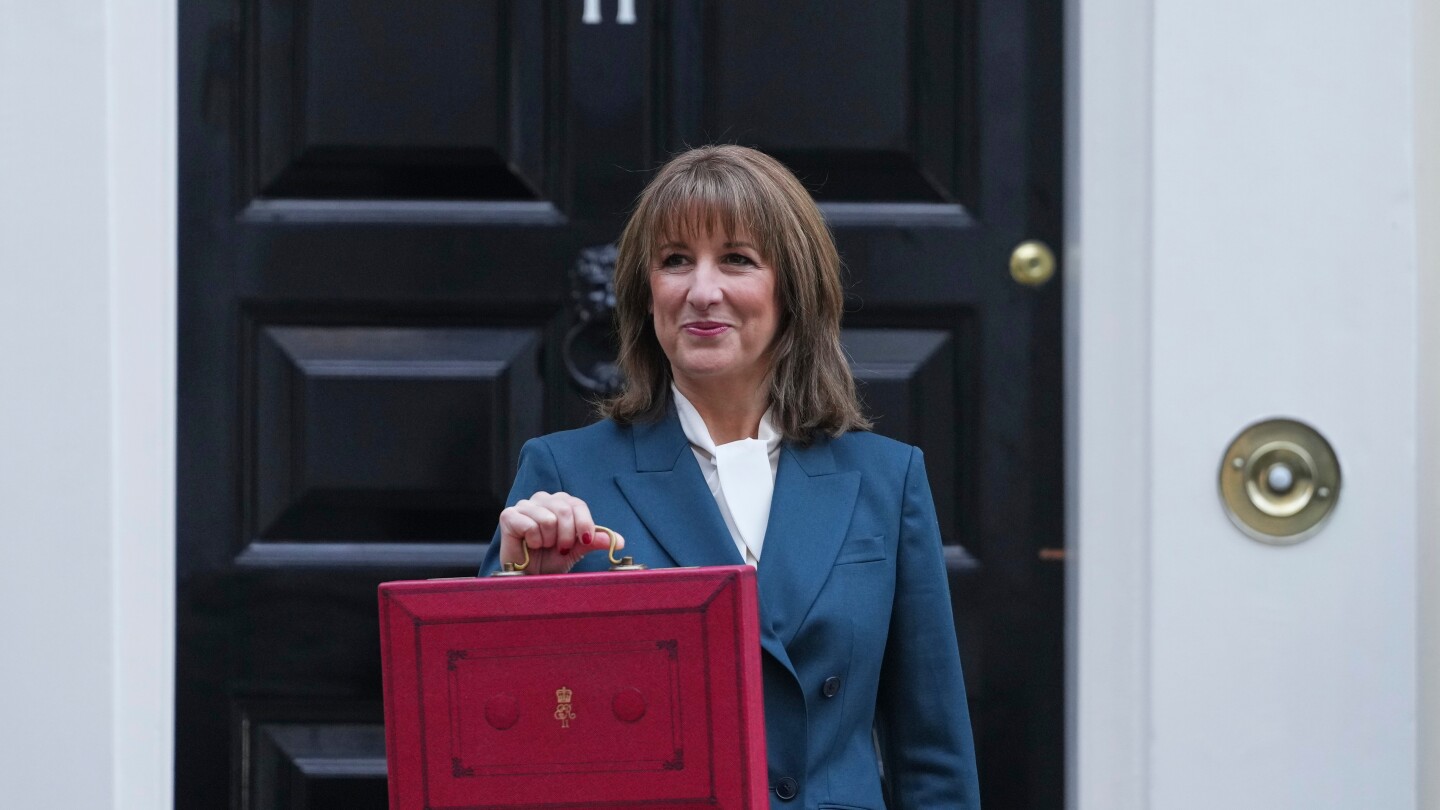
Britain’s center-left Labour government presented a controversial tax-raising budget on Wednesday, aiming to boost economic growth and reduce child poverty while navigating significant political challenges. Treasury chief Rachel Reeves delivered the financial statement to the House of Commons after its contents were leaked online half an hour earlier, adding to the sense of disarray that has surrounded the government in recent weeks.
The budget introduces £26 billion ($34 billion) in tax increases, primarily designed to strengthen the government’s financial buffer against future economic shocks. Reeves acknowledged that some measures contradicted the spirit of Labour’s election pledge not to raise taxes on working people, but defended her approach, stating, “I have yet to see a credible or a fairer alternative plan for working people.”
The most significant revenue-generating measure extends the freeze on income tax thresholds for an additional three years from 2028. This policy means more earners will automatically move into higher tax brackets as wages increase over time. Other tax measures include a new “mansion tax” on properties worth over £2 million ($2.6 million), reforms to capital gains taxation, increased gambling taxes, a levy on electric vehicles, and reduced tax-free provisions for private pensions.
To offset these tax increases and address cost-of-living concerns, Reeves announced plans to raise the minimum wage, freeze rail fares for the first time in three decades, and reduce household energy bill levies. In a move welcomed enthusiastically by Labour MPs, she also eliminated a controversial restriction limiting benefits for families with one or two children, a policy change she said would lift 450,000 children out of poverty.
The budget bears striking similarities to Reeves’ first financial plan presented just over a year ago, despite her previous assurances that it would be the only major tax-raising budget during this parliamentary term, which runs until 2029. This shift reflects the challenging economic reality facing Britain’s government.
The UK economy, ranked sixth largest globally, has underperformed expectations, with critics pointing to last year’s business tax increases as a contributing factor. Though the economy showed signs of improvement in early 2024, outpacing other G7 nations, recent indicators suggest this momentum has stalled – continuing a pattern of false economic dawns that have plagued Britain since the 2008-2009 global financial crisis.
Economic experts calculate that if the UK had maintained its pre-financial crisis growth trajectory, the economy would be nearly 25% larger today – representing a substantial loss of economic activity and tax revenue. Britain’s public finances have faced multiple challenges, including the COVID-19 pandemic, the Russia-Ukraine war, and global trade tensions exacerbated by U.S. tariff policies. Brexit has added an additional burden, costing the economy billions since the UK’s departure from the European Union in 2020.
Helen Miller, director of the Institute for Fiscal Studies, praised Reeves for more than doubling the government’s financial buffer to £22 billion, noting, “By providing greater insulation against economic turbulence, the additional buffer will reduce the risk of playing out this year on repeat in 2026.” Market reaction appeared cautiously positive, with interest rates on British government bonds declining – a development that, if sustained, could improve growth prospects.
The budget unveiling follows a chaotic period for the government. On November 4, Reeves signaled an income tax rate increase that would clearly breach a key election promise. After significant backlash from Labour lawmakers and a more favorable public finance outlook, she reversed course, opting instead for the smaller revenue measures announced Wednesday.
The premature online publication of the budget by the Office for Budget Responsibility (OBR), which Reeves called “deeply disappointing and a serious error,” further underscored the government’s difficulties. The OBR attributed the incident to a “technical error” and promised a full investigation.
The stakes are particularly high for Prime Minister Keir Starmer and his administration, with opinion polls consistently showing Labour trailing the hard-right Reform UK party led by Nigel Farage. While the next general election isn’t required until 2029, giving the government time for its economic measures to take effect, speculation about potential challenges to Starmer’s leadership continues to mount.
Kemi Badenoch, leader of the opposition Conservative Party, denounced the budget as a failure, accusing the government of taxing working people to fund welfare increases and suggesting that Reeves “should resign” if she had “any decency.”
Fact Checker
Verify the accuracy of this article using The Disinformation Commission analysis and real-time sources.

16 Comments
The extension of the income tax threshold freeze is a particularly controversial measure that will impact many working families. The government will need to carefully justify this decision and explain how it fits into their broader economic strategy.
Well said. The government will have to do a lot of work to convince the public that this is a necessary and fair trade-off, rather than just a convenient way to raise revenues. Effective communication will be key.
This budget seems aimed at tackling the country’s economic woes, but the government will need to sell it effectively to the public. Raising taxes is always unpopular, but they may view it as a necessary evil. Time will tell if it pays off politically.
Precisely. The government is walking a fine line here, trying to balance fiscal responsibility with public sentiment. It’s a high-stakes gamble that could either stabilize the economy or backfire politically.
This budget seems like a pragmatic but unpopular attempt by the Labour government to address the country’s economic challenges. The tax hikes, especially the extended income tax threshold freeze, will likely face significant public backlash. The government will need to make a strong case for why these measures are necessary.
You’re right, the government will have to do a lot of work to justify these tax increases and convince the public that they are in the best interests of the country. It’s a high-stakes gamble that could either stabilize the economy or backfire politically.
The UK government’s budget announcement comes at a tricky time, with the public already feeling the squeeze of the cost-of-living crisis. Raising taxes, even if necessary, is always a risky political move. The government will need to carefully manage the messaging and public perception around these measures.
Exactly. The government will have to strike a delicate balance between fiscal responsibility and political pragmatism. They’ll need to clearly articulate the rationale behind these tax hikes and convince the public that the long-term benefits outweigh the short-term pain.
This budget seems like a tough balancing act for the Labour government. Raising taxes during a cost-of-living crisis is risky, but they may feel it’s necessary to shore up the country’s finances. It will be interesting to see how the public reacts.
Agreed, it’s a delicate situation. The government will need to communicate the rationale clearly and convince the public that these measures are in the best long-term interests of the country.
This budget seems to be a pragmatic attempt by the Labour government to shore up the country’s finances, but the tax hikes are sure to be unpopular. It will be interesting to see how they position these measures and whether they can sell them to the public.
Absolutely. The government is in a tough spot, having to make difficult decisions that may not be politically palatable. But if they can articulate a clear, compelling vision for how these steps will benefit the country in the long run, they may be able to win over some skeptics.
While tax hikes are never popular, the government may feel it has limited options to boost revenues and address economic challenges. The extended freeze on income tax thresholds is a particularly contentious move that will impact many working families.
You make a fair point. The government will have to weigh the political risks carefully against the perceived benefits of shoring up the fiscal position. It’s a tough decision without any easy answers.
The UK government is facing a tough balancing act with this budget. Raising taxes is always a risky move, but they may feel it’s necessary to stabilize the economy. The challenge will be convincing the public that these measures are fair and in their best interests.
Agreed. The government will need to be very strategic in how they communicate this budget and the reasoning behind it. They’ll have to walk a fine line between fiscal responsibility and political palatability.