


Listen to the article
Keir Starmer fights another day after what could have been a career-ending political crisis stemming indirectly from the Jeffrey Epstein files. The UK prime minister narrowly avoided being toppled by mounting internal opposition within his governing Labour Party, as rivals ultimately hesitated to move forward with a leadership coup.
Energy Secretary Ed Miliband observed Tuesday that Labour lawmakers had “looked over the precipice… and they didn’t like what they saw,” adding that they chose to unite behind Starmer. The unspoken implication, however, was clear: this unity might be temporary.
Starmer’s authority has been severely damaged by aftershocks from Epstein-related documents, despite having never personally met the disgraced financier. The crisis centers on Starmer’s 2024 appointment of veteran Labour politician Peter Mandelson as UK ambassador to Washington. Mandelson, who had connections to Epstein, has become the focal point of criticism about the prime minister’s judgment.
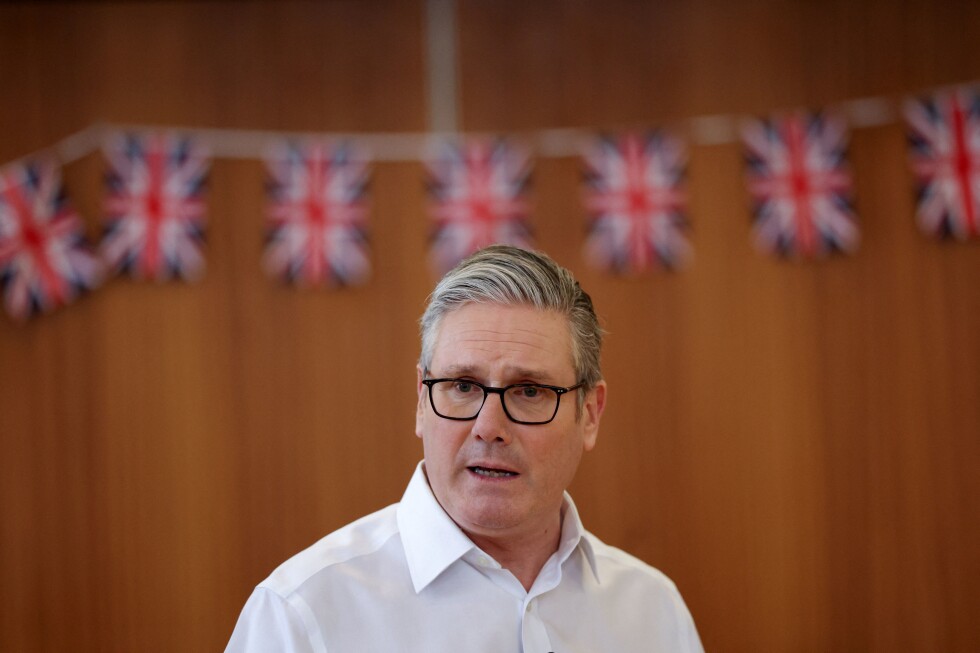
“I will never walk away from the mandate I was given to change this country,” Starmer declared Tuesday while visiting a community center in southern England. “I will never walk away from the people that I’m charged with fighting for and I will never walk away from the country that I love.”
The appointment of Mandelson, who offered valuable international contacts and trade expertise but carried a history of ethical controversies, backfired dramatically when emails published in September revealed he had maintained a friendship with Epstein after the financier’s 2008 conviction for sex offenses involving a minor.
Though Starmer dismissed Mandelson when this information came to light, a subsequent release of Epstein files by the US government contained further damaging revelations. Mandelson now faces a police investigation for potential misconduct in public office over documents suggesting he passed sensitive government information to Epstein, though he is not accused of any sexual offenses.
The Mandelson scandal represents just the latest challenge in Starmer’s increasingly troubled premiership, which began with a landslide election victory 19 months ago. Despite earning praise for his international diplomacy, including rallying support for Ukraine and negotiating a favorable trade agreement with US President Donald Trump, Starmer has struggled domestically.
His government has failed to make significant progress on inflation, economic growth, and cost-of-living pressures. Despite commanding a substantial parliamentary majority, Starmer has been forced into multiple policy reversals on contentious issues like welfare cuts and digital ID cards.
Internal turmoil has been evident in Downing Street, with Starmer cycling through two chiefs of staff and four communications directors. His powerful chief of staff, Morgan McSweeney, resigned Sunday over the Mandelson appointment, followed by communications director Tim Allan’s departure the next day.
The crisis intensified when Scottish Labour leader Anas Sarwar called for Starmer’s resignation on Monday. Had other senior party figures followed suit, Starmer’s position would likely have become untenable. Instead, Cabinet members and parliamentary colleagues posted seemingly coordinated messages of support, including potential leadership challengers Angela Rayner and Wes Streeting.
A critical meeting with Labour MPs followed, where Starmer impressed many with his resolve. Chris Curtis, one of the more than 200 Labour lawmakers elected in 2024, noted that the initially skeptical mood shifted toward support as “it was clear he was up for the fight.”
Political analysts suggest this reprieve is likely temporary. Labour lawmakers remain concerned about their reelection prospects given the party’s plummeting poll numbers. Female party members in particular have expressed disappointment over the Mandelson appointment.
Eluned Morgan, Labour’s First Minister of Wales, called the Mandelson revelations “deeply troubling, not least because, once again, the voices of women and girls were ignored.” While offering support for Starmer, she insisted that “that failure must be acknowledged and confronted honestly.”
Labour faces near-term electoral tests, including a February special election in a former stronghold in northwest England and May elections for Scottish and Welsh legislatures and local English councils.
Professor Tim Bale of Queen Mary University of London believes Starmer has “bought himself some time” while potential challengers are “keeping their powder dry.” However, he adds, “It’s very difficult to imagine after the shellacking that the party will presumably face in May, him continuing to lead the party much beyond this summer.”
Yet British politics remains unpredictable. As Bale notes, “There are problems with the other candidates. It’s never an ideal situation for any party to be choosing a prime minister in midterm, and it may be that the Labour Party decides, better the devil you know. I suspect that Keir Starmer will go, but who knows?”
Fact Checker
Verify the accuracy of this article using The Disinformation Commission analysis and real-time sources.

6 Comments
The Epstein fallout seems to be creating quite the political headache for PM Starmer. It’s a tricky situation where he has to balance maintaining unity in his party while also addressing the concerns over Mandelson’s connections. Navigating this will require some deft political maneuvering.
This seems like a classic case of political blowback from something tangentially related. Starmer will need to find a way to separate himself from the Epstein connections, while also addressing the underlying concerns about his judgment. Not an easy task, but crucial for his continued leadership.
Avoiding a leadership challenge is a win for now, but Starmer’s authority does appear to have taken a hit. The Epstein links are a major distraction that he’ll need to address head-on if he wants to regain the trust of his party and the public.
Agreed. Starmer will need to be transparent and decisive in how he handles this going forward. Sweeping it under the rug is not an option if he wants to move past the damage.
It’s interesting to see how this Epstein-related issue has become such a focal point for Starmer’s leadership. Even though he didn’t have direct ties, the fallout is clearly impacting his standing. Curious to see how he navigates this in the weeks and months ahead.
The Epstein saga just keeps on giving, doesn’t it? Starmer’s appointment of Mandelson looks like a risky move in hindsight. I wonder if there were any warning signs that this could become such a liability. Careful vetting is key for high-profile positions like that.