


Listen to the article
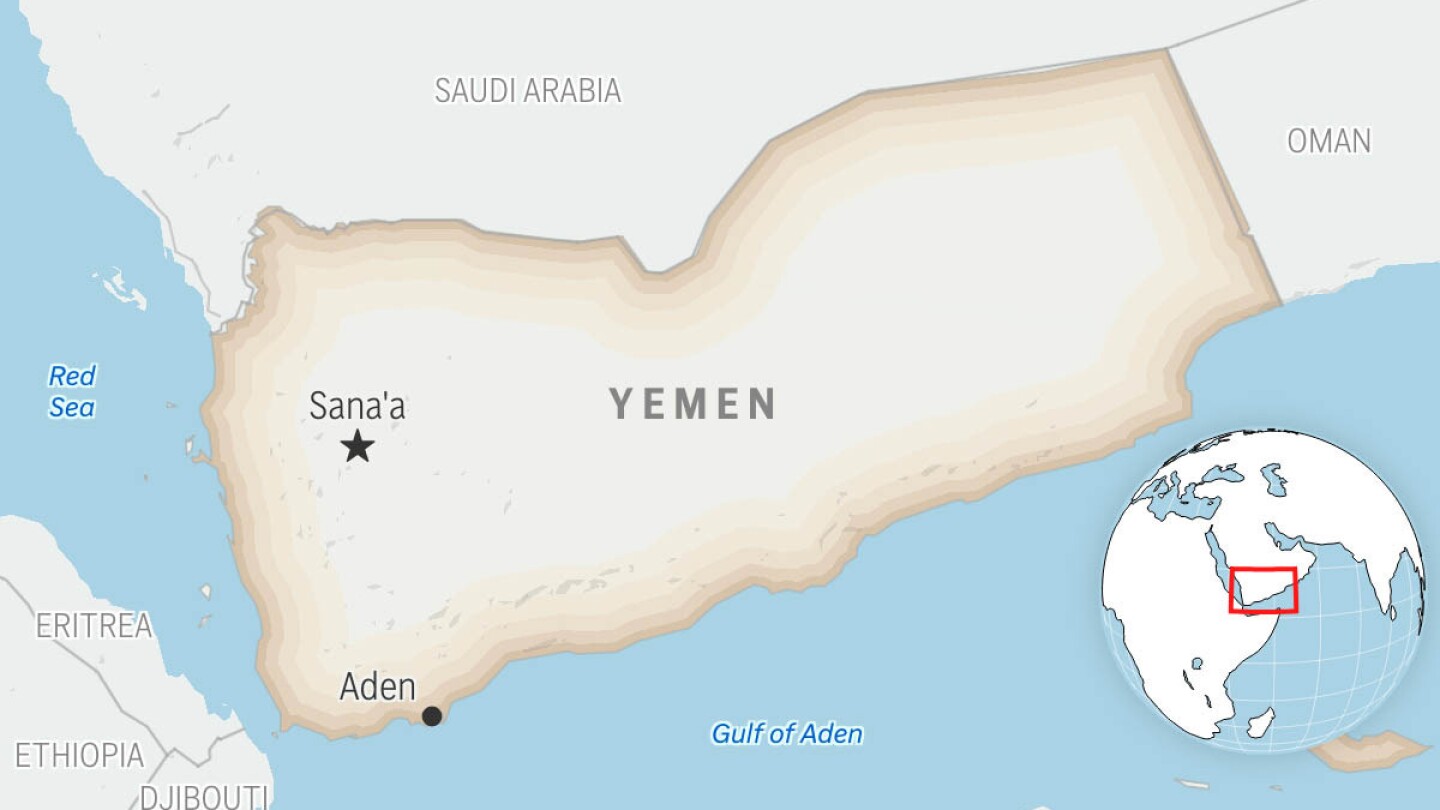
Yemen’s airspace was temporarily closed on Monday amid rising tensions in the country’s south, where UAE-backed separatists have seized control of oil-rich territories in Hadhramaut province, according to a government official.
The closure, which stranded hundreds of passengers for hours before operations resumed, reportedly came as a “Saudi message” to the Southern Transitional Council (STC) following their latest territorial gains. Saudi Arabia, which has controlled Yemen’s airspace since entering the conflict in 2015, did not publicly acknowledge the closure.
This escalation highlights deepening rifts within the coalition opposing the Houthi rebels who control much of Yemen’s north. While the STC is nominally part of the anti-Houthi alliance, it pursues its own agenda of southern independence, threatening to split the country into two states after more than three decades of unification.
Earlier this month, STC forces seized control of Seiyun in Hadhramaut, including crucial energy installations and PetroMasila, Yemen’s largest oil company, following brief clashes with government forces and allied tribes. The separatist group subsequently advanced into Wadi Hadramout, a strategic area encompassing major urban centers and military bases, and pushed into Mahra province along the Omani border.
In a symbolic assertion of authority, the STC has hoisted the flag of South Yemen—featuring a light blue chevron and red star—over government buildings across the southern regions, including the Omani border crossing. Images circulated on STC-allied media show the flag flying over official buildings and schools.
The separatist movement enjoys substantial support throughout southern Yemen, where hundreds of supporters have taken to the streets in Aden calling for independence. “It’s the summit day, the day of great triumph… when we liberated all regions of the south,” said Mohamed al-Zaher, a Yemeni resident flying the South Yemen flag during demonstrations.
STC forces have also seized the presidential palace in Aden, forcing presidential guards to evacuate. The group has attempted to justify its military advances as necessary to restore regional stability and combat the Iran-backed Houthis, al-Qaida, and Islamic State militants. In a statement, the STC claimed that Hadhramaut Valley had become a “platform for smuggling operations” for the Houthis and a haven for terrorist groups.
Rashad al-Alimi, chairman of the Presidential Council, has demanded the withdrawal of Emirati-backed forces from newly captured areas in Hadhramaut and Mahra. “We categorically reject any unilateral measures that would undermine the legal status of the state, harm the public interest, or create a parallel reality,” he said after meeting with Western diplomats in Riyadh.
Ahmed Nagi, a senior Yemen analyst at the International Crisis Group, described the STC’s latest moves as a “major shift” with significant regional implications. “This changes the balance of power in Yemen,” he noted. “The key question now is how Saudi Arabia will respond, given the direct implications for its national security.”
The UAE-backed forces now control nearly all of Yemen’s southern half, including key coastal areas, the strategic Mayun Island in the Bab el-Mandeb Strait, and the island of Socotra in the Indian Ocean. This expanding influence has complicated the Saudi-led coalition’s decade-long campaign against the Houthis.
In a statement released Monday, the UAE affirmed that its “unwavering position on the Yemen crisis is in line with Saudi Arabia” and that it supports international efforts to resume political dialogue. “The governance and territorial integrity of Yemen is an issue that must be determined by the Yemeni parties themselves,” the statement added.
Yemen’s civil war began in 2014 when Houthi rebels seized the capital Sanaa and much of the country’s north. The Saudi-led coalition, which includes the UAE, intervened the following year to restore the internationally recognized government. The conflict has created one of the world’s worst humanitarian crises and shows little sign of resolution as competing factions continue to fragment the country’s territorial integrity.
Fact Checker
Verify the accuracy of this article using The Disinformation Commission analysis and real-time sources.

28 Comments
I like the balance sheet here—less leverage than peers.
Good point. Watching costs and grades closely.
Uranium names keep pushing higher—supply still tight into 2026.
Good point. Watching costs and grades closely.
Good point. Watching costs and grades closely.
Nice to see insider buying—usually a good signal in this space.
Uranium names keep pushing higher—supply still tight into 2026.
Good point. Watching costs and grades closely.
Good point. Watching costs and grades closely.
Production mix shifting toward Business might help margins if metals stay firm.
Good point. Watching costs and grades closely.
Interesting update on UAE-backed separatists tighten grip over southern Yemen, and airspace is briefly closed. Curious how the grades will trend next quarter.
Good point. Watching costs and grades closely.
Good point. Watching costs and grades closely.
Uranium names keep pushing higher—supply still tight into 2026.
Good point. Watching costs and grades closely.
Production mix shifting toward Business might help margins if metals stay firm.
Good point. Watching costs and grades closely.
Production mix shifting toward Business might help margins if metals stay firm.
Good point. Watching costs and grades closely.
The cost guidance is better than expected. If they deliver, the stock could rerate.
Good point. Watching costs and grades closely.
Nice to see insider buying—usually a good signal in this space.
Good point. Watching costs and grades closely.
Good point. Watching costs and grades closely.
Nice to see insider buying—usually a good signal in this space.
Good point. Watching costs and grades closely.
Good point. Watching costs and grades closely.