


Listen to the article
Turkey Calls for Protection of Black Sea Energy Infrastructure After Tanker Attacks
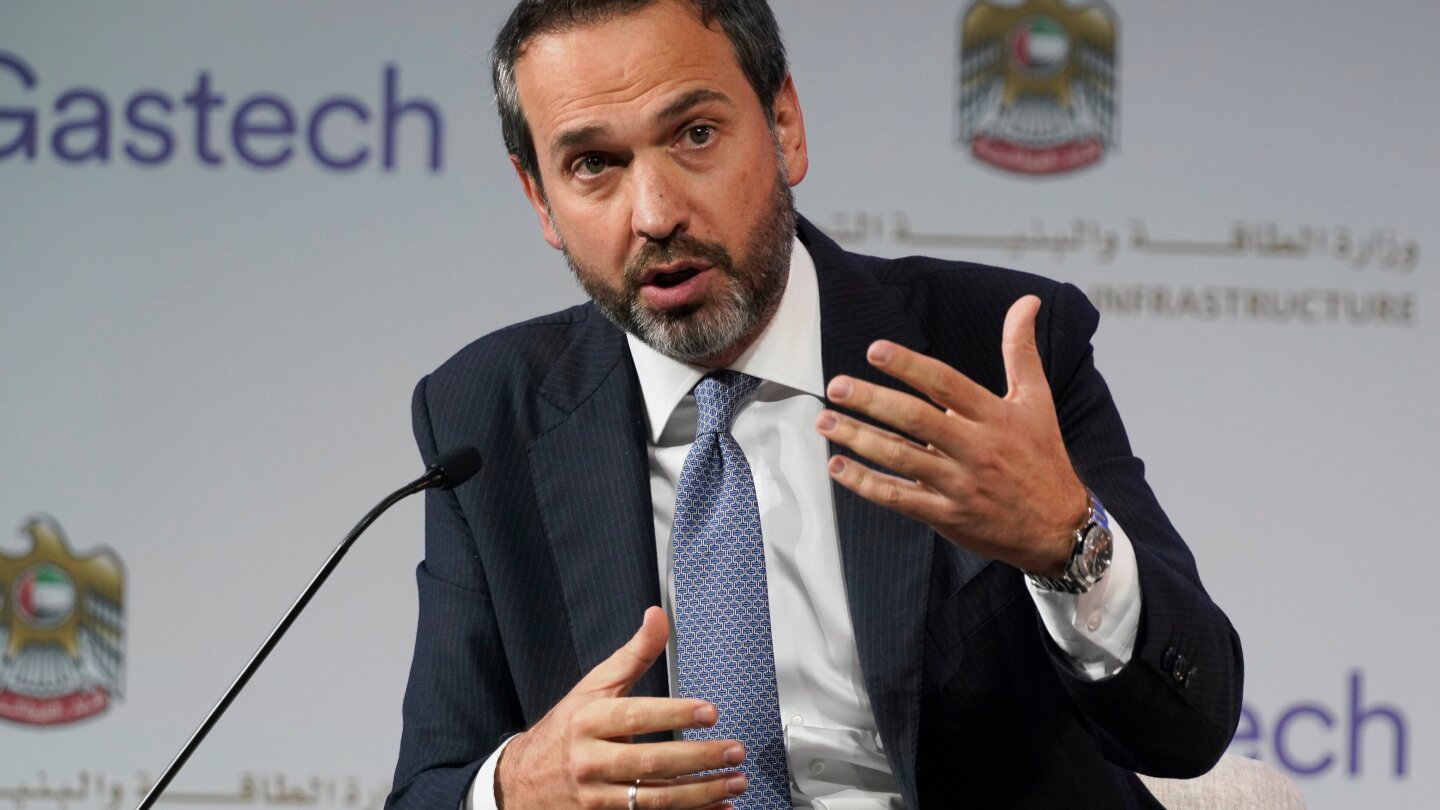
Turkey’s Energy Minister Alparslan Bayraktar has urged all parties to safeguard oil and gas supply lines in the Black Sea following recent attacks on Russian tankers near Turkish waters, highlighting the country’s delicate position as a major importer of Russian energy.
The minister expressed concern not only about maritime shipping routes but also about critical infrastructure – specifically the Blue Stream and Turk Stream undersea pipelines that transport Russian natural gas to Turkey.
“We call on all parties to keep the energy infrastructure out of this war because it’s part of people’s daily lives,” Bayraktar said during a news conference on Wednesday. “We need to keep the energy flows uninterrupted in the Black Sea and the straits.”
His comments followed a series of attacks on Russian vessels. Ukraine claimed responsibility for striking two tankers on November 28, while a third vessel was hit Tuesday as it approached the Turkish port of Sinop. President Recep Tayyip Erdogan had previously condemned the earlier incidents as threatening “navigational safety, life and the environment, especially in our own exclusive zone.”
The attacks have underscored Turkey’s energy vulnerability. Russian oil and gas account for nearly half of Turkey’s total energy needs, creating a significant dependency that has drawn scrutiny from NATO allies, particularly the United States.
During Erdogan’s September visit to Washington, then-President Donald Trump pressed the Turkish leader to reduce ties with Moscow, including in the energy sector. During that same trip, Turkish companies signed a multibillion-dollar agreement with U.S. firms to purchase liquefied natural gas, signaling potential steps toward diversification.
When questioned about Turkey’s heavy reliance on Russian energy, Bayraktar defended the relationship while acknowledging the need for balance.
“Russia has proved to be a very reliable supply to the Turkish market” since Turkish households began transitioning to gas in the 1980s, he noted. However, he added, “it’s not a secret that we need to have a balanced supply portfolio. We don’t want to rely on one supply country or a few countries.”
This balancing act reflects Turkey’s complex geopolitical position. The country recently finalized another gas supply contract between its state-owned oil and gas company BOTAS and Russia’s Gazprom, reinforcing existing ties even as it seeks alternative sources.
The energy relationship extends beyond fossil fuels. Rosatom, Russia’s state nuclear corporation, is constructing the Akkuyu power plant on Turkey’s Mediterranean coast. When operational, the facility’s four reactors are expected to generate approximately 10% of Turkey’s electricity needs.
However, the nuclear project has faced significant delays, exacerbated by Western sanctions imposed on Russian entities following Russia’s 2022 invasion of Ukraine. Bayraktar said the plant’s administrators have turned to Chinese suppliers for components that Western companies won’t provide due to sanctions constraints.
Financing issues have further complicated the nuclear project, with Bayraktar revealing that $2 billion earmarked for construction remains “stuck in JP Morgan for a long time” as part of broader Western measures freezing Russian assets.
“We need to play a moderator role to help release this money because this is going to be used in the project,” the minister explained, highlighting Turkey’s self-perceived position as a mediator between Russia and Western powers.
Bayraktar’s references to the 2022 sabotage of the Nord Stream pipeline between Russia and Germany underscores Turkish authorities’ fears about potential infrastructure targeting and the severe consequences for a nation heavily dependent on imported energy.
Despite international pressure, Turkey continues to walk a tightrope between maintaining vital energy supplies from Russia and diversifying its sources to reduce vulnerability – all while navigating the complex geopolitical fallout of Russia’s war in Ukraine that has now extended to maritime security in Turkey’s backyard.
Fact Checker
Verify the accuracy of this article using The Disinformation Commission analysis and real-time sources.

19 Comments
I like the balance sheet here—less leverage than peers.
Exploration results look promising, but permitting will be the key risk.
If AISC keeps dropping, this becomes investable for me.
Exploration results look promising, but permitting will be the key risk.
Nice to see insider buying—usually a good signal in this space.
Good point. Watching costs and grades closely.
Silver leverage is strong here; beta cuts both ways though.
Good point. Watching costs and grades closely.
Exploration results look promising, but permitting will be the key risk.
Good point. Watching costs and grades closely.
Good point. Watching costs and grades closely.
If AISC keeps dropping, this becomes investable for me.
Uranium names keep pushing higher—supply still tight into 2026.
Good point. Watching costs and grades closely.
Good point. Watching costs and grades closely.
Interesting update on Turkey’s energy minister warns of threat to oil and gas supplies after tankers targeted. Curious how the grades will trend next quarter.
Good point. Watching costs and grades closely.
If AISC keeps dropping, this becomes investable for me.
Good point. Watching costs and grades closely.