


Listen to the article
The Trump administration has drawn criticism for its unorthodox approach to communicating with the American public about the war with Iran, waiting more than 48 hours to make any live, public address on the decision to engage militarily.
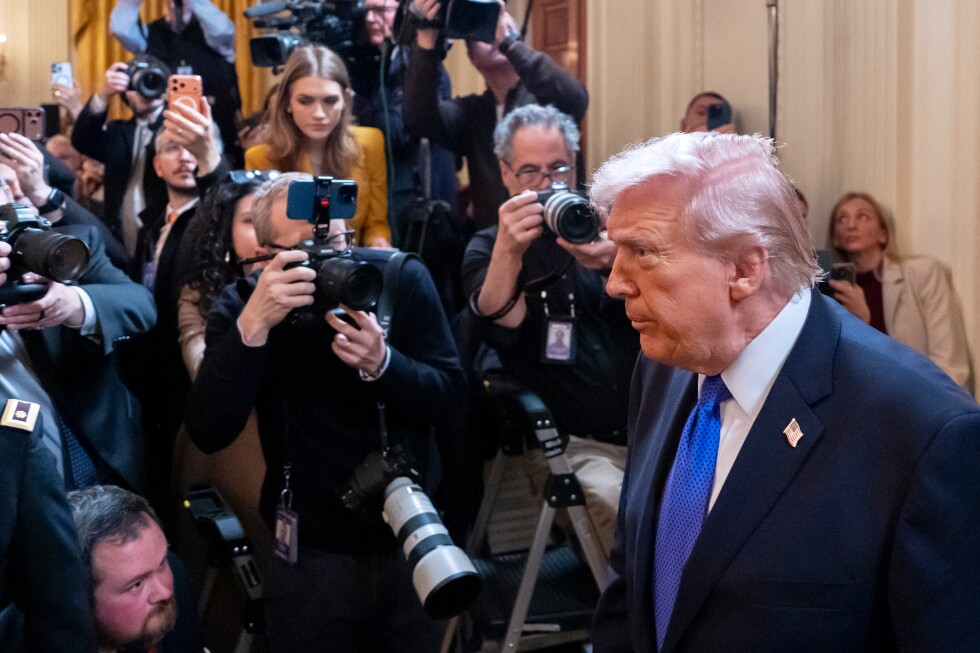
President Trump finally discussed the rationale for the attack on Monday during a White House ceremony honoring military heroes, though he took no questions from reporters. Earlier that day, Defense Secretary Pete Hegseth and Joint Chiefs of Staff Chairman Dan Caine briefed journalists at the Pentagon.
In the two days prior, Trump’s communication strategy relied primarily on pre-recorded statements released on Truth Social, his own social media platform, supplemented by telephone interviews with numerous journalists. This approach resulted in what some observers called fragmented responses that created more confusion than clarity about the administration’s war objectives.
The communication void became particularly glaring as American military casualties were reported. Critics drew unfavorable comparisons to Israeli Prime Minister Benjamin Netanyahu, who delivered two statements the day hostilities began and later addressed reporters at the site of a missile attack that killed nine people. Israeli military officials have maintained regular press briefings throughout the conflict.
“The American people need a commander in chief, and he has been absent in that role,” said Rahm Emanuel, former White House chief of staff under President Obama, on CNN. Emanuel, reportedly considering a 2028 presidential run, represents Democratic criticism of Trump’s approach.
The president’s decision to remain at Mar-a-Lago for a political fundraiser rather than return to Washington for a traditional Oval Office address drew particular scrutiny from journalists. New York Times chief White House correspondent Peter Baker highlighted this departure from historical precedent on social media.
White House Communications Director Steven Cheung defended the president’s approach, stating: “President Trump spent the majority of his time monitoring the situation in a secure facility, in constant contact with world leaders, and made multiple addresses to the nation that garnered hundreds of millions of views. He also took dozens of calls with reporters.”
Indeed, Trump conducted interviews with journalists from major news organizations including ABC, CBS, NBC, CNN, CNBC, Fox News, The Atlantic, The Washington Post, Axios, Politico, and an Israeli television station. Many reporters have direct access to the president’s mobile number, enabling these impromptu conversations.
However, the effectiveness of this strategy has been questioned. Most calls were brief, with limited information provided. The public received information filtered through journalists’ reporting rather than hearing directly from the president. Some interviews yielded contradictory statements, such as The New York Times reporting that Trump offered “several seemingly contradictory visions” about power transfer in Iran.
At the Pentagon, Hegseth’s briefing also departed from tradition. Many mainstream news organizations, including Associated Press and major networks, were permitted in the briefing room but not called upon for questions. Instead, Hegseth favored questions from Trump-friendly outlets such as the Daily Caller, One America News, and Christian Broadcasting Network. Many mainstream outlets had previously withdrawn their regular presence at Pentagon briefings after refusing to accept Hegseth’s restrictive work rules.
When NBC News reporter Courtney Kube attempted to ask about Trump’s stated four-week time limit on the operation, Hegseth initially ignored her before eventually dismissing her question as “the typical NBC sort of gotcha-type question.” He insisted the president had “all the latitude in the world” regarding timeline expectations.
The briefing’s physical arrangement further reflected the administration’s media preferences, with Trump-friendly outlets seated in front rows and other reporters, including former Fox News Pentagon correspondent Jennifer Griffin, relegated to the back.
White House spokeswoman Anna Kelly defended the president’s approach, stating: “President Trump is the most transparent and accessible president in American history. The American people have never had a more direct and authentic relationship with a president of the United States than they have with President Trump.”
Fact Checker
Verify the accuracy of this article using The Disinformation Commission analysis and real-time sources.

12 Comments
The comparison to Netanyahu’s approach is an interesting one. Effective crisis communication requires a delicate balance of urgency, transparency, and empathy.
You make a good point. Trump’s reliance on pre-recorded statements and phone interviews may not be sufficient to address the public’s need for real-time information and accountability.
Curious to see if Trump’s communication style will shift as the situation unfolds. Maintaining public trust is critical, especially when lives are at stake.
Absolutely. Transparency and accountability should be the top priorities for any government during a military conflict.
The contrast with Netanyahu’s approach is noteworthy. Effective communication during crises requires a delicate balance of timeliness, clarity, and empathy.
You make a good point. Fragmented responses can exacerbate public anxiety rather than provide reassurance and direction.
Trump’s reliance on pre-recorded statements and phone interviews seems unconventional compared to past presidents. It will be important to see if this strategy evolves as the situation develops.
Indeed, a more traditional press conference format may be needed to address the growing concerns over military actions and casualties.
Interesting approach by Trump, though the communication vacuum is concerning. Transparency and clear public messaging are crucial during military conflicts.
I agree, the lack of timely, live briefings creates uncertainty. Consistent and transparent communication is essential for public understanding.
It’s concerning that the communication void has become so glaring, especially as casualties are reported. Clear and timely information is essential in these situations.
I agree. Fragmented responses risk creating more confusion than clarity, which can undermine public confidence in the administration’s actions.