


Listen to the article
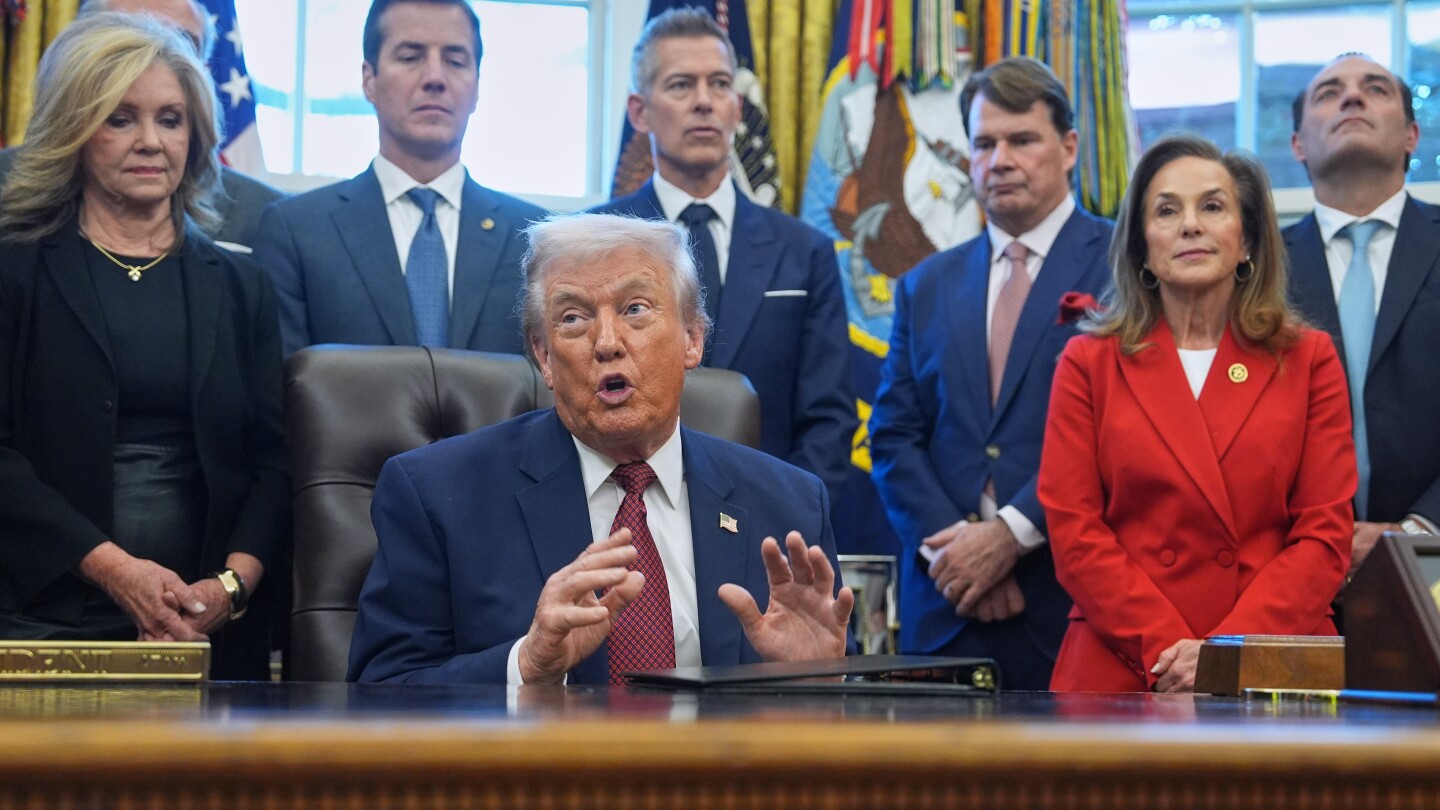
President Trump announced a proposal Wednesday to significantly weaken vehicle fuel efficiency standards, reversing Biden-era regulations that had pushed the auto industry toward greater fuel economy and reduced emissions.
The plan would reduce the required fleetwide average for light-duty vehicles to approximately 34.5 miles per gallon by the 2031 model year, down from the 50.4 miles per gallon projected under the Biden administration’s rules. Trump unveiled the proposal during a White House event attended by executives from major American automakers.
“From day one I’ve been taking action to make buying a car more affordable,” Trump said, claiming the Biden-era policy “forced automakers to build cars using expensive technologies that drove up costs, drove up prices and made the car much worse.”
The administration estimates the changes will save consumers about $1,000 on new vehicle purchases. The average price for a new car stood at nearly $50,000 in October, according to Kelley Blue Book data.
Auto industry leaders welcomed the rollback, which comes after complaints that the stricter standards were difficult to meet. Ford CEO Jim Farley called it “a win for customers and common sense,” while Stellantis CEO Antonio Filosa expressed appreciation for realigning standards “with real world market conditions.”
The proposal represents the latest in a series of Trump administration moves to dismantle environmental policies implemented under President Biden. Since taking office in January, Trump has relaxed auto tailpipe emissions rules, eliminated fines for automakers failing to meet federal mileage standards, and terminated consumer tax credits for electric vehicle purchases.
Environmental advocates responded with strong criticism. Dan Becker, director of the Safe Climate Transport Campaign at the Center for Biological Diversity, said, “In one stroke Trump is worsening three of our nation’s most vexing problems: the thirst for oil, high gas pump costs and global warming.”
Katherine García from the Sierra Club warned that the rollback “would move the auto industry backwards, keeping polluting cars on our roads for years to come and threatening the health of millions of Americans, particularly children and the elderly.”
The weakening of fuel economy standards could have significant environmental implications. According to calculations from the National Highway Traffic Safety Administration, abandoning the Biden-era standards means vehicles could produce 22,111 more tons of carbon dioxide annually by 2035, along with additional emissions of soot particles and smog-forming pollutants.
Transportation Secretary Sean Duffy, who urged reversal of existing requirements shortly after taking office, defended the move. “The new rules are going to allow the automakers to make vehicles that Americans want to purchase, not vehicles that Joe Biden and former Transportation Secretary Pete Buttigieg want to build,” Duffy said.
Trump has repeatedly targeted what he incorrectly characterizes as an electric vehicle “mandate” under Biden, though no federal policy has actually required companies to sell EVs. The Biden administration had set a target that half of all new vehicle sales be electric by 2030, but this was a goal rather than a requirement. Currently, EVs account for about 8% of new vehicle sales in the United States.
“People want the gasoline car,” Trump asserted, calling Democrats’ efforts to promote EVs “insane.”
While Ford and Stellantis executives attended the White House announcement, General Motors CEO Mary Barra was notably absent, represented instead by a plant manager. GM, like its competitors, has invested billions in electrification efforts but issued a statement supporting “the goals” of the proposed rule.
Fuel economy standards have been part of U.S. policy since the 1970s energy crisis, with efficiency requirements gradually increasing over time. Critics of the rollback argue it won’t significantly impact vehicle affordability but will increase gasoline consumption and potentially harm domestic manufacturers that have already made substantial investments in cleaner vehicle technologies.
The proposal will need to be finalized next year before taking effect, potentially setting up another shift in the regulatory landscape that automakers have navigated through changing administrations.
Fact Checker
Verify the accuracy of this article using The Disinformation Commission analysis and real-time sources.

19 Comments
Silver leverage is strong here; beta cuts both ways though.
Nice to see insider buying—usually a good signal in this space.
Good point. Watching costs and grades closely.
Uranium names keep pushing higher—supply still tight into 2026.
The cost guidance is better than expected. If they deliver, the stock could rerate.
The cost guidance is better than expected. If they deliver, the stock could rerate.
Good point. Watching costs and grades closely.
Uranium names keep pushing higher—supply still tight into 2026.
The cost guidance is better than expected. If they deliver, the stock could rerate.
Nice to see insider buying—usually a good signal in this space.
Good point. Watching costs and grades closely.
Interesting update on Trump proposal would weaken vehicle mileage rules that limit air pollution. Curious how the grades will trend next quarter.
Uranium names keep pushing higher—supply still tight into 2026.
Uranium names keep pushing higher—supply still tight into 2026.
Good point. Watching costs and grades closely.
Good point. Watching costs and grades closely.
The cost guidance is better than expected. If they deliver, the stock could rerate.
Good point. Watching costs and grades closely.
Exploration results look promising, but permitting will be the key risk.