


Listen to the article
Networks Face Ethical Quandary After Broadcasting Trump’s Politically Charged Address
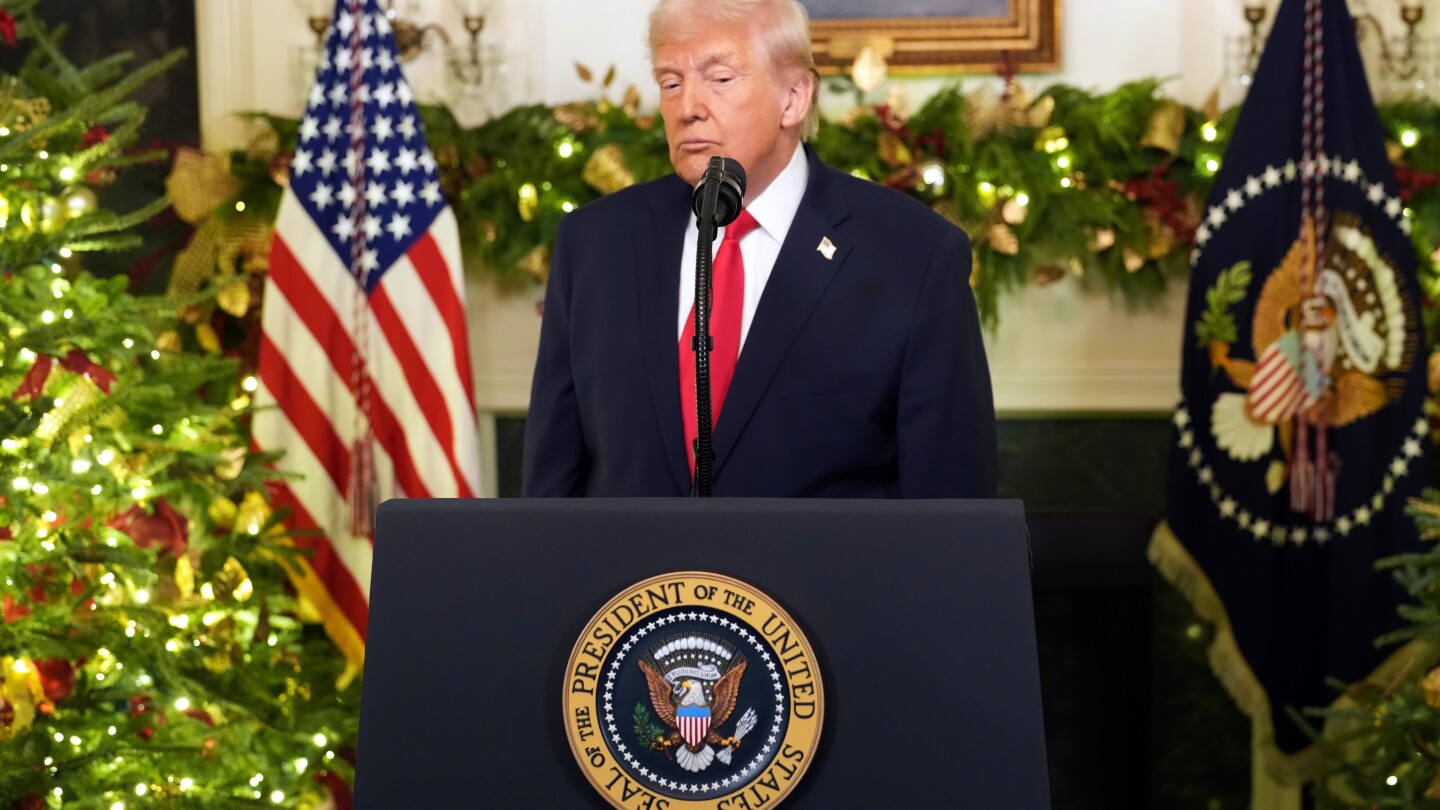
When Donald Trump delivered his first White House address since returning to office Wednesday night, all major U.S. networks carried it live. What viewers witnessed was an 18-minute politically charged speech from the Diplomatic Reception Room that raised serious questions about media responsibility and presidential access to the airwaves.
The speech, which contained numerous factual misstatements, aggressive partisan attacks, and exaggerated claims about his administration’s accomplishments, has sparked debate among media experts about whether networks should automatically grant airtime to a president for what amounts to campaign-style messaging.
“It’s not that the Oval Office and the White House haven’t been used for political speeches before,” noted Mark Lukasiewicz, former NBC News executive and current dean of Hofstra University’s communications school. “But, as with a great deal of what Donald Trump does as president, this was outside the norm.”
Lukasiewicz, who previously led NBC’s special broadcasts including presidential addresses, explained that media executives traditionally follow the principle that “when the president feels he needs to speak to the nation, you need to let him speak.” This convention, however, is being tested by Trump’s unprecedented approach to communication and media relations.
The timing of Trump’s address has raised additional concerns. It came the same day that FCC Chairman Brendan Carr told Congress that his agency, which regulates media companies, is not an independent body as had been understood through multiple administrations. This statement, combined with Trump’s history of suing news organizations and publicly attacking journalists, creates an environment where media executives may feel pressured when making coverage decisions.
Presidential requests for network time typically involve the White House communications team contacting network bureau chiefs, providing a time frame and general topic. Networks then weigh these requests against programming and advertising considerations, generally granting time based on the understanding that such addresses involve matters of substantial national importance.
Past presidents have been denied such requests. Networks rejected President Obama in 2014 when he wanted to address immigration policy during a congressional impasse. Lukasiewicz recalled being part of the executive team that denied Obama’s request to speak about the Affordable Care Act. Similarly, several networks chose not to carry President Biden’s 2022 speech about threats to American democracy, which referenced Trump and January 6th participants.
Trump has made fewer requests for network time than many predecessors, but Wednesday’s address came with limited clarity about its purpose. He announced his plans on Truth Social just a day earlier, following posts about accelerating actions against Venezuela regarding drug trafficking, which generated speculation about potential military actions.
Instead of a national security announcement, viewers saw Trump claim the United States was “laughed at” before his return to office, blame Democrats for “the worst inflation in the history of our country,” and assert prices were “falling rapidly” – statements that misrepresent economic realities. Actual inflation data shows rates began declining before Biden left office, though prices continue to rise, albeit at slower rates.
The president also made unsubstantiated claims about immigrants in Minnesota stealing “billions,” described immigration as an “invasion,” vastly overstated foreign investment secured during his administration, and characterized his 2024 election victory as a landslide despite an Electoral College margin that ranks in the bottom third of winning presidents historically.
Only Fox chose to display the White House-provided charts supporting Trump’s claims, while other networks simply broadcast his remarks without visual aids.
The episode highlights the difficult position networks face when presidential communication norms are tested. As Lukasiewicz observed, business realities cannot be separated from coverage decisions: “Those overlaying factors of the incredible pressure that this president can bring, and has shown himself completely willing to bring on these organizations and their corporate parents when he’s unhappy – that’s still part of the equation.”
As the Trump administration continues, media organizations may need to reconsider their approach to presidential address requests, balancing traditional deference to the office against journalistic responsibility to provide context for politically motivated messaging.
Fact Checker
Verify the accuracy of this article using The Disinformation Commission analysis and real-time sources.

8 Comments
I’ll be curious to see how this issue evolves and if networks develop more consistent guidelines for when to grant or deny live presidential addresses. Maintaining journalistic integrity while also serving the public interest is a delicate balance.
Interesting dilemma for the networks. On one hand, the President should have access to the public through live broadcasts. But on the other, the content seems highly partisan and factually questionable. Networks will have to balance public interest with journalistic integrity.
As a viewer, I want to hear directly from the President, but not if the content is just campaign-style rhetoric. Networks should set a high bar for granting live airtime to ensure it’s truly in the public interest.
This is a tough call for the networks. On one hand, denying the President airtime could be seen as censorship. But on the other, blindly broadcasting misinformation and partisan attacks undermines the media’s role. Striking the right balance is critical.
I’m curious to hear more perspectives on this. Should networks err on the side of giving the President airtime, or should they scrutinize the content and potentially refuse to broadcast if it’s deemed too overtly political?
That’s a great question. It’s a complex issue without a simple answer. Networks will likely have to evaluate each situation individually based on the specific content and context.
This raises important questions about the role of the media and their responsibility in covering the presidency. Factual accuracy and balanced reporting should be paramount, even when it comes to the commander-in-chief.
I appreciate the media experts weighing in on this. It’s a nuanced situation and I’m glad to see thoughtful consideration of the ethical implications. Responsible journalism is crucial, especially during politically charged times.