


Listen to the article
Healthcare organizations are voicing strong opposition to a Trump administration plan that would restrict federal student loan access for numerous healthcare fields, potentially exacerbating existing workforce shortages.
Under the proposed regulations, students pursuing graduate degrees in nursing, physical therapy, public health, and several other healthcare disciplines would face significantly lower federal student loan limits because these programs would not be classified as “professional” degrees.
The changes stem from Trump’s legislative package passed by Congress, which aims to revamp student loan programs. Currently, graduate students can borrow up to the full cost of their degree, but the new rules would establish different caps based on degree classification.
The Education Department has defined only a limited set of fields as professional programs: pharmacy, dentistry, veterinary medicine, chiropractic, law, medicine, optometry, osteopathic medicine, podiatry, and theology. Notably absent from this list are nursing, physical therapy, dental hygiene, occupational therapy, and social work, along with non-healthcare fields like architecture, education, and accounting.
The distinction creates a substantial disparity in borrowing capacity. Students in recognized professional programs would be permitted to borrow up to $50,000 annually with a lifetime cap of $200,000. In contrast, those in other graduate programs, including nursing and physical therapy, would be limited to $20,500 annually and a total of $100,000.
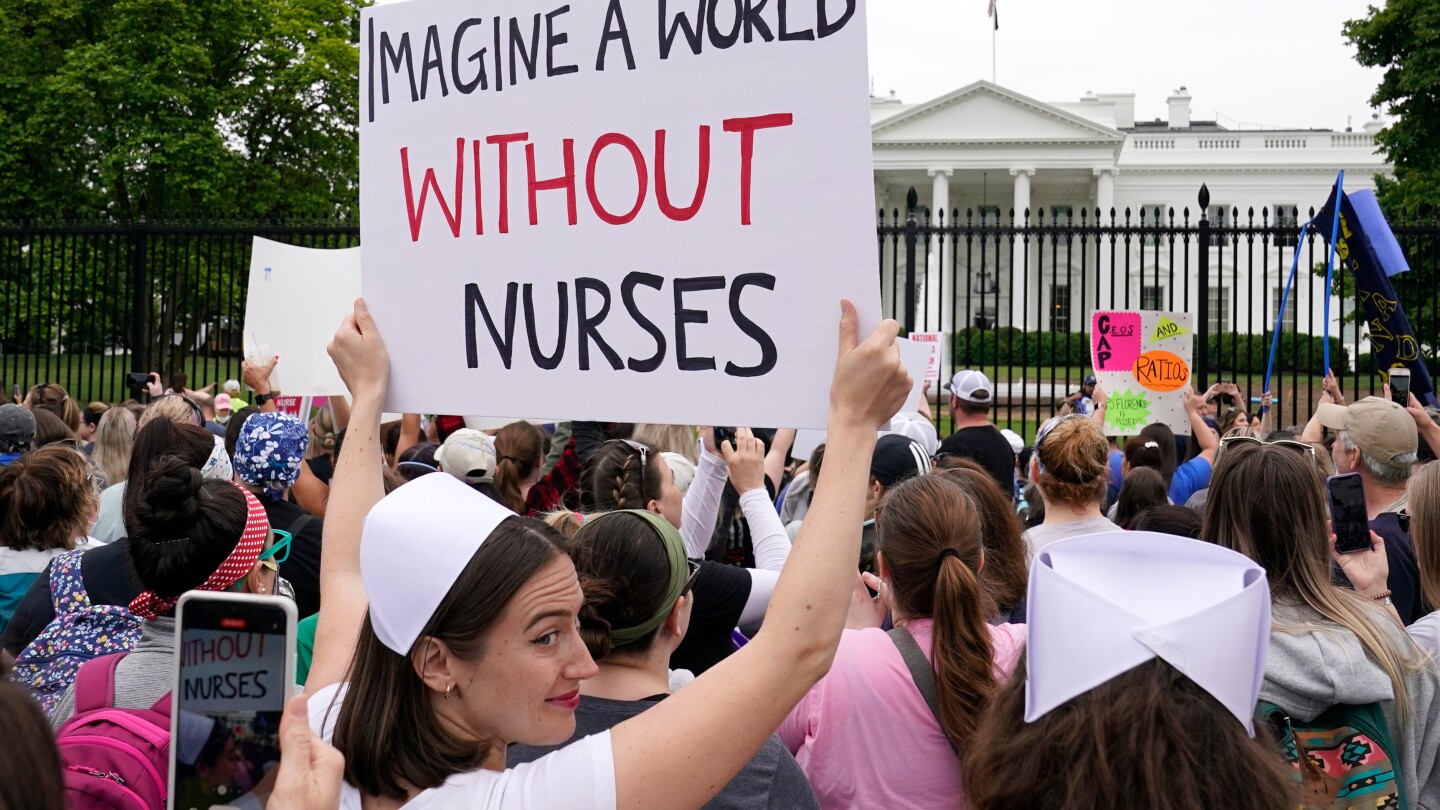
“It’s just a smack in the face,” said Susan Pratt, a nurse and president of a Toledo, Ohio nursing union. “When we were during the pandemic, the nurses showed up, and this is the thanks we get.”
The administration justifies these limitations as necessary to control rising tuition costs, arguing that capping student loans will pressure universities charging above-average tuition to reduce their rates. The Education Department is basing its definitions on a 1965 law governing student financial aid, though critics note that while the original law provided examples of professional degrees without claiming to be exhaustive, the new regulation treats its list as definitive.
Administration officials maintain the impact will be minimal, citing data suggesting that 95% of nursing students are enrolled in programs that won’t be affected by the new caps because they cost less than the $100,000 lifetime limit. Current students would be grandfathered into existing lending provisions.
Healthcare organizations, however, paint a more alarming picture. A coalition of health groups has urged the Education Department to reconsider, arguing that post-bachelor’s health degrees required for licensure or certification should qualify as professional programs. They emphasize that the excluded fields are predominantly populated by women and face significant workforce shortages.
According to a 2019 U.S. Census Bureau report, women constitute approximately three-quarters of full-time healthcare workers in America, with even higher percentages in certain roles like dental and medical assistants.
The American Association of Colleges of Nursing, which notes that one in six registered nurses held a master’s degree as of 2022, has warned that “the impact on our already-challenged nursing workforce would be devastating” if the proposal is implemented.
Critics argue that restricting federal loan access would force students to turn to more expensive private loans, potentially deterring candidates from entering these essential healthcare fields altogether. They also contend that advanced education opportunities have been crucial in attracting new professionals to nursing and other healthcare disciplines.
The new student loan caps are slated to take effect in July of next year, though the plan is still being finalized. The regulations were recently detailed through a federal rulemaking process, leaving healthcare organizations scrambling to advocate for changes before implementation.
As the healthcare system continues to grapple with staffing shortages across multiple disciplines, the potential long-term consequences of these financing restrictions could extend well beyond individual students to impact patient care and healthcare delivery nationwide.
Fact Checker
Verify the accuracy of this article using The Disinformation Commission analysis and real-time sources.

12 Comments
This proposed change seems misguided. Nurses and other healthcare workers provide essential services, and restricting their access to student loans could worsen staffing shortages during a critical time. I hope the administration reconsiders this plan.
Agreed, this could have severe unintended consequences for the healthcare system. Policymakers need to carefully consider the impact on the workforce before making changes to student loan programs.
It’s disappointing to see the administration proposing policies that could make it harder for people to enter essential healthcare professions. We should be doing more to support and encourage these crucial career paths.
I’m curious to understand the administration’s reasoning behind this proposed change. Reclassifying certain healthcare degrees as non-professional seems like it would deter people from pursuing those fields.
That’s a good point. Without clear justification, this policy shift feels arbitrary and likely to have detrimental effects on the healthcare workforce pipeline.
This is really troubling news. Nurses, therapists, and public health workers are the backbone of our healthcare system. Limiting their access to student loans could jeopardize the availability of critical services.
I agree, this is very concerning. The administration should reconsider this plan and work to ensure healthcare fields remain accessible and attractive to prospective students.
While the administration may have other goals in mind, this policy would undoubtedly make it harder for people to enter healthcare fields. That seems counterproductive when we need more nurses, therapists, and public health professionals.
Exactly. Restricting student loan access for these crucial roles is short-sighted. The healthcare industry is already facing staffing challenges – this could make the situation much worse.
I’m quite skeptical of this proposed change. Reclassifying certain healthcare degrees as non-professional degrees is a puzzling decision that could deter people from pursuing those fields. We should be making it easier, not harder, to enter these vital professions.
While I understand the desire to rework student loan programs, this specific change seems misguided. Excluding key healthcare roles from ‘professional’ degree status is concerning and could have far-reaching consequences.
This plan seems short-sighted and ill-advised. Nurses, physical therapists, and public health workers provide invaluable services. Restricting their access to student loans could exacerbate staffing challenges in the healthcare sector.