


Listen to the article
Trinidad and Tobago’s iconic carnival faced a new challenge this year as rising prices threatened to exclude many locals from the beloved cultural celebration widely known as “the greatest show on Earth.”
The Caribbean nation virtually shut down on Tuesday as it approached the finale of the two-day carnival festivities. However, with premium party tickets reaching nearly $700 and popular masquerade band costumes exceeding $2,000, participation has become increasingly unaffordable for many residents.
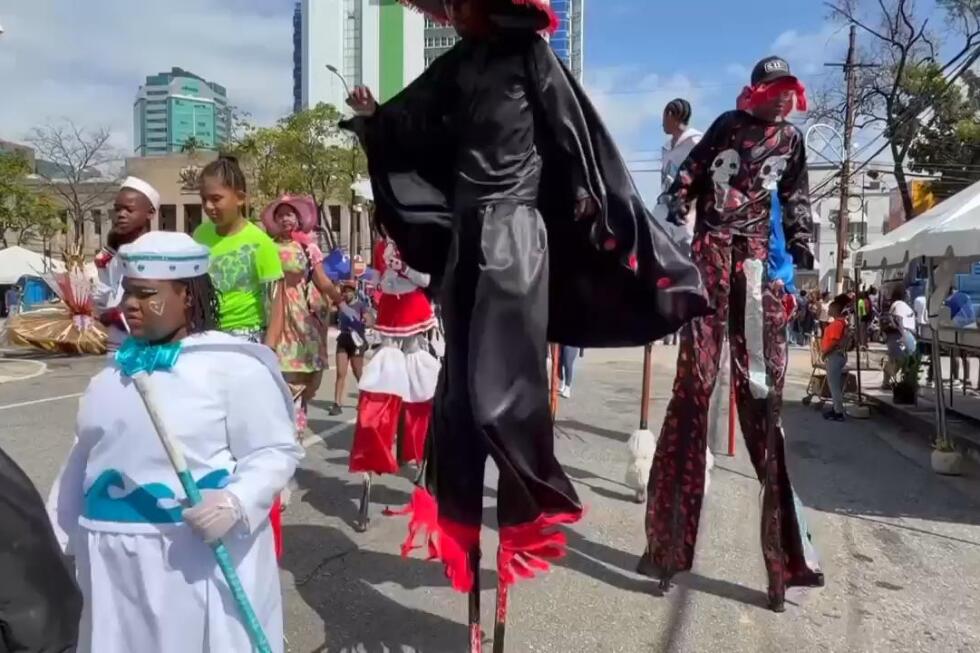
Against this economic backdrop, community members like Joshua Lamorelle are finding innovative solutions to preserve the cultural heritage. Lamorelle offers free stilt-walking lessons to children from impoverished communities across the island.
“It is giving the kids an opportunity to be a part of something that is very hard for them to afford,” Lamorelle explained as he provided final guidance to students days before schools and businesses closed for the massive street parade.
Among his pupils was 11-year-old Kanye Simmons, who enthusiastically secured stilts to his legs in preparation for a junior parade. “I find it’s very educational, and it’s very fun,” said Simmons, who prefers stilt-walking even to video games.
His mother, Chrisann Clarke, expressed gratitude for Lamorelle’s efforts to educate children about the country’s culture and carnival history. The free participation was equally important: “It’s actually great, because most parents are unable to afford it,” she noted.
The carnival in Trinidad and Tobago takes place on the two days preceding Ash Wednesday—known locally as Carnival Monday and Tuesday. Though not official holidays, the celebration brings tens of thousands of costumed participants to the streets.
The celebration’s roots stretch back to the 18th century when French settlers introduced the festivities but barred enslaved Africans from participating. By the 19th century, formerly enslaved people had rebelled against British officials who attempted to suppress the celebrations. Today, carnival has evolved into a major cultural institution and economic driver, generating millions in tourism revenue and creating thousands of jobs.
As economic pressures mount, local artists have developed creative approaches to maintain the carnival spirit. Soca music star Kimba Sorzano, who owns a “maxi taxi” minibus, offers free rides to commuters who agree to listen to his new carnival music throughout their journey. The promotion became so popular that fast food restaurants joined in by providing free breakfast during these musical commutes.
“Some people got priced out of the carnival, but at the same time we are the carnival,” said Sorzano, emphasizing that the true spirit of carnival remains alive in the hearts of Trinidadians and Tobagonians regardless of economic circumstances.
Singer Patrice Roberts similarly organized a free soca concert in late January that attracted more than 10,000 people. Acknowledging the financial challenges many families face, Roberts noted in a social media post that she understood “not everyone can indulge” this year.
Economic pressures in Trinidad and Tobago have intensified recently, with unemployment rising to 4.8% in the third quarter of 2023 from 3.8% in the previous quarter, according to government data. Since the election of a new government last April, new taxes and increased fees have driven up consumer prices and led to job losses, with some business owners reporting closures.
Lamorelle has responded by forming a carnival masquerade band for children, largely funding it himself with limited sponsor support. His work has garnered strong community backing in his hometown of Valencia in northeast Trinidad.
“He’s doing wonderful work in the community because he has the children more occupied than just loitering and doing nonsense,” said Nakita De Verteuil, whose two children participate in the band.
Her 17-year-old son, Josiah, who portrayed a “midnight robber” on four-foot stilts, views Lamorelle as a mentor and role model. “He is a very lovable person,” the teenager said. “And to children, he is one of the best influencers.”
As the carnival celebration continues to evolve, these grassroots efforts represent a determination to preserve cultural traditions and ensure they remain accessible despite economic challenges, honoring the legacy of those who fought for the right to participate in these celebrations generations ago.
Fact Checker
Verify the accuracy of this article using The Disinformation Commission analysis and real-time sources.
