


Listen to the article
Burt Meyer, pioneering toy inventor behind some of America’s most beloved playthings including Rock ‘Em Sock ‘Em Robots, Lite-Brite and MouseTrap, has died at age 99.
Meyer passed away on October 30 at the King-Bruwaert House retirement community in Burr Ridge, Illinois, according to executive director Rebecca Mathis.
His iconic creations emerged during the post-World War II economic boom, a period when advances in plastic molding and mass production revolutionized the toy industry. This manufacturing evolution created opportunities for more interactive and dynamic toys, a niche Meyer masterfully filled with designs that would remain popular for decades.
Meyer’s genius lay in his unique ability to balance seemingly contradictory talents: a childlike imagination coupled with practical engineering knowledge. This combination allowed him to create toys that were both whimsical and functional.
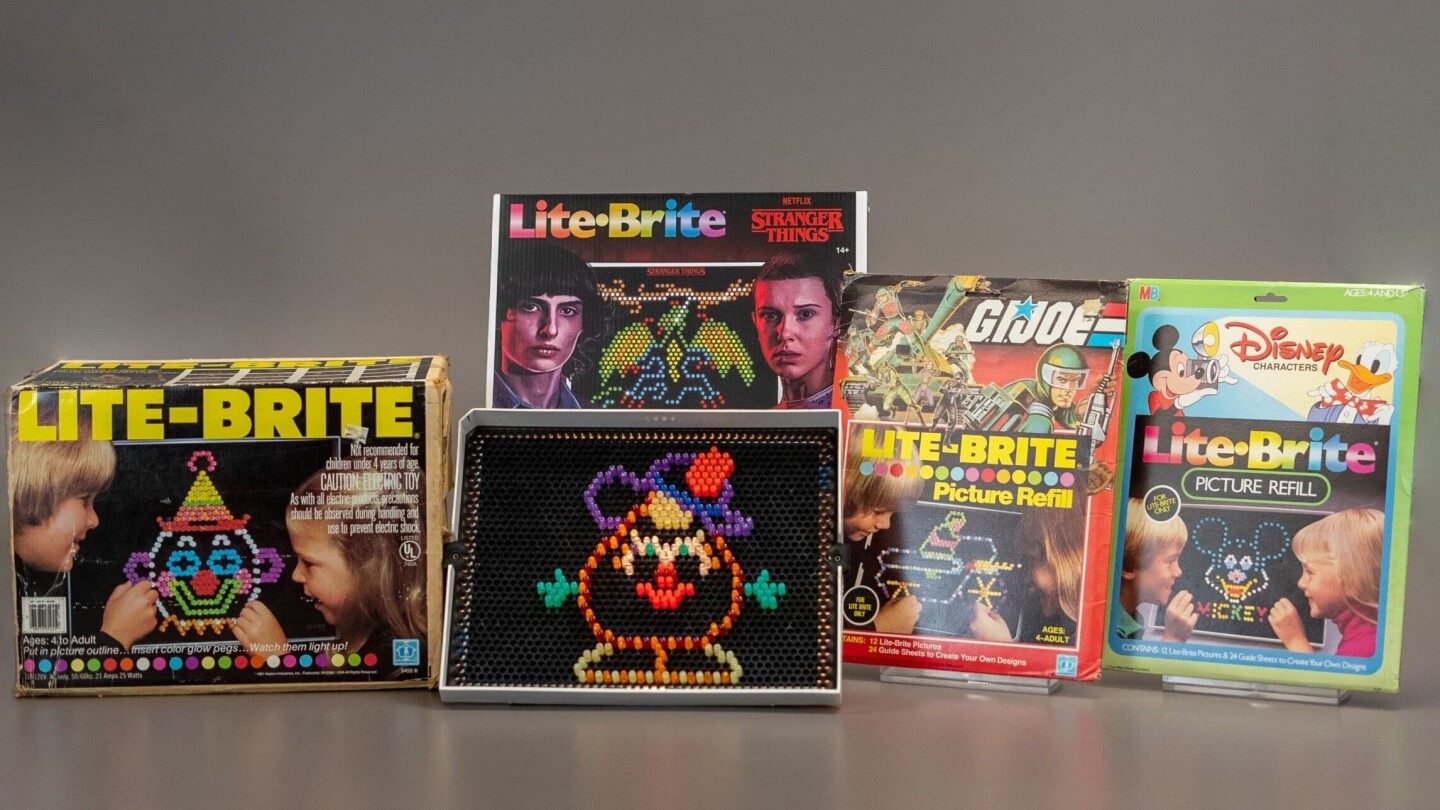
The inspiration for Lite-Brite, one of his most enduring creations, struck in 1966 while Meyer was walking in Manhattan with his employer Marvin Glass, owner of one of the era’s largest toy design firms. Passing a window display featuring hundreds of colored lights, Meyer envisioned transforming the concept into a toy for children, despite engineers at the company expressing safety concerns about adapting electric lights for young users.
“There’s billions of ideas out there,” noted toy historian Tim Walsh in his 2005 book “Timeless Toys,” “but executing them into a final creative solution is often the hard part.” Meyer’s determination prevailed, resulting in a small backlit box with black paper sheets that allowed children to create illuminated patterns. The toy became an instant success and cultural phenomenon, eventually earning spots on Time Magazine’s list of 100 greatest toys and induction into the Strong National Museum of Play’s hall of fame. Updated versions of Lite-Brite remain on store shelves today.
Meyer’s innovative thinking similarly transformed a stalled concept for a boxing arcade game designed for home use. The original concept faced marketing challenges after a featherweight boxer died from a brain injury, making any boxing-themed toy potentially controversial.
“This is too good to pass up,” Meyer recalled saying in a 2010 interview. “Let’s take it away from humanity, let’s make it robots. And we won’t have them fall over, we’ll have something funny happen.”
The resulting Rock ‘Em Sock ‘Em Robots featured plastic fighters controlled by button-operated joysticks. Players would attempt to punch the opposing robot’s jaw, triggering the spring-loaded head to dramatically pop up. The game’s popularity endured across generations, even appearing in “Toy Story 2.” In 2021, toy giant Mattel announced plans for a live-action movie adaptation, demonstrating the lasting cultural impact of Meyer’s creation.
Born in 1926 as Burton Carpenter Meyer, he served two years in the Navy as an aircraft mechanic before entering the toy industry. In the mid-1980s, Meyer established his own company, Meyer/Glass Design, which developed numerous successful products including the gross-out hit Gooey Louie and the popular Pretty Pretty Princess board game. His son, Steve Meyer, managed the business until 2006.
After retiring from toy development, Meyer settled in Downers Grove, a Chicago suburb, where his passion for engineering continued through building and flying small aircraft. Even in his 80s, he could be spotted skillfully piloting planes from a nearby private airfield.
Meyer often drew parallels between his two passions, aerospace engineering and toy design, noting that both fields demanded creativity and collaboration. “When you’re flying the airplane, use every resource that you have in there. That’s why we were able to turn out so many successful products,” Meyer said, attributing his success to the highly collaborative environment at Marvin Glass & Associates.
His personalized license plate reading “TOYKING” aptly summarized his legacy in the industry. In a 2010 interview, Meyer expressed continued delight when people would respond to learning about his profession with the enthusiastic recognition: “Oh, I played with that!”
Meyer’s creations have transcended generations, becoming not just toys but cultural touchstones that shaped the childhood experiences of millions of Americans, cementing his place as one of the most influential toy designers of the 20th century.
Fact Checker
Verify the accuracy of this article using The Disinformation Commission analysis and real-time sources.

14 Comments
Sad to see the loss of such a pioneering figure in the toy industry. Burt Meyer’s creations sparked joy and imagination for countless children. A lasting legacy indeed.
Absolutely. His impact on American childhood is immeasurable. Lite-Brite and Rock ‘Em Sock ‘Em Robots will live on as classics.
Fascinating to see how advances in manufacturing during the post-war boom enabled more dynamic and interactive toy designs. Burt Meyer really capitalized on those innovations to bring his whimsical visions to life.
Yes, he had a remarkable knack for anticipating consumer trends and translating them into beloved toys. A true visionary.
What an impressive legacy! Burt Meyer’s iconic toys like Lite-Brite and Rock ‘Em Sock ‘Em Robots defined childhood for generations. His ability to blend creativity and engineering was truly remarkable.
Absolutely, his creations sparked so much joy and imagination. A true pioneer of the toy industry.
Burt Meyer’s passing marks the end of an era for classic American toy design. His unique blend of creativity and functionality seems increasingly rare these days. A true master of his craft.
Well said. The toy industry has evolved so much, it may be hard to find the next Burt Meyer. His legacy will live on through his beloved creations.
It’s fascinating to see how the post-WWII manufacturing boom enabled the rise of more dynamic and interactive toy designs. Burt Meyer was a true pioneer in capitalizing on those innovations.
Absolutely. His ability to anticipate consumer trends and translate them into iconic toys was truly exceptional.
I wonder if Burt Meyer’s passing marks the end of an era for classic American toy design. His ability to blend creativity and functionality seems increasingly rare these days. A true master of his craft.
That’s a good point. The toy industry has evolved so much, it may be hard to find the next Burt Meyer. His unique blend of skills was truly special.
Burt Meyer’s ability to balance creativity and engineering was truly remarkable. His iconic toys like Lite-Brite and Rock ‘Em Sock ‘Em Robots defined play for generations. A true visionary.
Well said. His designs stood the test of time and remain beloved today. A true master of his craft.