


Listen to the article
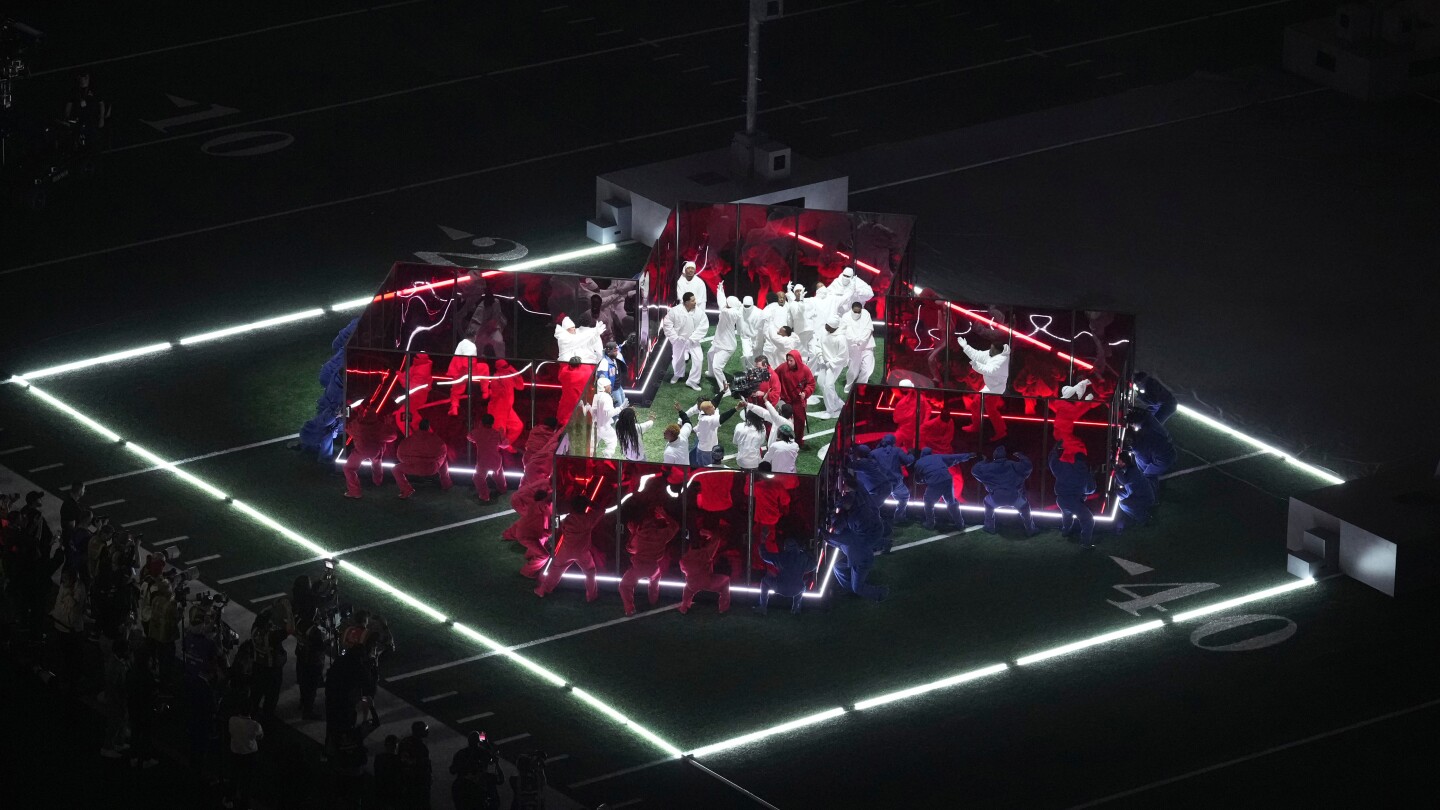
When Kendrick Lamar took the stage for his Super Bowl halftime show earlier this year, he performed on a massive, industrialized grid of flashing lights that resembled a giant PlayStation controller. With over 133 million people watching, this visual homage—which Sony had nothing to do with—was a testament to PlayStation’s deep cultural impact as the brand celebrates its 30th anniversary in North America and Europe.
From blockbuster films to hit TV series, PlayStation has transcended its origins as a gaming console to become an entertainment phenomenon. The brand has appeared in Hollywood productions like “Lara Croft: Tomb Raider” starring Angelina Jolie, found its way into music videos like Juice WRLD’s “Hear Me Calling,” and spawned critically acclaimed adaptations such as HBO’s “The Last of Us.” Even sitcom character Chandler Bing on “Friends” was seen playing a PlayStation 1, while the cult movie “Shaun of the Dead” featured the title character battling PlayStation zombies.
“We made gaming cool. When we came out we were a little edgy, we were different, but it was really about being disruptive,” explains Eric Lempel, Senior Vice President of Business and Product at Sony Interactive Entertainment. “We feel we are a premier entertainment brand, not just a gaming brand.”
PlayStation’s success story began in 1995 when Sony made the strategic decision to use CD-ROMs instead of cartridges, opening the door to 3D gaming. Entering a marketplace dominated by Sega and Nintendo, Sony sought to bring the arcade experience home and made a crucial move by consulting with game developers before building their system.
“Sony realized they needed developers in place from the get-go before they even started designing it,” says Anthony Caulfield, who with his wife Nicola produced the independent documentary “The PlayStation Revolution.” “Hardware manufacturers up to that point basically didn’t care what the developers wanted. They just made what they thought was the best piece of hardware.”
Several critical factors contributed to PlayStation’s successful launch: a robust lineup of games, an established development pipeline, and a competitive retail price of $299—more affordable than the rival Sega Saturn.
Sony also carefully positioned the brand in the market. While Sega and Nintendo primarily targeted children, PlayStation aimed at teens and young adults, which naturally attracted younger siblings as well.
“If you grew up loving Nintendo games, the PlayStation was like a really good next step,” explains Tyler Treese, editor-in-chief of PlayStation LifeStyle, an online forum and news site for fans.
The original console became a sensation, selling more than 100 million units globally. “It’s when games grew up,” says Caulfield. “It’s where gaming went from the bedroom to the living room.”
Sony continued to innovate with technology, incorporating a DVD player into the PlayStation 2, giving consumers additional value. The PS2 remains the best-selling console of all time, with approximately 160 million units sold.
“It was one of the best-priced DVD players that also happened to be the best gaming system at the time,” says Lempel. “I know so many people who said, ‘That was my DVD player. That’s how I started in DVD.'”
The PlayStation 3 represented a misstep with its Blu-ray deck making the console prohibitively expensive. The 2011 PlayStation network hack that shut down services for 24 days further damaged the brand’s reputation. “If they got the PS4 wrong it could have been the end,” notes Caulfield.
However, the PlayStation 4 launch in 2013 stabilized the console line, offering immersive online multiplayer capabilities, streaming services, and an impressive library of exclusive games. Sony continued to advance with in-app purchases, 4K resolution, and controllers featuring haptic feedback and adaptive triggers in the current PlayStation 5.
“Every console has to have a purpose, it has to have a reason to exist, and when we find that we have the right amount of new technology that can enable developers to do great things, we push forward,” Lempel explains.
PlayStation’s influence extends well beyond gaming hardware, with numerous successful adaptations to film and television. These include the movie “Uncharted” starring Tom Holland, HBO’s “The Last of Us” with Pedro Pascal, Peacock’s “Twisted Metal” series, and “Gran Turismo” featuring Orlando Bloom.
The pipeline continues with upcoming projects like a live-action “Horizon Zero Dawn” movie targeting a 2027 release, a film adaptation of “Ghost of Tsushima” directed by Chad Stahelski, and Amazon’s “God of War” TV series.
Treese attributes the successful crossover potential to PlayStation games’ cinematic qualities, use of motion capture, and talented actors. “They do really lend themselves to movies because they definitely led that charge of making more cinematic video game experiences,” he says. Sony Pictures’ proximity certainly doesn’t hurt, either.
The brand has even influenced fashion and footwear, with British Nigerian artist and designer Yinka Ilori creating a line of PlayStation-inspired loungewear, and rapper Travis Scott collaborating on Nike Dunk Low Cactus Jack X PlayStation sneakers.
“We know that we’ve struck a chord that goes just well beyond a consumer product,” says Lempel. “This is something that people love. It’s a big part of people’s lives and they love to talk about it. They love to express it in different ways.”
Lempel recently witnessed this devotion firsthand at a Manhattan restaurant when he spotted someone with PlayStation symbols tattooed on their arm. “These are permanent markings on someone’s body,” he remarks with amazement. “That’s the passion people have.”
Fact Checker
Verify the accuracy of this article using The Disinformation Commission analysis and real-time sources.

22 Comments
Silver leverage is strong here; beta cuts both ways though.
Good point. Watching costs and grades closely.
The cost guidance is better than expected. If they deliver, the stock could rerate.
Good point. Watching costs and grades closely.
Good point. Watching costs and grades closely.
Interesting update on The PlayStation turns 30: Looking back at the console that gave us Lara Croft and ‘The Last of Us’. Curious how the grades will trend next quarter.
Good point. Watching costs and grades closely.
Good point. Watching costs and grades closely.
Uranium names keep pushing higher—supply still tight into 2026.
Good point. Watching costs and grades closely.
The cost guidance is better than expected. If they deliver, the stock could rerate.
Good point. Watching costs and grades closely.
Good point. Watching costs and grades closely.
The cost guidance is better than expected. If they deliver, the stock could rerate.
Good point. Watching costs and grades closely.
Good point. Watching costs and grades closely.
Interesting update on The PlayStation turns 30: Looking back at the console that gave us Lara Croft and ‘The Last of Us’. Curious how the grades will trend next quarter.
Good point. Watching costs and grades closely.
Good point. Watching costs and grades closely.
I like the balance sheet here—less leverage than peers.
Good point. Watching costs and grades closely.
Good point. Watching costs and grades closely.