


Listen to the article
The European Union unveiled an ambitious plan Wednesday to leverage frozen Russian assets to provide Ukraine with crucial financial support over the next two years, but the proposal immediately faced resistance from Belgium, which hosts most of the frozen funds and fears significant financial and legal repercussions.
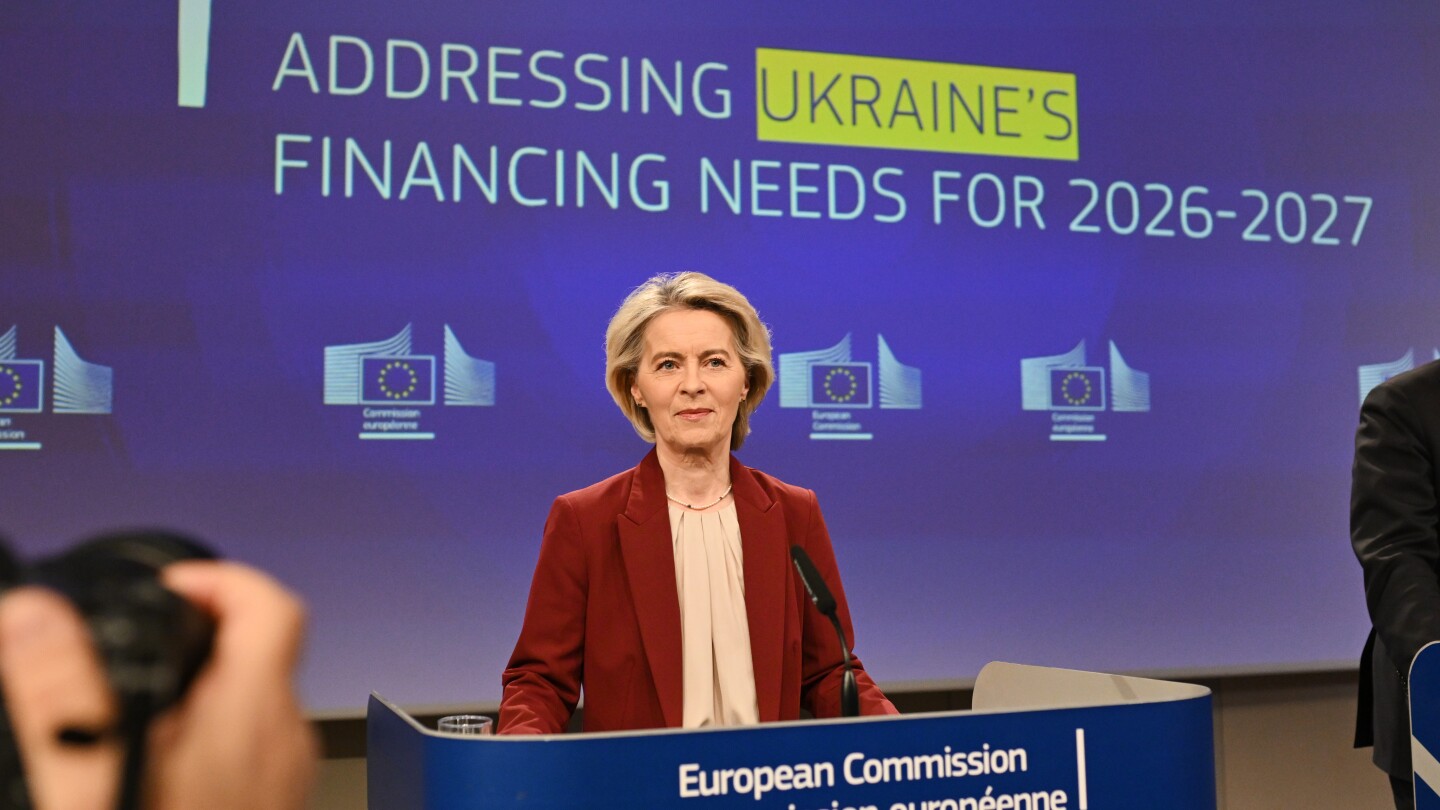
European Commission President Ursula von der Leyen announced that the EU would provide €90 billion ($105 billion) to Ukraine for 2026 and 2027, covering two-thirds of the country’s estimated financial and military needs. The International Monetary Fund has projected Ukraine’s total requirements at €137 billion ($160 billion) for this period.
“Today we are sending a very strong message to the Ukrainian people. We are with them for the long haul,” von der Leyen said. She added that international partners would be expected to contribute the remaining amount needed.
The proposal centers on using frozen Russian assets as collateral for what she termed a “reparations loan.” This approach, according to von der Leyen, would strengthen Ukraine’s position in any future peace negotiations with Russia and signal to Moscow that “the prolongation of the war on their side comes with a high cost for them.”
Since Russia’s invasion in 2022, the EU has already provided over €170 billion ($197 billion) in support to Ukraine. The bloc now faces the challenge of sustaining this assistance amid shifting political landscapes across Europe and uncertainties surrounding future U.S. support under the incoming Trump administration. Von der Leyen noted she had informed the Trump administration about the proposal.
The EU is eyeing the approximately €210 billion ($245 billion) in Russian assets frozen across Europe, with the largest portion—around €194 billion as of June—held in Belgium through the financial clearing house Euroclear. Additional frozen Russian assets are held in Japan (approximately $50 billion) and smaller amounts in the U.S., U.K., and Canada.
However, Belgian Foreign Minister Maxime Prévot firmly rejected the Commission’s plan, calling it “the worst of all” options. “It is risky. It has never been done before,” Prévot said at NATO headquarters in Brussels. Russia has already described the proposed scheme as “theft.”
Prévot expressed concern that the proposal would leave Belgium vulnerable to legal challenges from Russia and potential damage to Euroclear’s business interests and reputation. “The reparation loans scheme entails consequential economic, financial and legal risks,” he stated, adding that Belgium feels its concerns are being ignored by EU partners.
“We are not seeking to antagonize our partners or Ukraine. We are simply seeking to avoid potential disastrous consequences for a member state that is being asked to show solidarity without being offered the same solidarity in return,” Prévot explained.
Belgium instead supports borrowing money for Ukraine on international markets, which Prévot described as “a well-known, a robust and a well-established option with predictable parameters.” This alternative approach, however, would require unanimous approval from all 27 EU member states, and Hungary has consistently blocked aid to Ukraine.
Von der Leyen insisted that the Commission has addressed Belgium’s concerns in its proposal. “We have listened very carefully to Belgium’s concerns, and we have taken almost all of them into account in our proposal,” she said. “We will share the burden in a fair way, as it is the European way.”
Other EU members have expressed understanding of Belgium’s position while emphasizing the urgent need to support Ukraine. German Foreign Minister Johann Wadephul acknowledged that Belgium’s concerns are “justified, but the issue can be resolved if we are prepared to take responsibility together.”
Dutch Foreign Minister David van Weel stressed the critical importance of the funds: “These funds are really, really important. We need to support the Ukrainian economy, otherwise they will have a very tough time next year.” Several EU countries have already offered to provide financial guarantees to mitigate potential risks.
The European Central Bank has separately expressed concerns that the proposed reparation loan could undermine confidence in the euro on international markets.
EU leaders are scheduled to discuss the scheme and Ukraine’s economic and military needs at a summit in Brussels on December 18, where they will need to balance geopolitical imperatives with financial and legal considerations in a decision that could have far-reaching consequences for European solidarity and Ukraine’s future.
Fact Checker
Verify the accuracy of this article using The Disinformation Commission analysis and real-time sources.

24 Comments
I like the balance sheet here—less leverage than peers.
Good point. Watching costs and grades closely.
Good point. Watching costs and grades closely.
Exploration results look promising, but permitting will be the key risk.
Good point. Watching costs and grades closely.
Interesting update on The EU lays out a plan to fund Ukraine using frozen Russian assets but Belgium says it’s too risky. Curious how the grades will trend next quarter.
Good point. Watching costs and grades closely.
Good point. Watching costs and grades closely.
The cost guidance is better than expected. If they deliver, the stock could rerate.
Good point. Watching costs and grades closely.
Good point. Watching costs and grades closely.
Silver leverage is strong here; beta cuts both ways though.
Good point. Watching costs and grades closely.
I like the balance sheet here—less leverage than peers.
Good point. Watching costs and grades closely.
Good point. Watching costs and grades closely.
Uranium names keep pushing higher—supply still tight into 2026.
Good point. Watching costs and grades closely.
Silver leverage is strong here; beta cuts both ways though.
Interesting update on The EU lays out a plan to fund Ukraine using frozen Russian assets but Belgium says it’s too risky. Curious how the grades will trend next quarter.
Good point. Watching costs and grades closely.
Nice to see insider buying—usually a good signal in this space.
Good point. Watching costs and grades closely.
Good point. Watching costs and grades closely.