


Listen to the article
Thailand Spearheads Global Initiative to Combat Online Scam Epidemic
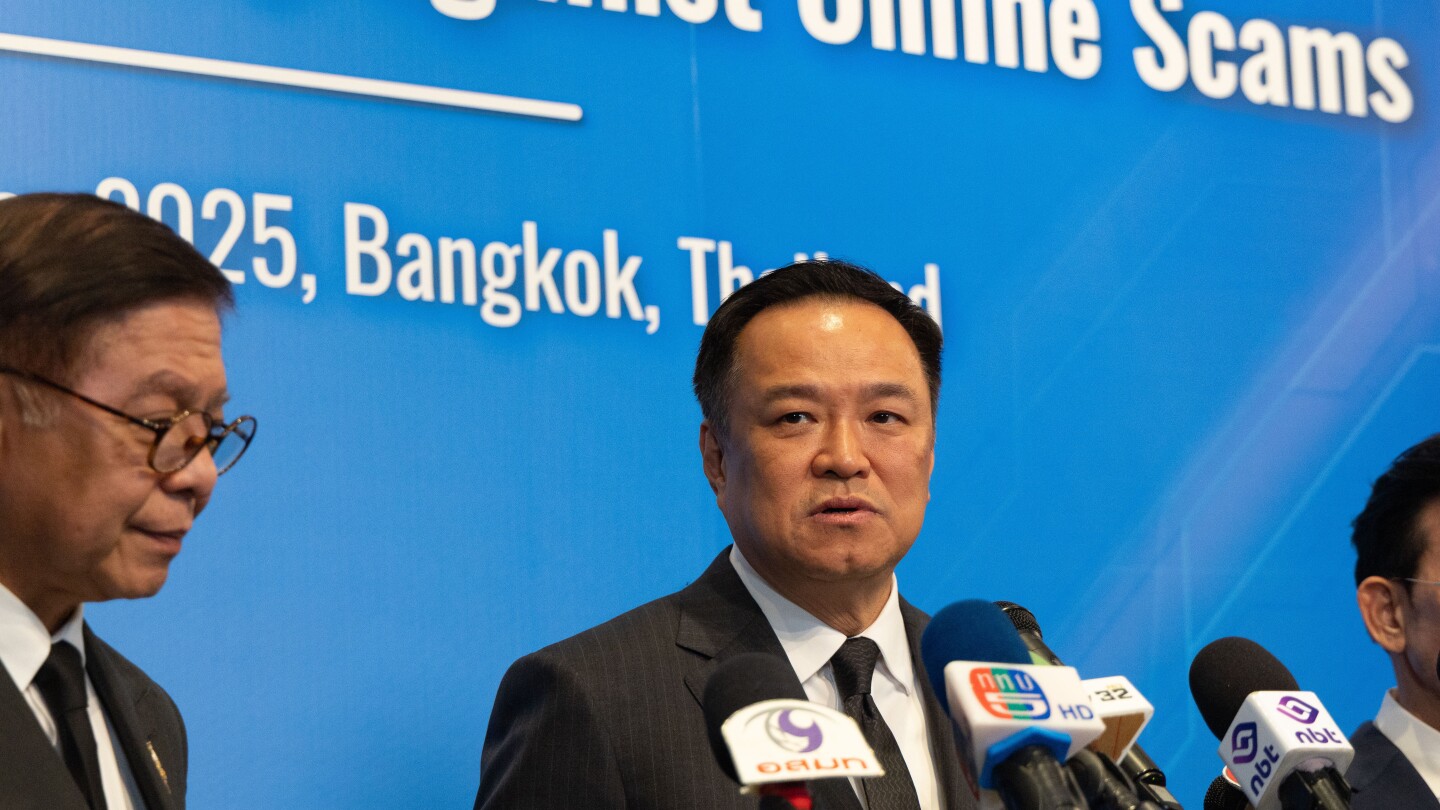
Thailand took a leading role in launching an international effort to combat the growing threat of online scams, as officials from multiple countries gathered in Bangkok for a two-day conference that concluded Thursday.
The Global Partnership Against Online Scams, jointly organized by Thailand’s Ministry of Foreign Affairs and the United Nations Office on Drugs and Crime (UNODC), aims to address criminal enterprises that are estimated to bilk billions of dollars annually from victims worldwide.
Thai Prime Minister Anutin Charnvirakul emphasized the cross-border nature of the challenge during his keynote address on Wednesday. “Online scams reveal a deeper problem — a collective vulnerability that no country can address alone,” he said.
The initiative’s founding members include Thailand, Bangladesh, Nepal, Peru, and the United Arab Emirates. Their partnership agreement outlines a comprehensive approach that encompasses political commitment, law enforcement cooperation, victim protection, public awareness campaigns, and cross-border collaboration.
Southeast Asia has emerged as a notorious hub for these criminal networks, with the UNODC estimating that scam victims lost between $18 billion and $37 billion globally in 2023 alone. The region has seen a proliferation of scam centers that typically lure victims through bogus investment schemes and fake romantic relationships.
Tech giants are playing a crucial role in the anti-scam effort. Meta, the parent company of Facebook, Instagram, and WhatsApp, presented a threat report during the conference that highlighted scammers’ increasing use of artificial intelligence and detailed the company’s countermeasures.
TikTok made headlines by becoming one of the first private sector entities to join the partnership, signing on to the conference’s closing statement. This development comes as TikTok faces various regulatory challenges worldwide, including scrutiny in the United States over its Chinese ownership, transparency breaches in the European Union, child protection concerns in Canada, and data sharing issues in Indonesia.
Brian Hanley, Asia-Pacific director of the Global Anti-Scam Alliance, which TikTok joined earlier this month, stressed the importance of collaboration between all stakeholders. “Scams are exploiting not only transnational boundaries but also the seams across various platforms from banks, telcos, to social media platforms,” Hanley explained.
“TikTok is the one that we’re talking about today, but hopefully tomorrow everyone’s joining,” he added. “We’re starting to get critical mass and momentum as everyone realizes it’s affecting their bottom lines and consumer trust.”
Recent events have underscored the urgency of addressing this issue. Several countries in the region have conducted raids on scam compounds, while Thailand has grappled with the repatriation of victims. The death of a South Korean student forced into scam work in Cambodia also heightened awareness of these criminal operations.
Cambodia, widely recognized as a major hub for scam compounds, was notably absent from the Bangkok conference. The country has faced criticism from neighboring Thailand over its handling of the issue, complicated by ongoing armed conflict between the two nations.
The Bangkok initiative builds on previous regional commitments to combat online scams, including the United Nations Convention against Cybercrime signed by more than 70 countries in Vietnam last October. UN Secretary-General António Guterres described that agreement as “a vow that no country, no matter their level of development, will be left defenseless against cybercrime.”
The Bangkok conference drew more than 300 participants from nearly 60 countries, signaling strong international interest in tackling a problem that transcends national borders and requires coordinated global action.
Fact Checker
Verify the accuracy of this article using The Disinformation Commission analysis and real-time sources.

10 Comments
This is an important initiative to address the global scourge of online fraud. Coordinated international action is essential to disrupt these criminal networks and protect vulnerable citizens. I’m glad to see Thailand spearheading this effort.
Agreed. Online scams cross borders and require a collaborative approach. The specific focus areas outlined, from law enforcement to public awareness, seem well-designed to tackle this complex challenge.
Cybercrime is a major challenge that knows no borders. I’m hopeful this new partnership can make meaningful progress in disrupting the criminal enterprises behind online scams.
Tackling online scams is critical as the problem continues to grow worldwide. Thailand deserves credit for convening this conference and bringing countries together to develop a unified strategy.
Absolutely. The scale of the losses from these scams is staggering, so a coordinated global response is imperative. Kudos to Thailand for this important leadership on an issue that impacts so many people.
Excellent to see Thailand spearheading this important global effort to combat online fraud. Raising public awareness and strengthening international collaboration are key to tackling this challenge.
Combating online scams is a vital issue that demands a unified, international response. This new partnership led by Thailand is a welcome development, and I’m curious to see how the specific initiatives unfold.
Agreed, the details of the partnership’s action plan will be crucial. Effective information sharing, joint investigations, and coordinated law enforcement will all be critical to disrupting these criminal networks.
Online scams are a complex, cross-border problem that requires close cooperation between countries. This initiative seems like a positive step towards developing more effective countermeasures.
Agreed. Sharing intelligence, best practices, and coordinating enforcement across national boundaries will be critical to protecting citizens and businesses from these predatory schemes.